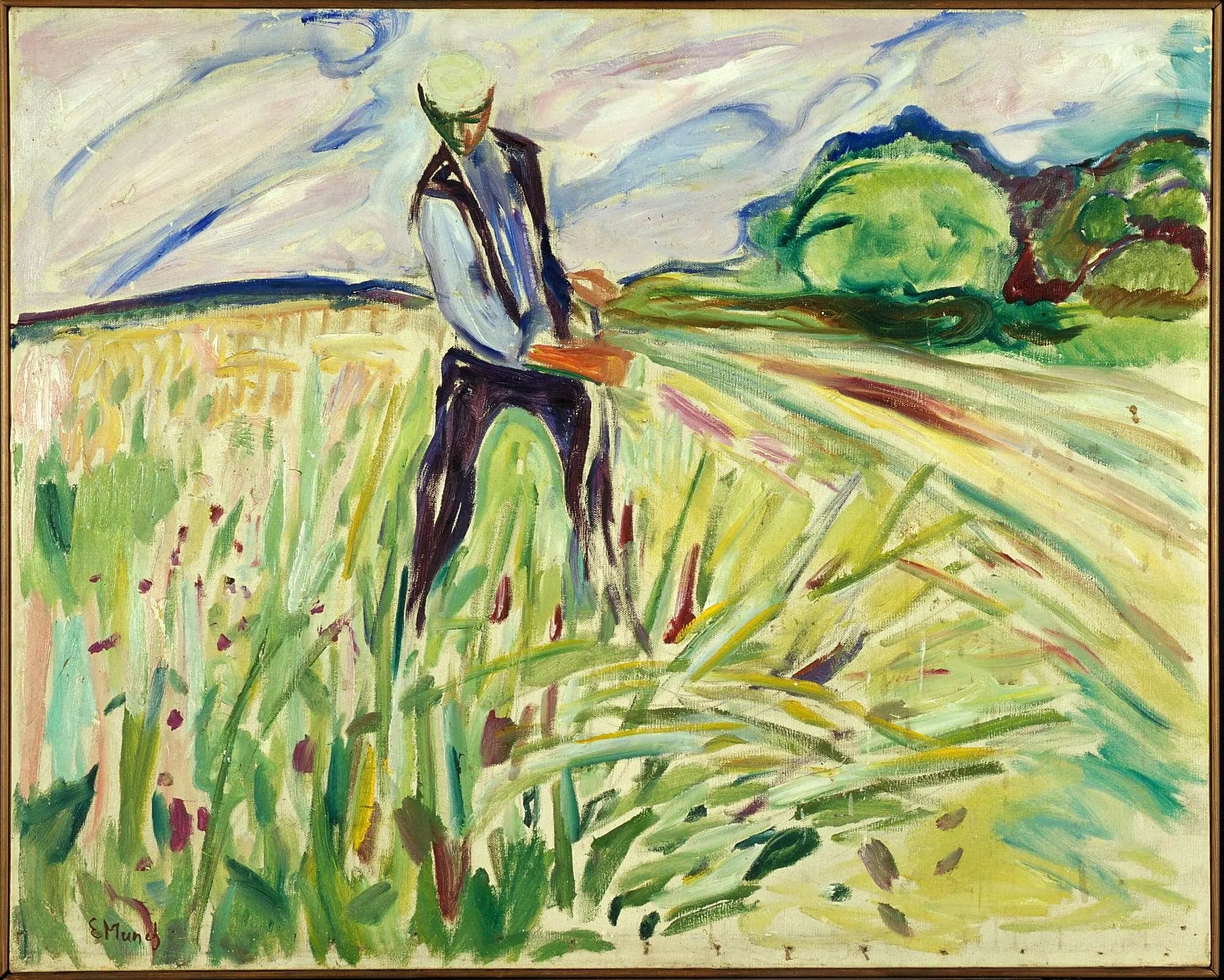
The Reaper
- Original dimensions
- 151 x 130 cm
- Museum
- Munch Museum
- Year
- 1917
Scene depicted
The Harvest depicts a man absorbed in the wheat harvest. The rhythm of his work, almost choreographic, blends with the horizon of a landscape vibrant with light. This timeless scene evokes the sacred relationship between man and the earth, an eternal cycle of effort and reward. As he cuts through the golden ears, an atmosphere of serenity permeates the composition, as if each movement dances to the whim of the wind.
Historical context
Created in 1917, this painting emerges from the turmoil of a war-torn Europe, in the city of Oslo, then called Christiania, evoking the anxiety of an era while fitting into the expressionist movement. Through this canvas , Munch transcribes the pain and beauty of field labor, an ode to nature that resists the surrounding darkness. The painting is currently housed in the Munch Museum, a sanctuary for his artistic legacy, remaining at the crossroads of memory and emotion.
Place in the artist's career
The Harvest is situated at a key moment in Munch's career, where his expressionism reaches an emotional peak. Like his famous works "The Scream" and "The Madonna," this painting reflects his artistic evolution. Here, the logic of composition intertwines with an explosion of color, echoes of solitude and passion, foreshadowing the existential questions that will mark his later work.
Anecdote
“The seasons are the breath of the earth,” Munch might have said while contemplating the golden fields. That morning, the sun gently pierced the mists of a promising spring, inspiring every brushstroke. It is here, in this fleeting moment, that the painting comes to life, infused with a palpable spiritual force, revealing the very essence of the canvas .
Major exhibitions
Edvard Munch . Monumental projects