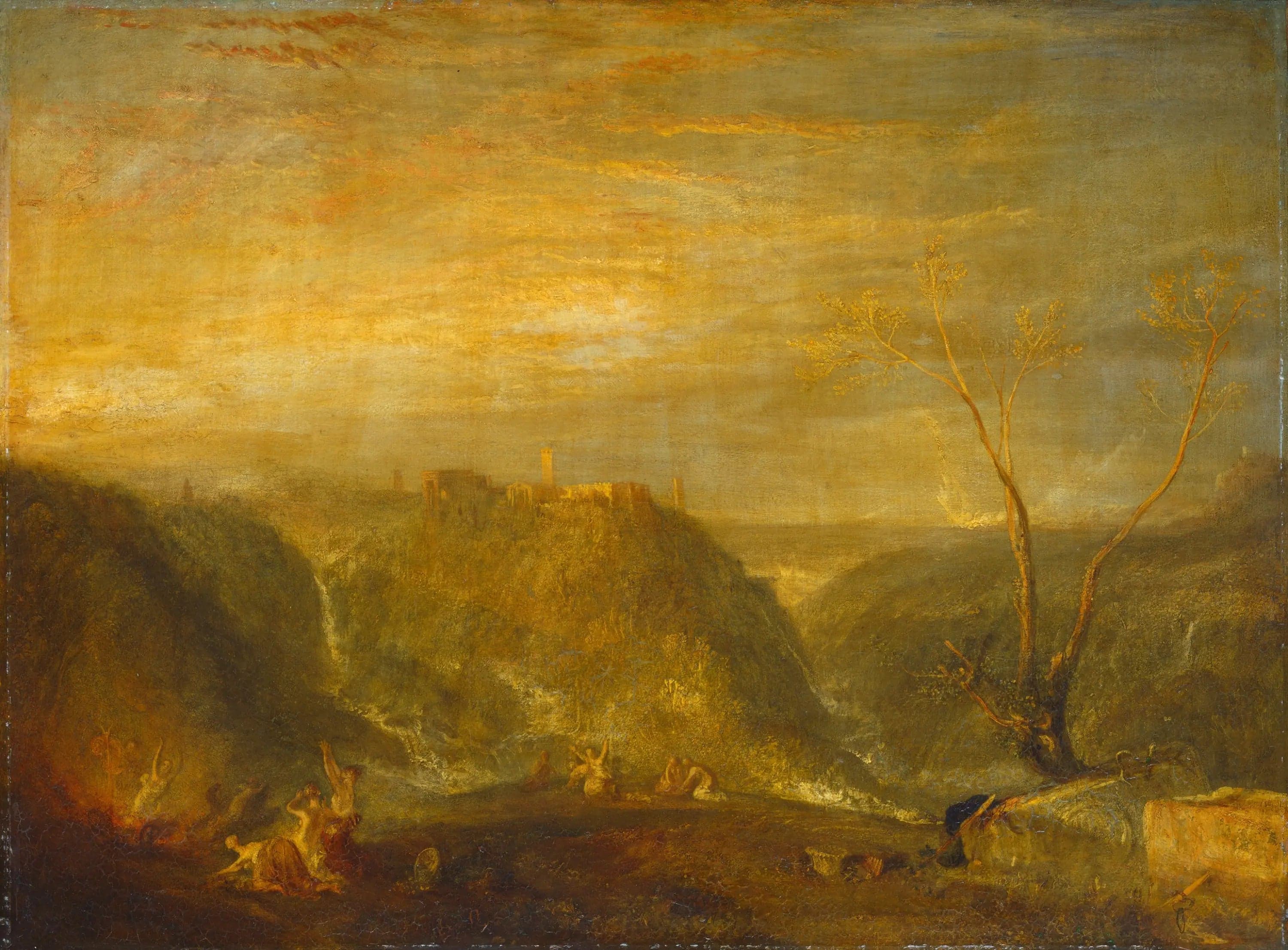
The Rape of Proserpine
- Original dimensions
- 123.7 x 92.6 cm
- Museum
- National Gallery of Art
- Year
- 1839
Scene depicted
This masterpiece illustrates the tragic moment of the myth where Proserpine is abducted by Pluto, the god of the underworld. The composition expresses a palpable tension, where beauty and pain intertwine. Viewers can almost feel the agitated wind, hearing the desperate cries of the nymph, while the warm light of summer persists despite the growing shadow of the abduction.
Historical context
Created in 1839, this iconic painting emerges in a transforming London, reflecting the romantic movement that seeks to capture raw emotion and the grandeur of nature. The painting is currently housed in the National Gallery of Art , a prestigious place that hosts many other paintings by essential artists. With impressive dimensions, this canvas of 123.7 x 92.6 cm surpasses with its intensity and drama.
Place in the artist's career
The Rape of Proserpine stands as one of Turner’s major works, illustrating a turn towards a more dramatic expression. With pieces such as The Fighting Temeraire and Rain, Steam and Speed, he begins to merge human nature with elemental forces, thus offering a maturity in his style that transforms each painting into a deep exploration of emotion and the ephemeral.
Anecdote
“Every brushstroke must be a love letter to light,” said Turner when discussing his inspiration. One spring morning, while wandering near the banks of the Thames, the light reflected on the water like a whisper from ancient gods. It is this vibrant atmosphere that nourished the soul of the painting The Rape of Proserpine, transforming it into a dance of colors and feelings.