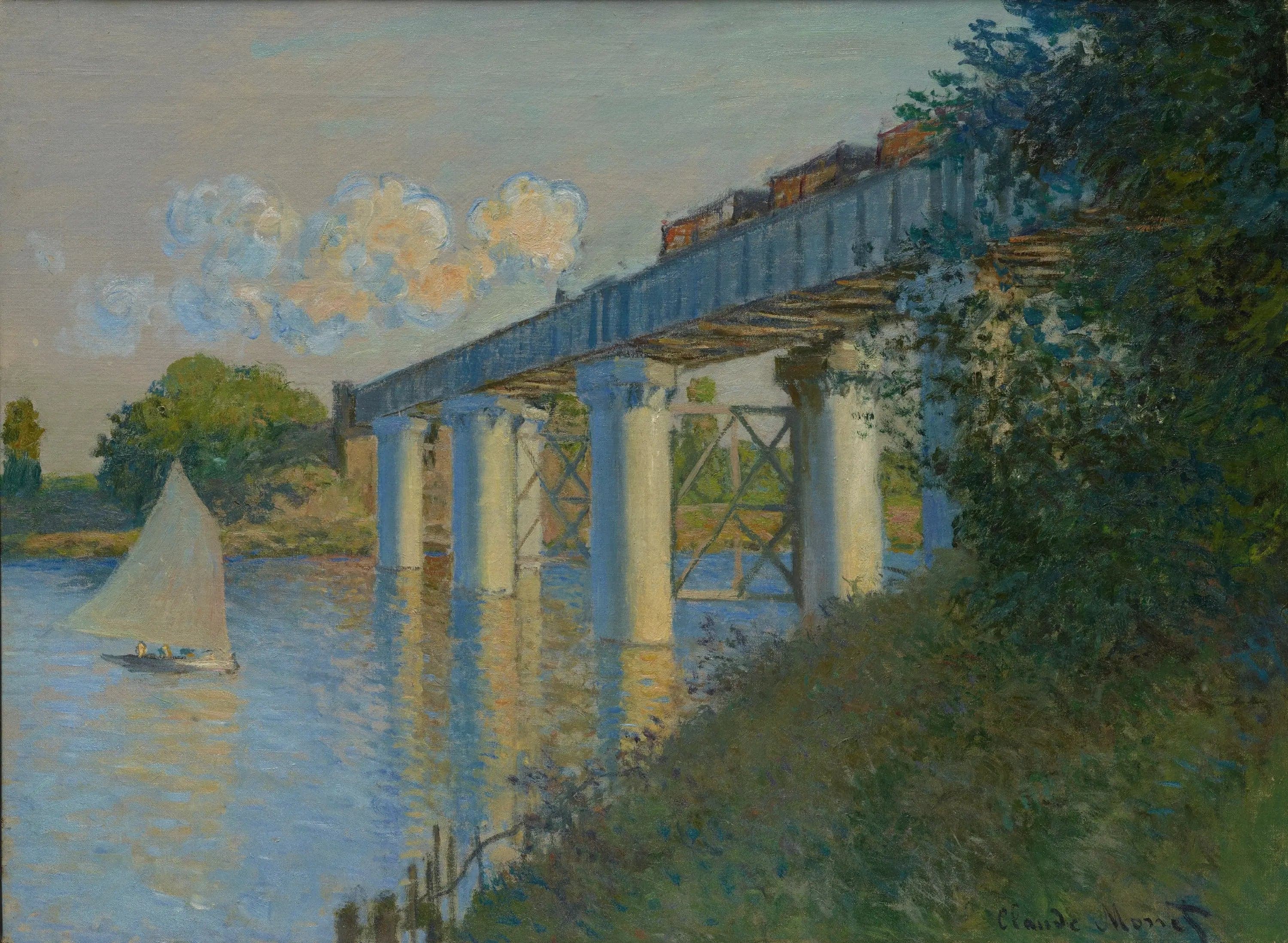
The Railway Bridge at Argenteuil
- Original dimensions
- 710 x 540 cm
- Museum
- Orsay Museum
- Year
- 1870
Scene depicted
In this pictorial work, Monet depicts the railway bridge of Argenteuil , a symbol of modernity. The locomotives, smoking and noisy, contrast with the peaceful boats moored on the banks. The painting immerses us in a dialogue between industrial progress and natural beauty, creating a unique harmony. The reflections in the water add an almost magical dimension, as if the painting breathes life, each element vibrating under the effect of light.
Historical context
Year: 1870 |BRK| Museum: Orsay Museum |BRK| Dimensions: 710 x 540 cm
Place in the artist's career
This painting represents a crucial step in Monet's career, revealing his transition to artistic maturity. Between earlier paintings such as “ Impression, Sunrise ” and his later compositions, this canvas unveils his stylistic evolution, marked by increasingly complex plays of light and a bold palette that captures the fleeting.
Anecdote
"Light changes everything, it is the soul of my canvas .” These words, imbued with empathy, reveal how Monet perceived his art. One spring morning, while standing on the banks of the Seine, the reflections in the water and the song of the birds inspired him. This painting is above all a narrative of sensations, an awakening of the senses, where each brushstroke evokes a memory, an emotion of a fleeting moment.