The Races
- Original dimensions
- 35.1 x 26.6 cm
- Museum
- National Gallery of Art
- Year
- 1871
Scene depicted
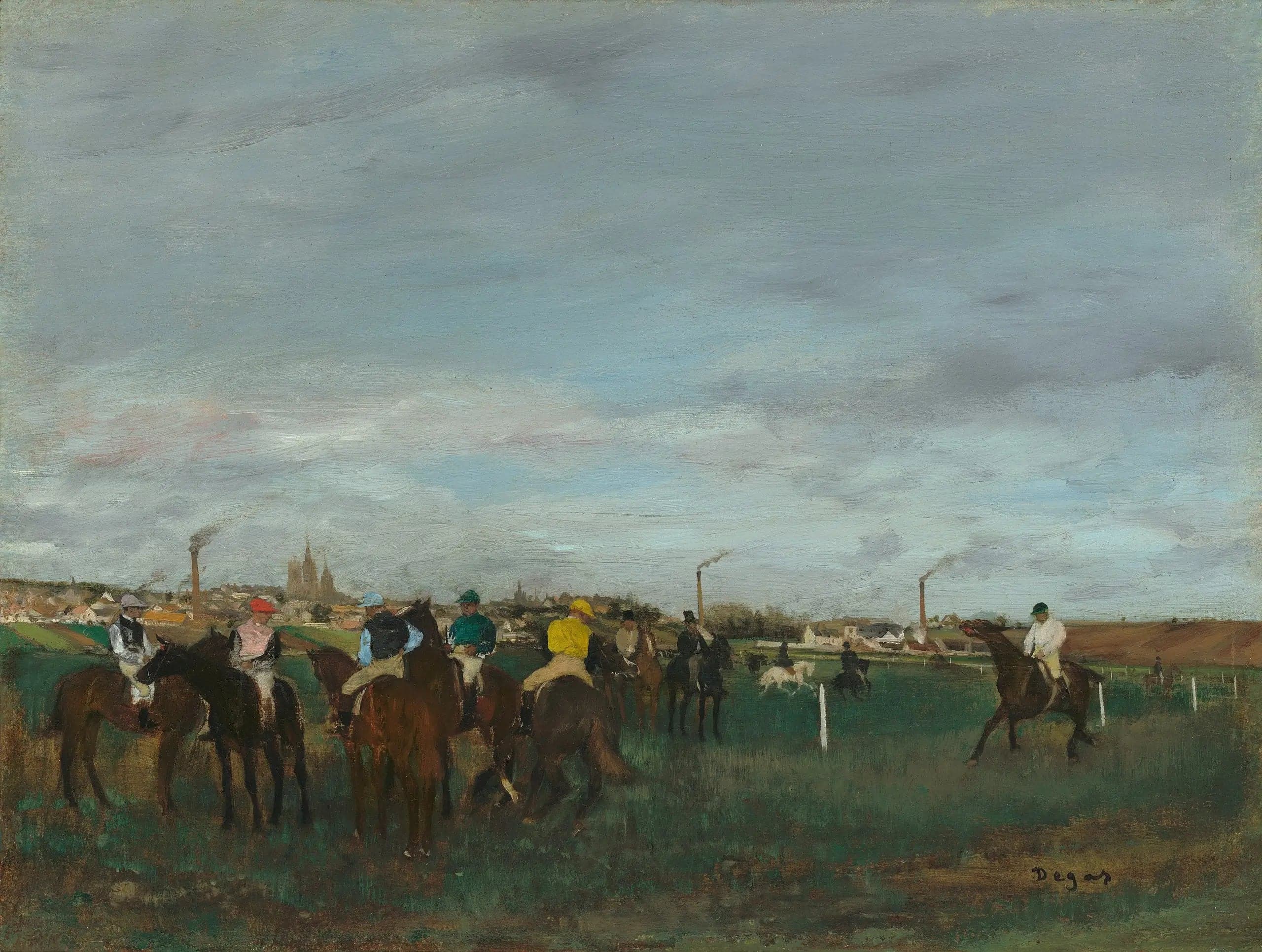
At the heart of this painting , the artwork immerses us in the excitement of a horse race. The silhouettes of the jockeys intertwine, while the fiery mounts race at full speed, creating a ballet of movement and colors. Every detail, from the fluttering scarf of a rider to the focused gazes of the spectators, offers an instant narrative, making this canvas a lively and vibrant scene.
Historical context
Created in 1871, during a period of social and artistic upheaval, The Races is anchored in Paris, the beating heart of Impressionism . It is within this cultural ferment that Degas, influenced by innovative techniques of light and movement, created this canvas emblematic. Today, this painting shines at the National Gallery of Art , carefully preserved, bearing witness to the indelible mark left by its artist.
Place in the artist's career
This painting represents a pivotal moment in the career of Edgar Degas . A promising work from his youth, it foreshadows the recurring themes of the artist, notably the representation of movement. Compared to The Dancer at the Barre and After the Bath , a notable evolution is observed, both technically and emotionally, marking the transition to undeniable artistic maturity.
Anecdote
"I seek to render the true, not what others want to see, but what I feel." These words from Degas reflect the very essence of the masterpiece that is The Races . It is on the edges of a horse track, during a vibrant spring morning, that he finds inspiration, thus capturing the frenetic energy and timeless grace of the races.