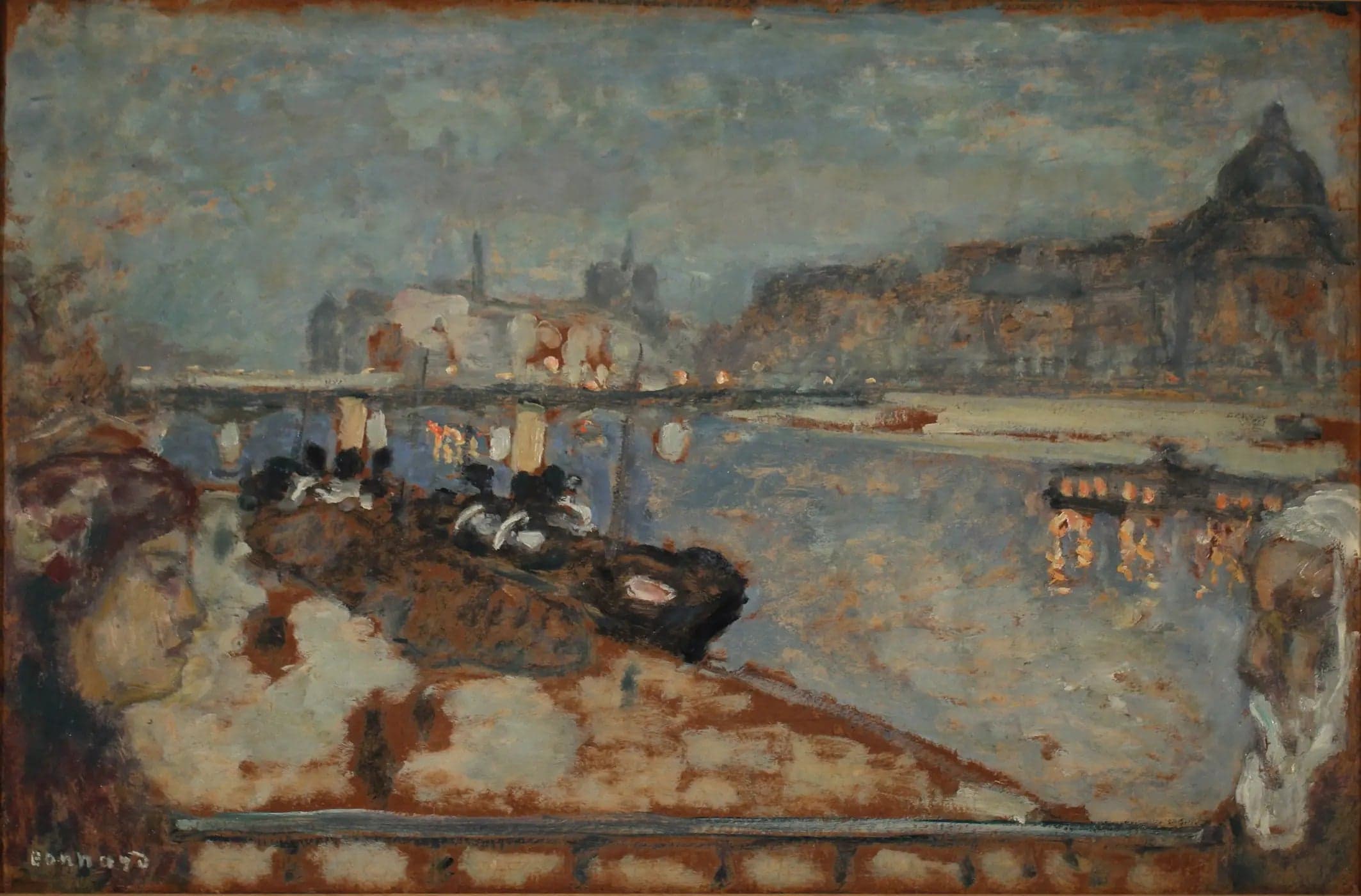
The Quays of Paris
- Original dimensions
- 67 x 44 cm
- Museum
- Not specified
- Year
- 1906
Scene depicted
In “The Quays of Paris,” Pierre Bonnard depicts a vibrant scene of life, blending the flows of the Seine with the blurred silhouettes of passersby. This painting evokes the emotions of a suspended moment, a dance between light and water, transforming a simple walk into a true sensory experience. The elements of the city merge into a living tableau where each brushstroke resonates like a harmonious note of this urban symphony.
Historical context
Created in 1906, this painting is emblematic of early 20th century Paris, a flourishing time for artistic movements. Located in the French capital, it belongs to the favored current of post-impressionism , reflecting the cultural and aesthetic changes of its time. The work is currently in a private collection, surrounded by the mystery of a rich past, and offers dimensions that attract the eye with their 67 by 44 centimeters of artistic depth.
Place in the artist's career
“The Quays of Paris” marks a turning point in Bonnard's career, reflecting his stylistic evolution towards the search for light and atmospheres. In parallel, his works such as “Luncheon on the Grass” and “The Nap” highlight his innovative approach, revealing themselves as milestones of his artistic maturity and exploration of the intimate.
Anecdote
“The light of Paris is a poem in itself,” Bonnard is said to have remarked while evoking his muse, this canvas inspired by the Parisian quays. Imagine the artist strolling along the Seine, breathing in the air filled with the scent of booksellers and spring flowers, capturing with emotion the fleeting moment of urban life, intoxicated by this ephemeral aesthetic that marks the birth of his masterpiece .