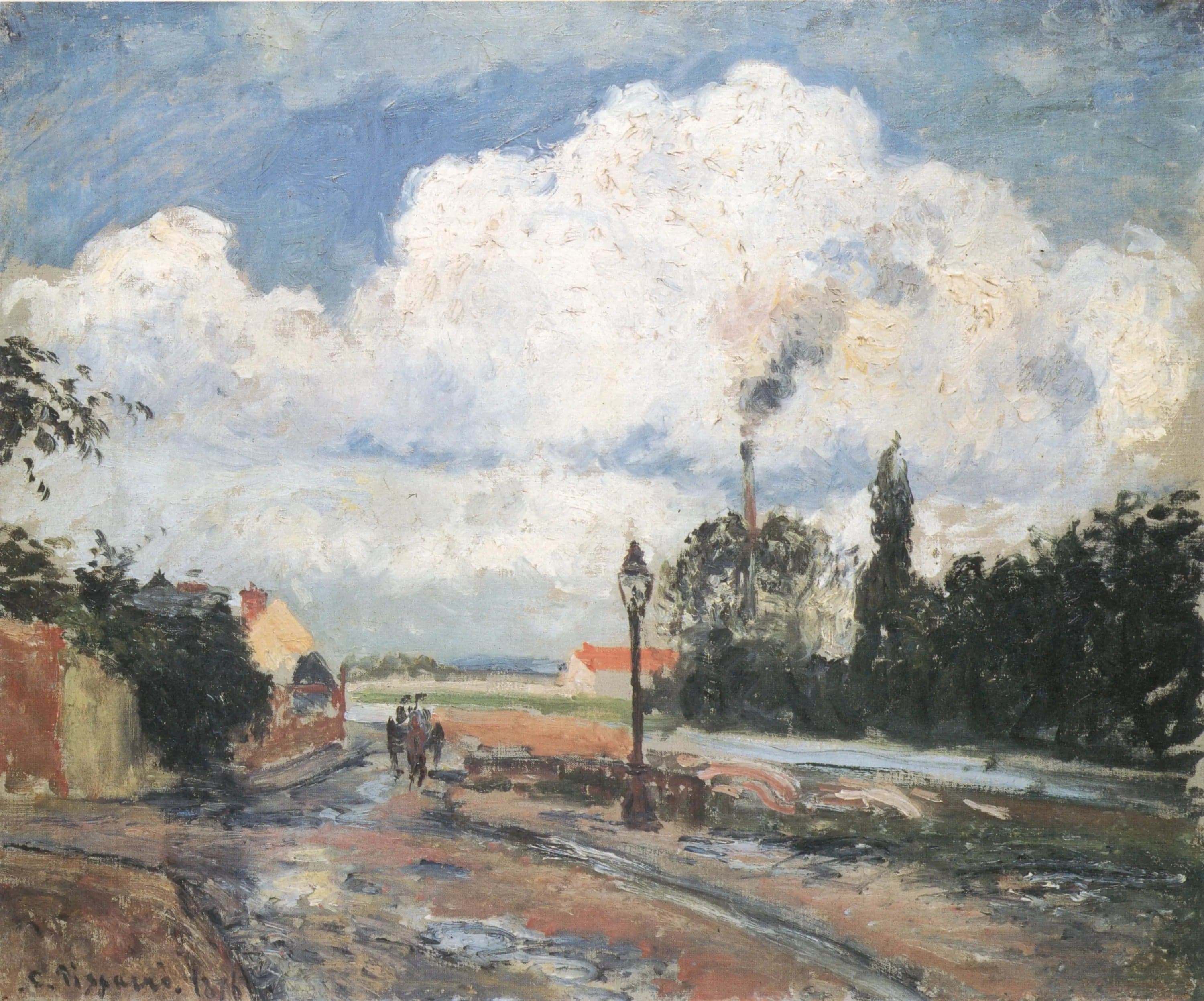
The Quai du Pothuis in Pontoise after the Rain
- Original dimensions
- 55 x 46 cm
- Museum
- Whitworth Art Gallery
- Year
- 1876
Scene depicted
This painting depicts a post-rain scene, where the quay, a place for strolling, comes alive under the ray of a shy sun. The invention of light, born from reflections on the wet cobblestones, composes a living tableau where each character, each detail tells the story of a world in perpetual change, characteristic of a fleeting moment of French rurality.
Historical context
Created in 1876, this iconic work is rooted in the charming town of Pontoise, located in the heart of the Île-de-France region. Registered in the Impressionist movement, The Quai du Pothuis in Pontoise after the Rain stands out for its vibrant atmosphere and shimmering hues. Currently housed at the Whitworth Art Gallery, this painting of 55 x 46 cm evokes the fleeting beauty of nature, immortalizes a specific moment of daily life, and reflects the creative spirit of an era when art reinvents the perception of the world.
Place in the artist's career
The Quai du Pothuis in Pontoise after the Rain is part of Pissarro's promising career, marking a crucial step in his exploration of light effects and daily life. Through his canvas, he becomes one of the pioneers of Impressionism , while engaging in dialogue with other paintings such as The Potato Harvest and Boulevard Montmartre, Spring , reflecting a continuous evolution in his approach to color and light.
Anecdote
“When the rain stops, the earth and the soul are reborn.” Thus expressed Camille Pissarro about his creative process. Inspired by a rainy morning, where colors seemed to splash across the landscape, the artist captures here the very essence of nature, transformed by light and raindrops, and offers us a vibrant pictorial work .