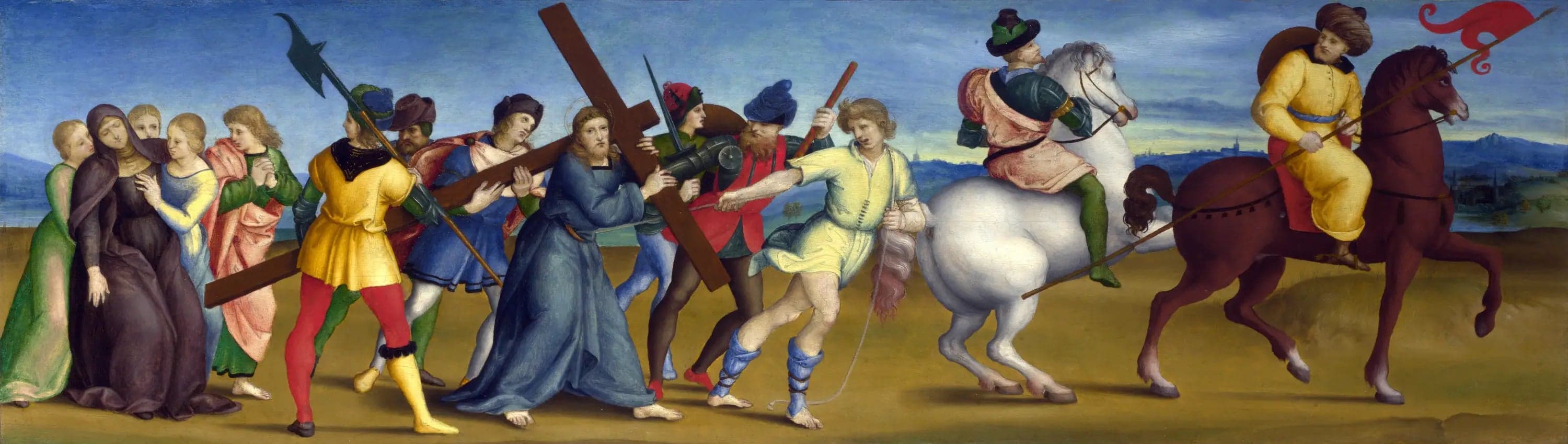
The Procession to Calvary
- Original dimensions
- 85.5 x 24.4 cm
- Museum
- National Gallery
- Year
- 1504
Scene depicted
The painting depicts an epic scene, where human figures, led by a wounded Christ, resolutely advance towards Calvary. The winding path, lined with spectators, reflects humanity's journey in the face of suffering. Each face and gesture bears witness to a mix of pain, resignation, and hope. This powerful representation plays on the communion between the sacred and the profane, inviting the viewer to enter into an inner dialogue.
Historical context
Created in 1504, this painting is the result of the exceptional genius of Raphael Sanzio. It was born in Rome, in the heart of the Renaissance , a time when art flourished in a new light, highlighting human and spiritual beauty. The dynamic composition and the finesse of the details offer a captivating glimpse into the artistic sensitivity of its time. It is currently displayed at the National Gallery, a prestigious setting in the city of London, where its brilliance shines.
Place in the artist's career
This painting stands as one of the major works from the early career of Raphael, marking his artistic maturity. It contrasts with his early attempts, such as 'The Annunciation', and paves the way for the peak of his talent in 'The Transfiguration'. The emotional richness of 'The Procession to Calvary' illustrates his stylistic evolution towards a mastery of light and narrative compositions.
Anecdote
“Inspiration comes from the shadows dancing on the cobblestones at dusk, revealing souls in search of elevation,” Raphael might have whispered. It was on a bright morning, here in Rome, that the artist envisioned this pictorial work at the heart of a procession, filled with palpable energy, as if each character was moving towards a divine, inevitable destiny.