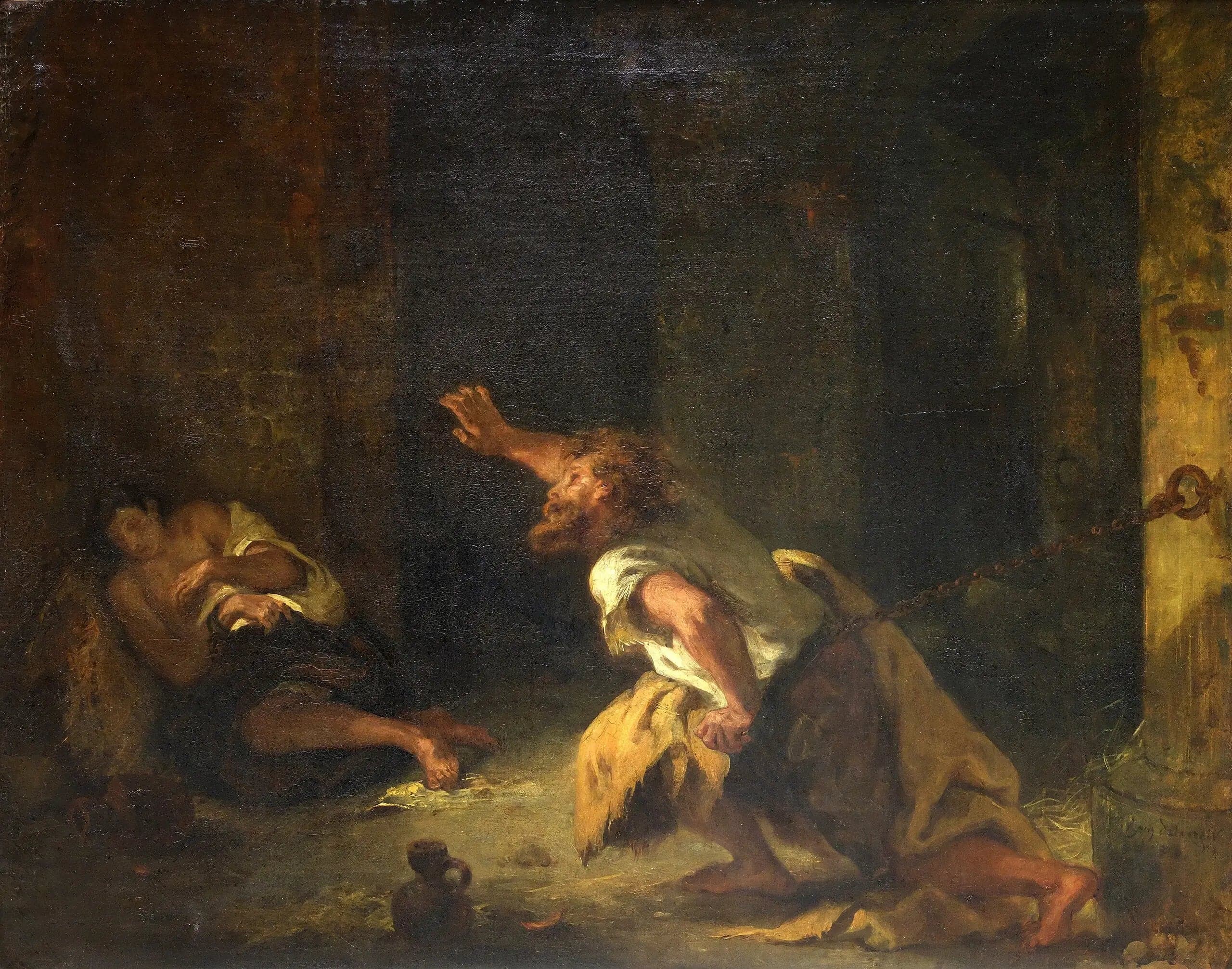
The Prisoner of Chillon
- Original dimensions
- 92.5 x 73.5 cm
- Movement
- romanticism
- Museum
- room 950
- Year
- 1834
Scene depicted
The painting depicts a moment of deep suffering and resistance. Bonivard, this man of letters, was imprisoned in Chillon Castle, Switzerland, for his ideas. Delacroix, with his brush, managed to evoke the melancholy and desolation of the central character, his silhouette standing out against the cold walls, while light filters through the bars, a witness to his unwavering despair.
Historical context
Created in 1834, during a period when romantic art was flourishing, this iconic painting finds its roots in Paris, at the heart of the profound inspirations of the time. This pictorial work stands out for its poignant scene and is currently housed in the museum, in room 950, where it continues to enchant visitors. Its dimensions, 92.5 x 73.5 cm, give it a striking presence on any wall.
Place in the artist's career
With The Prisoner of Chillon, Delacroix moves towards growing recognition. This painting is part of a period where the artist explores dramatization and color. Alongside Liberty Leading the People and The Death of Sardanapalus , this work highlights his approach towards an expressive romanticism that echoes his travels and personal emotions.
Anecdote
“The soul of prisoners sings louder than the walls of their cell.” This phrase resonates like an echo of the inspiration that seized Delacroix on the shores of Lake Geneva. One bright April morning, the painter would have encountered these intense thoughts while recalling the tragic story of Bonivard, thus diving into the very essence of his masterpiece.
Major exhibitions
Salon of 1835