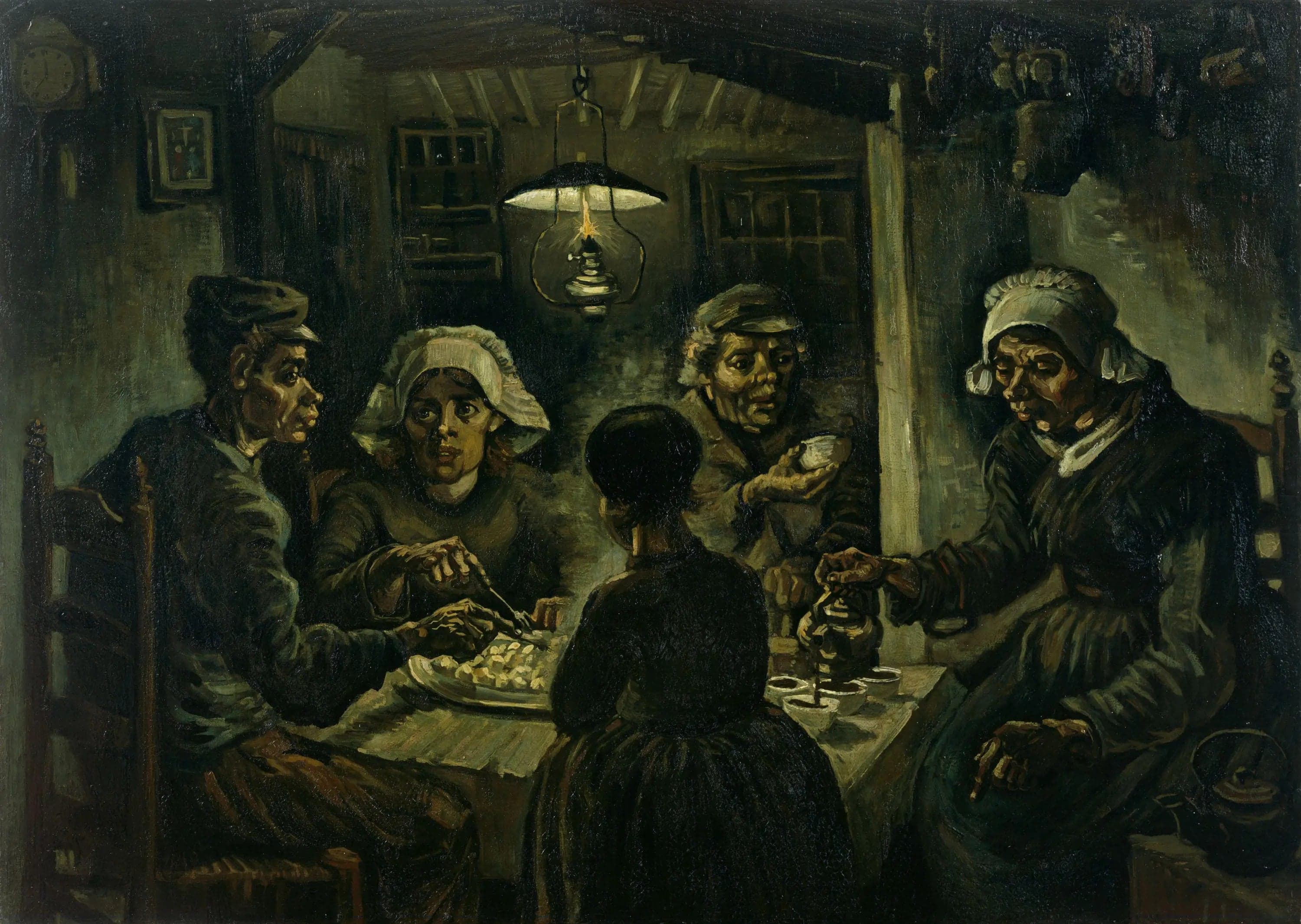
The Potato Eaters
Scene depicted
In this painting , Vincent van Gogh depicts an intimate and poignant scene where peasants share a frugal meal. The artwork exudes an atmosphere of seriousness and simplicity, reflecting the daily life of a world often unknown, filled with labor and satisfaction. The weathered faces of fatigue contrast with the warmth of the potatoes, a symbol of survival and connection to the land.
Historical context
Created in 1888, the iconic painting "The Potato Eaters" immerses us in the rural world of Nuenen , Netherlands. This work belongs to the artistic movement of Post-Impressionism , an era marked by a quest for authenticity and reality. Currently exhibited at the Van Gogh Museum , this canvas measures 114 x 82 cm, a generous size that enhances its presence on any wall.
Place in the artist's career
This painting marks a turning point in the career of Vincent van Gogh . Far from the swirling landscapes of his later works, "The Potato Eaters" reveals a darker and more introspective approach. It belongs to a period where the artist explores themes of human existence, while engaging in dialogue with " The Starry Night " and " The Sunflowers ", thus reflecting an evolution in his artistic reflection.
Anecdote
Vincent van Gogh once stated: "I wanted to show the pain and beauty of peasant life through my palette." Inspired by a cool morning in a small town where the golden light played on the hardworking faces, he captured the very essence of humanity in this masterpiece . Each brushstroke resonates with the strength of his commitment to peasant struggles.