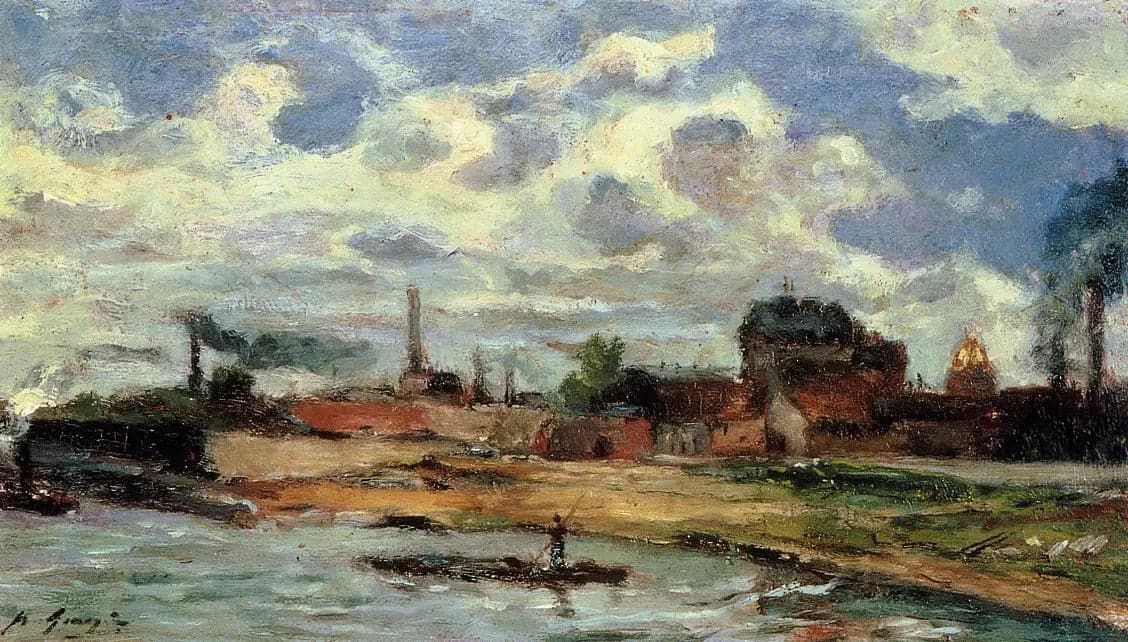
The Port of Javel I
- Original dimensions
- 25.5 x 16 cm
- Museum
- Boijmans Van Beuningen Museum
- Year
- 1876
Scene depicted
In The Port of Javel I , Gauguin paints a tableau of tranquility where the silhouettes of the boats stand out against an intriguing sky. Along the water, the reflections of colors vibrate, bringing a sense of serenity to this composition . The artist immerses us in a peaceful atmosphere, where the port becomes a place of escape and contemplation. Beyond the simple landscape, this pictorial work evokes dreams and echoes of a bygone era.
Historical context
Created in 1876, within the vibrant framework of the post-impressionist movement, The Port of Javel I transports us to Paris, by the Seine, where Gauguin immortalizes the effervescence of this maritime district. This iconic painting is now found at the museum Boijmans Van Beuningen, where it captivates the gaze of visitors, allowing them to appreciate its dimensions of 25.5 x 16 cm.
Place in the artist's career
Considered a turning point in Gauguin's career, The Port of Javel I represents an important stage in his stylistic exploration. At a time when he is still experimenting with impressionist themes, this painting pulses with promises, drawing closer to his later works such as The Vision after the Sermon and The Fisherman of the Coast , which will mark his evolution towards a more symbolic and personal language.
Anecdote
“Every painting I create is a part of my soul, an impression laid down with passion on the canvas.” These words of Gauguin resonate powerfully when observing his masterpiece at the heart of a bright morning. Inspired by the dancing shadows of boats on the water, he captured a fleeting moment where nature sings and awakens.