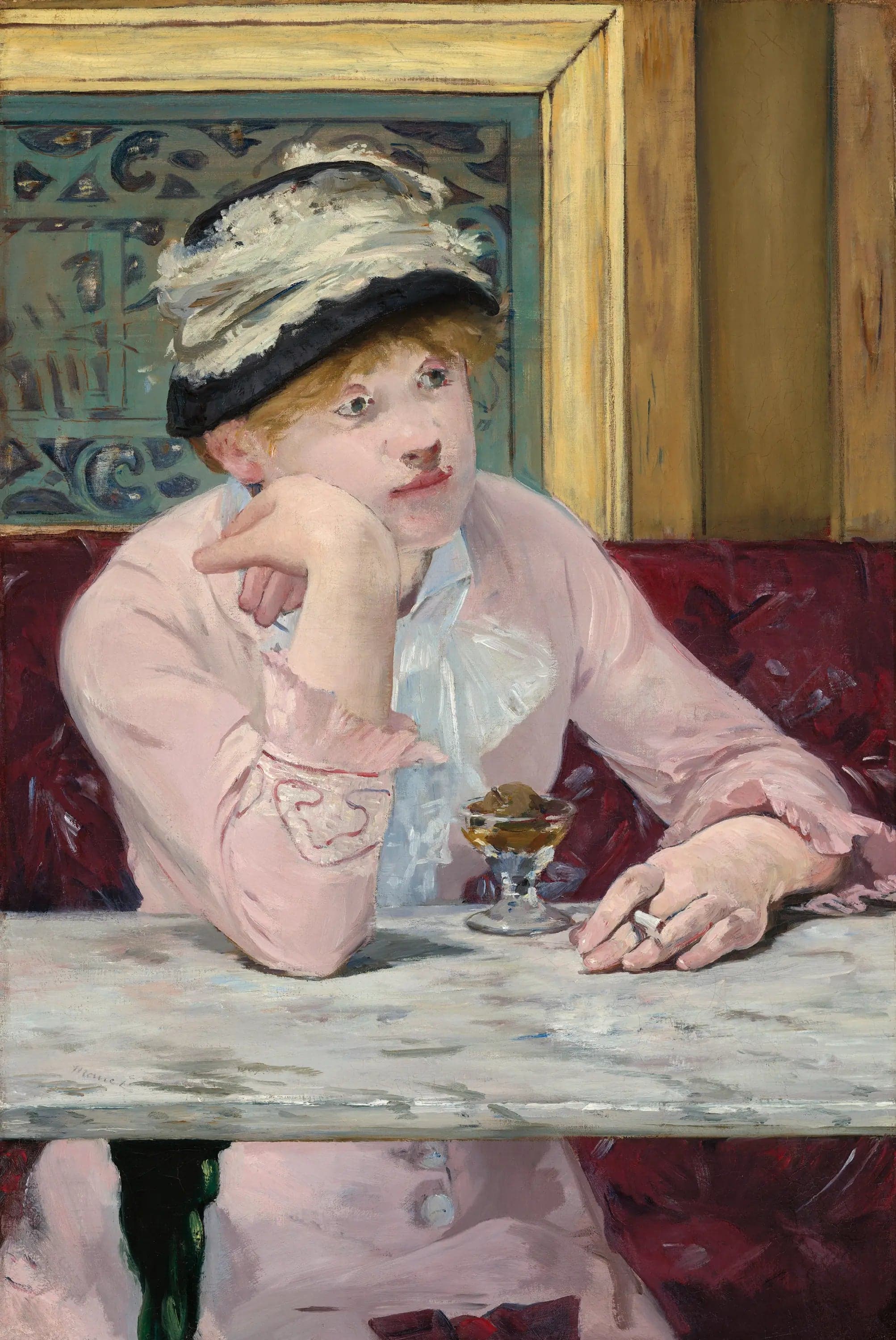
The Plum
- Original dimensions
- 50.2 x 73.6 cm
- Museum
- National Gallery of Art
- Year
- 1878
Scene depicted
In "The Plum," Manet invites us to contemplate the simplicity of a fruit. The painting reveals a juicy plum, adorned with vibrant hues, resting on a rustic wooden table, thus celebrating the beauty of the small things in life. Manet's art manages to convey a peaceful and contemplative atmosphere, captivating the viewer.
Historical context
Created in 1878, in Paris, the painting "The Plum" is part of impressionism , a poetic movement that redefines light and color. Manet, a central figure of this movement, draws inspiration from everyday life and the nature around him. The canvas is currently displayed at the National Gallery of Art , where it continues to dazzle visitors, measuring 50.2 by 73.6 cm.
Place in the artist's career
"The Plum" marks a turning point in Manet's career, illustrating his transition to an unprecedented artistic maturity. This masterpiece stands alongside "Luncheon on the Grass" and "Olympia," revealing an evolution in his technique and understanding of textures, making each canvas unique in its approach.
Anecdote
“Art is capturing the moment.” This moment of revelation, imbued with poetry, emerged in a sunny alley in Montmartre, where Manet found himself face to face with a delicate plum. This canvas is a celebration of the beauty of this fruit, embodying the emotions that art can evoke.