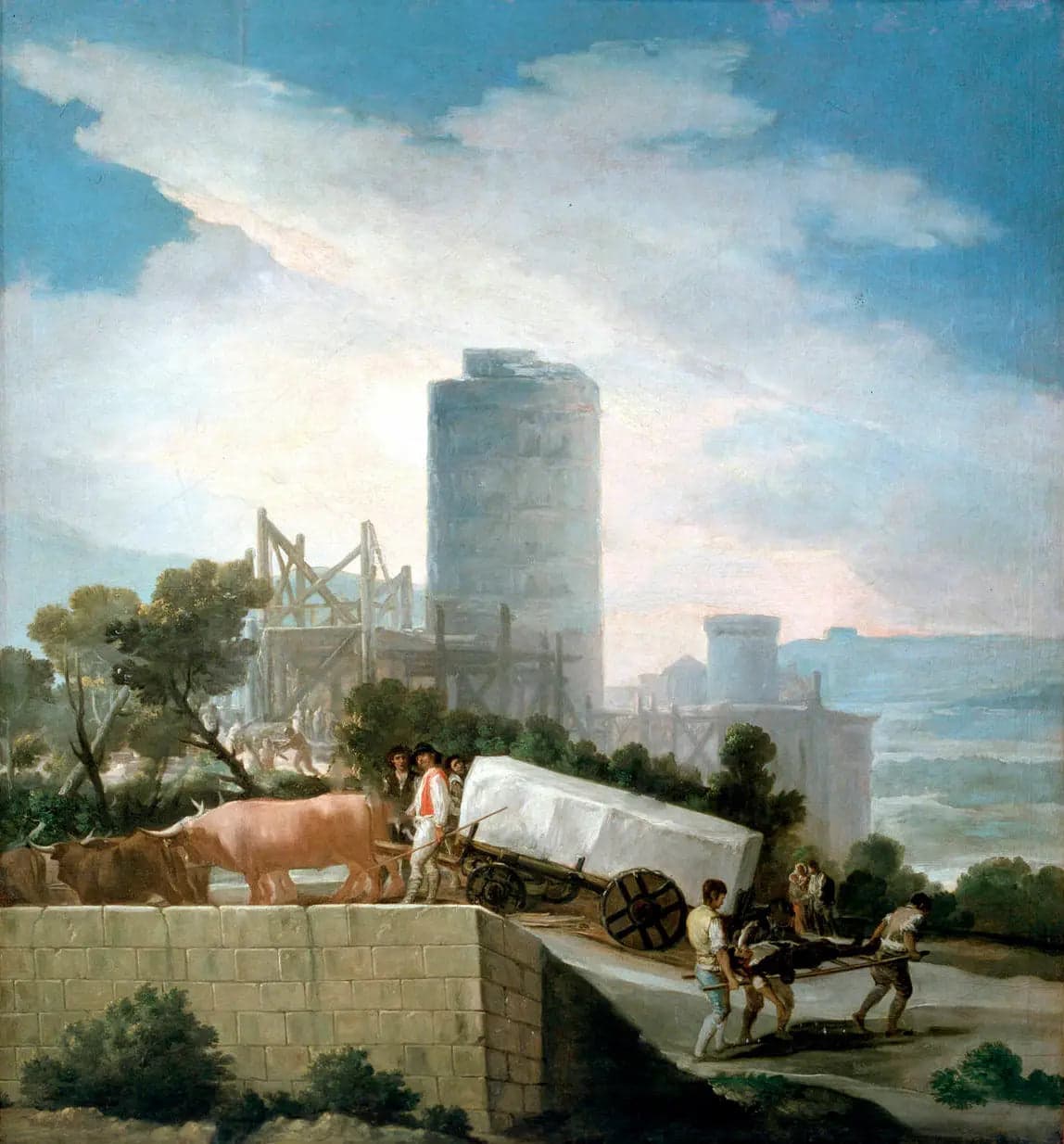
The Ploughing of a Field
- Original dimensions
- 169 x 127 cm
- Museum
- Not specified
- Year
- 1786
Scene depicted
In The Plowing of a Field , Goya invites us to enter the Spanish rural universe. The canvas presents farmers plowing the land under a bright sky, emblematic of renaissance and hope. This carefully balanced composition depicts the beauty and simplicity of rural life, highlighting the deep connection between man and the soil he cultivates.
Historical context
Created in 1786, The Plowing of a Field is a major work by the Spanish painter Francisco de Goya . This painting is emblematic of the romanticism that emerged during this period, illustrating social tensions and the essence of the land in daily life. In a historical context marked by political changes, where Spain evolves between tradition and modernity, this painting is a mirror of the struggles and aspirations of the people. Although the painting is currently not specified in a museum, its dimensions of 169 x 127 cm captivate and invite wonder.
Place in the artist's career
This painting represents a significant milestone in Goya's career, marking his evolution towards a more realistic and humanistic approach. At this stage, he distinguishes himself from his earlier works such as The Maja , while foreshadowing darker creations, like The Disasters of War , revealing the rise of the tragic and human depth in his art.
Anecdote
“A painting is not just an image, it is a hidden voice that whispers the story behind the colors.” This quote encapsulates the essence of the masterpiece that Goya created one summer morning, while observing peasants plowing the soil, their faces radiant to the rhythm of nature. Each brushstroke on the canvas evokes the harmony between man and his environment, capturing the quintessence of the scene of the painting .