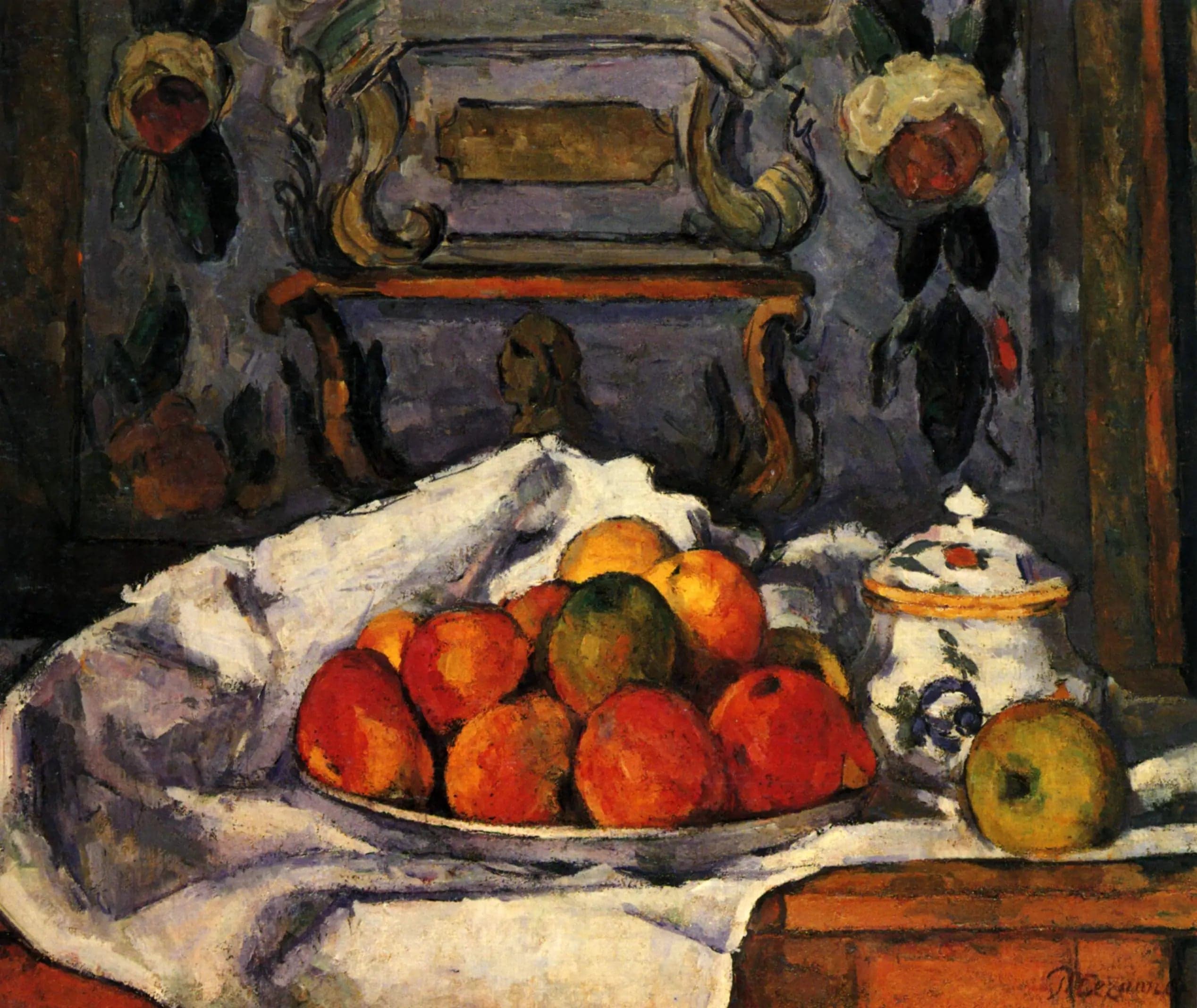
The Plate of Apples
- Original dimensions
- 55.2 x 46 cm
- Museum
- Metropolitan Museum of Art
- Year
- 1876
Scene depicted
The scene captures an exquisite arrangement of apples, gracefully placed on a table, revealing the harmony of colors and shapes that characterize Cézanne's universe. Each fruit is an invitation to contemplation, a celebration of the simple pleasures of life. The intimacy of the composition creates a dialogue between the observer and the material, elevating this painting to the rank of an essential pictorial work.
Historical context
Created in 1876, this iconic painting by Paul Cézanne has its roots in Aix-en-Provence, a city in the south of France rich in artistic influences. Immersed in the Impressionist movement, Cézanne radicalizes the conventions of his time, foreshadowing the modern styles to come. Today, this masterpiece remains preserved at the Metropolitan Museum of Art in New York, where it continues to inspire and move.
Place in the artist's career
The Plate of Apples is situated at a turning point in Cézanne's career. It embodies his quest for a more essential and structural representation of objects. Alongside other works like The Montagne Sainte-Victoire and The Card Players , this painting reveals his stylistic evolution towards formal simplification and a bold exploration of color and light.
Anecdote
“I want to become an apple, to feel enveloped by its sweet fragrance, to see the light caress its smooth skin.” These words may have been spoken by the great painter on a sunny morning as he contemplated his garden, an inexhaustible source of creativity. This moment of revelation gave birth to The Plate of Apples , a work filled with emotions and pictorial intentions.