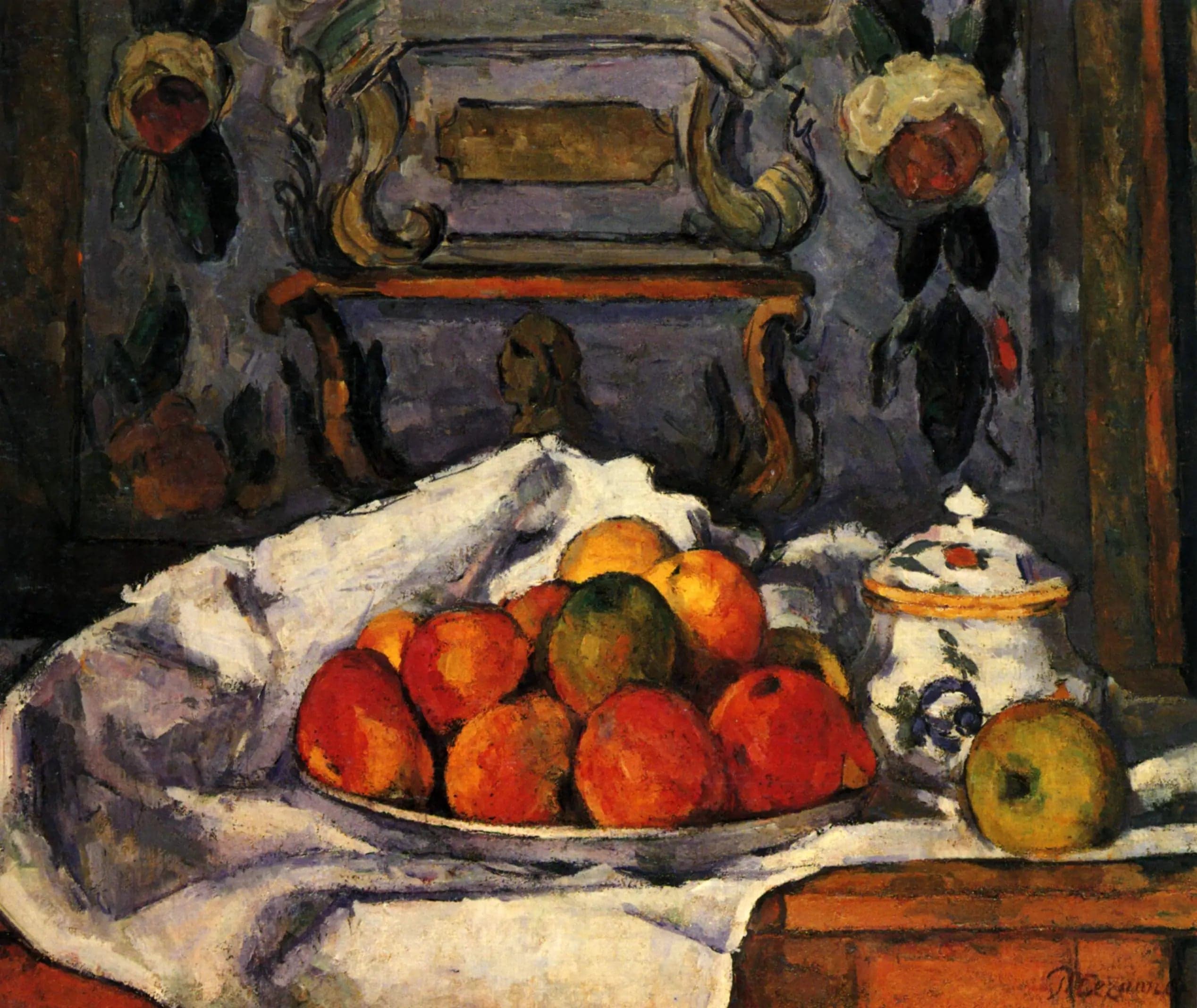
The Plate of Apples
- Original dimensions
- 54.7 x 45.8 cm
- Museum
- Art Institute of Chicago
- Year
- 1877
Scene depicted
The Plate of Apples depicts an elegant composition of apples beautifully arranged on a white plate. The presence of the fruits, an essential element of daily life, evokes a symbolic intensity. The way each apple is rendered seems to vibrate with life and awakens an invitation to explore the subtle rhythm of nature. Each brushstroke echoes a broader reality, where the ordinary takes precedence over the exceptional.
Historical context
Created in 1877, this painting embodies its roots in Aix-en-Provence, at the heart of French Provence. This period, marked by the emergence of post-impressionism , allows Cézanne to explore innovative compositions and bold perspectives. The canvas , which currently resides at the Art Institute of Chicago , captures the very essence of still life, a genre that experiences a resurgence during this time.
Place in the artist's career
This masterpiece is situated at a pivotal stage in Cézanne's career, where he redefines pictorial conventions. Alongside The Other Plate of Apples and Still Life with Melons, The Plate of Apples honors simple elements by transcending their triviality. It embodies the maturity of the artist, reflecting his commitment to capturing the underlying structure of nature.
Anecdote
“I want to achieve harmony in my painting , as nature has done itself, through simplicity.” One sunny morning in Provence, Cézanne finds himself facing a plate of apples, the light caressing their shiny skin. This fleeting and precious vision becomes the trigger for the famous pictorial work that captures the moment and the emotion.