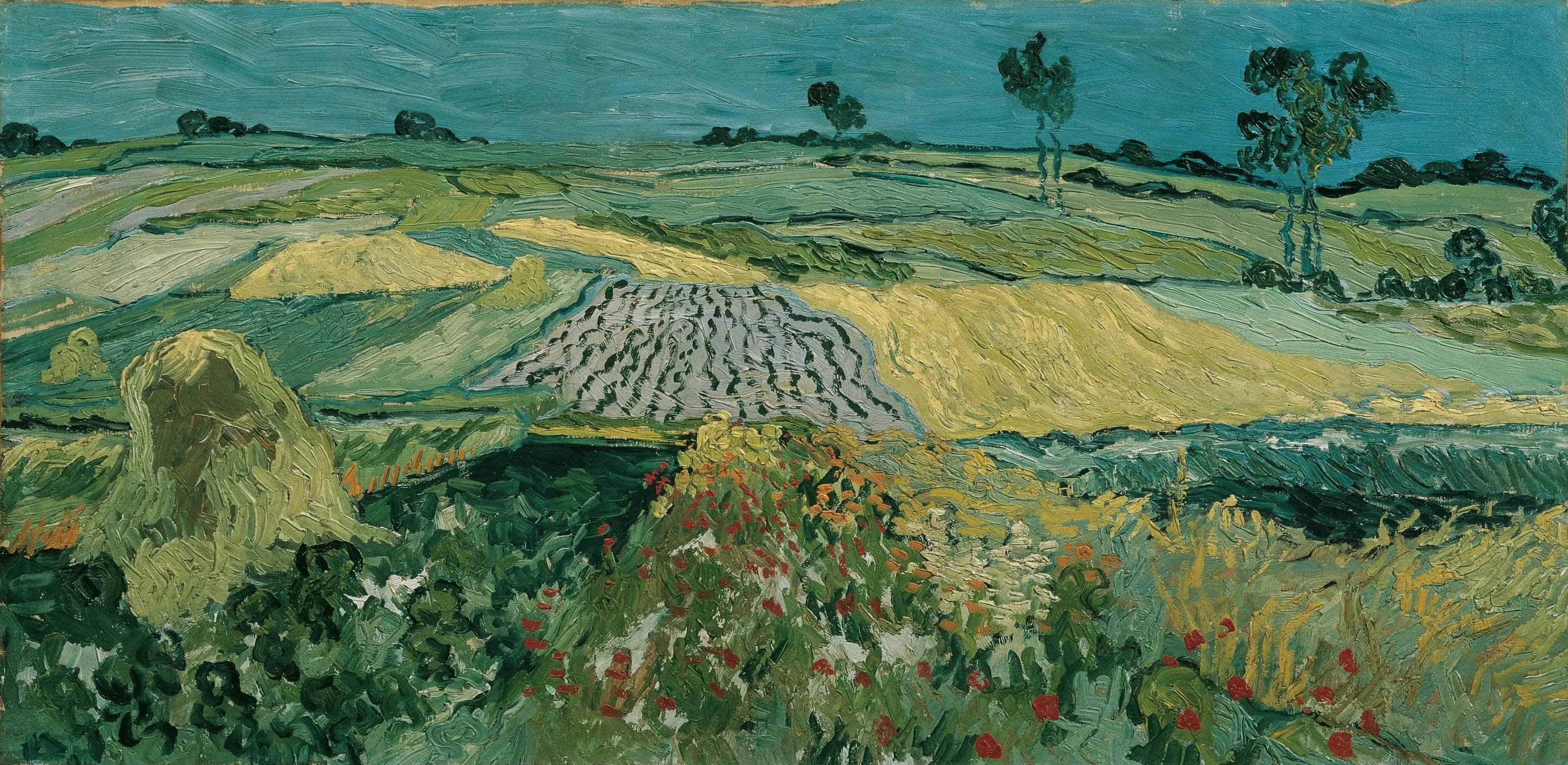
The Plain of Auvers
- Original dimensions
- 101 x 50 cm
- Museum
- Österreichische Galerie Belvedere
- Year
- 1890
Scene depicted
The Plain of Auvers represents a breathtaking panorama: golden fields, lush hills, and an incandescent sky blend into a composition that is harmonious. The canvas illustrates the serenity of a landscape in perpetual evolution, each element bathed in a light that seems animated by its own intelligence. Vincent captures here the very essence of nature's rugged beauty, a painting that invites the viewer to immerse themselves in the tranquility of a moment suspended in time.
Historical context
Created in 1890, this canvas is emblematic of the post-impressionist movement, an artistic current that revolutionized the way of seeing and representing reality. Located in the picturesque commune of Auvers-sur-Oise , this painting was created during the last months of the tumultuous life of Vincent van Gogh , a period marked by palpable emotional intensity. Today, the painting is preserved at the Österreichische Galerie Belvedere , a prestigious setting that pays tribute to it.
Place in the artist's career
The Plain of Auvers represents a milestone in Van Gogh's career, illustrating his growing mastery of color and light. At this stage of his life, he is already at a crossroads, between his promising beginnings and his rise as an undisputed master. Two other significant paintings , such as The Starry Night and The Sunflowers , allow us to observe the stylistic and emotional evolution of the artist, each leaving its unique mark on the art world.
Anecdote
“Nature is a book that I read every day.” These words of Vincent resonate as he walks through the plain of Auvers one spring morning. The soft light of dawn caresses the landscape , and the vibrant colors begin to materialize under his brush. This moment of intimate communion with the beauty of nature infused his work with an unparalleled evocative power, bringing the painting to life through each brushstroke.