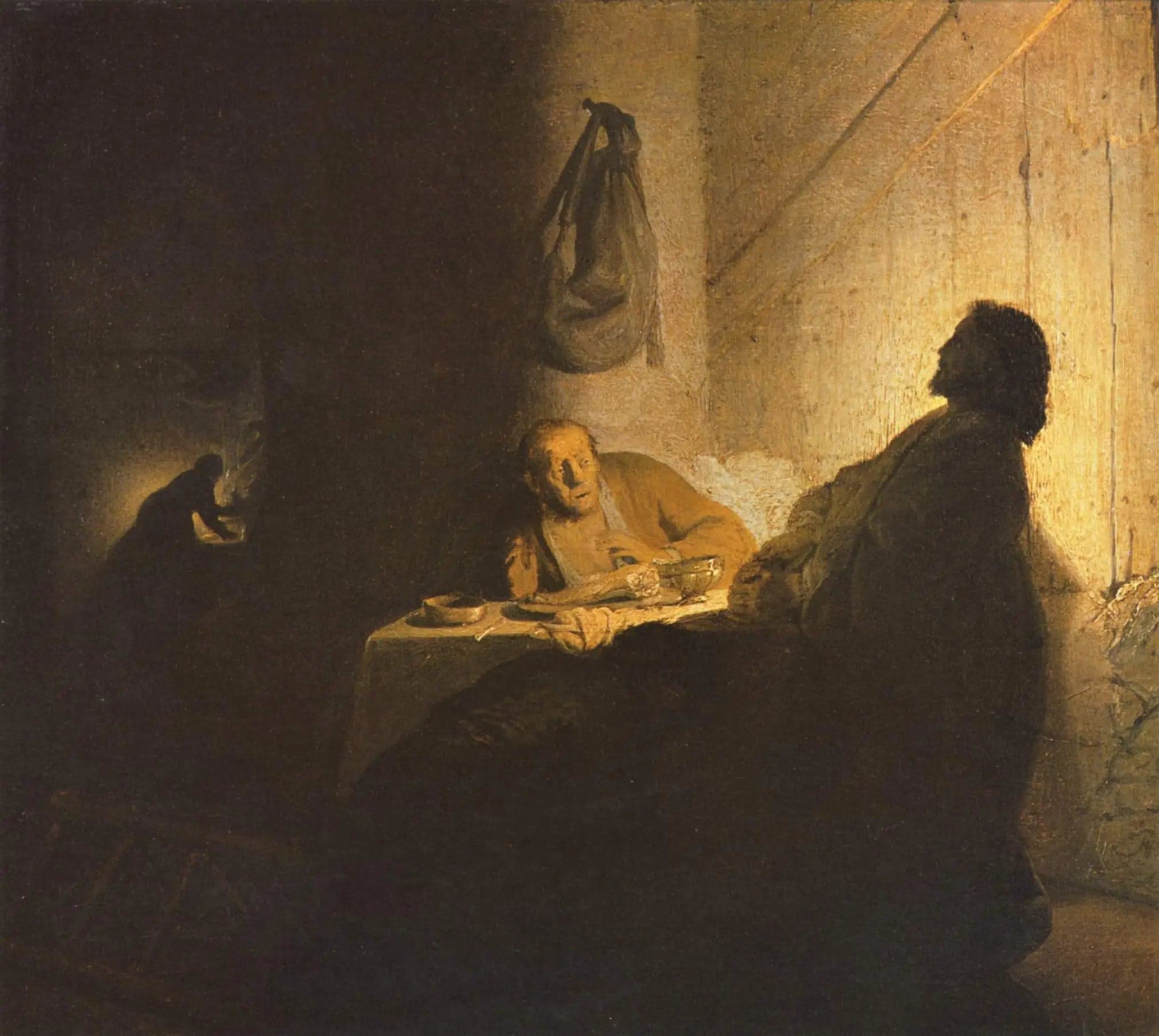
The Pilgrims of Emmaus
- Original dimensions
- 64 x 50 cm
- Museum
- reserves of the Louvre Museum
- Year
- 1661
Scene depicted
In this painting , Rembrandt illustrates the encounter of the disciples with the risen Christ in a painting imbued with mystery and revelation. The pilgrims, after a long journey, feel the joy and surprise of recognizing the one who was their master, enveloped in a divine light that accentuates their astonishment. This scene becomes a true symbol of revelation and human communion.
Historical context
Created in 1661, the painting "The Pilgrims of Emmaus" by Rembrandt is undeniably situated in the context of the Dutch golden age, a rich and flourishing artistic movement. At that time, Amsterdam is the nerve center of creativity. The painting is currently in the reserves of the Louvre Museum in Paris, testifying to its artistic heritage and importance in the history of art.
Place in the artist's career
The Pilgrims of Emmaus represents a turning point in Rembrandt's career, marking a period of deep introspection and technical mastery. Alongside this canvas , "The Night Watch" and "The Anatomy Lesson of Dr. Tulp" testify to the evolution of his style, combining realism and psychological depth.
Anecdote
"Light, this sweet redemption, is everything." This quote from Rembrandt evokes a clear morning when, inspired by the play of light on the faces of the pilgrims, he created his masterpiece . This moment of genius transcends the canvas , capturing a spiritual encounter at the heart of everyday life.