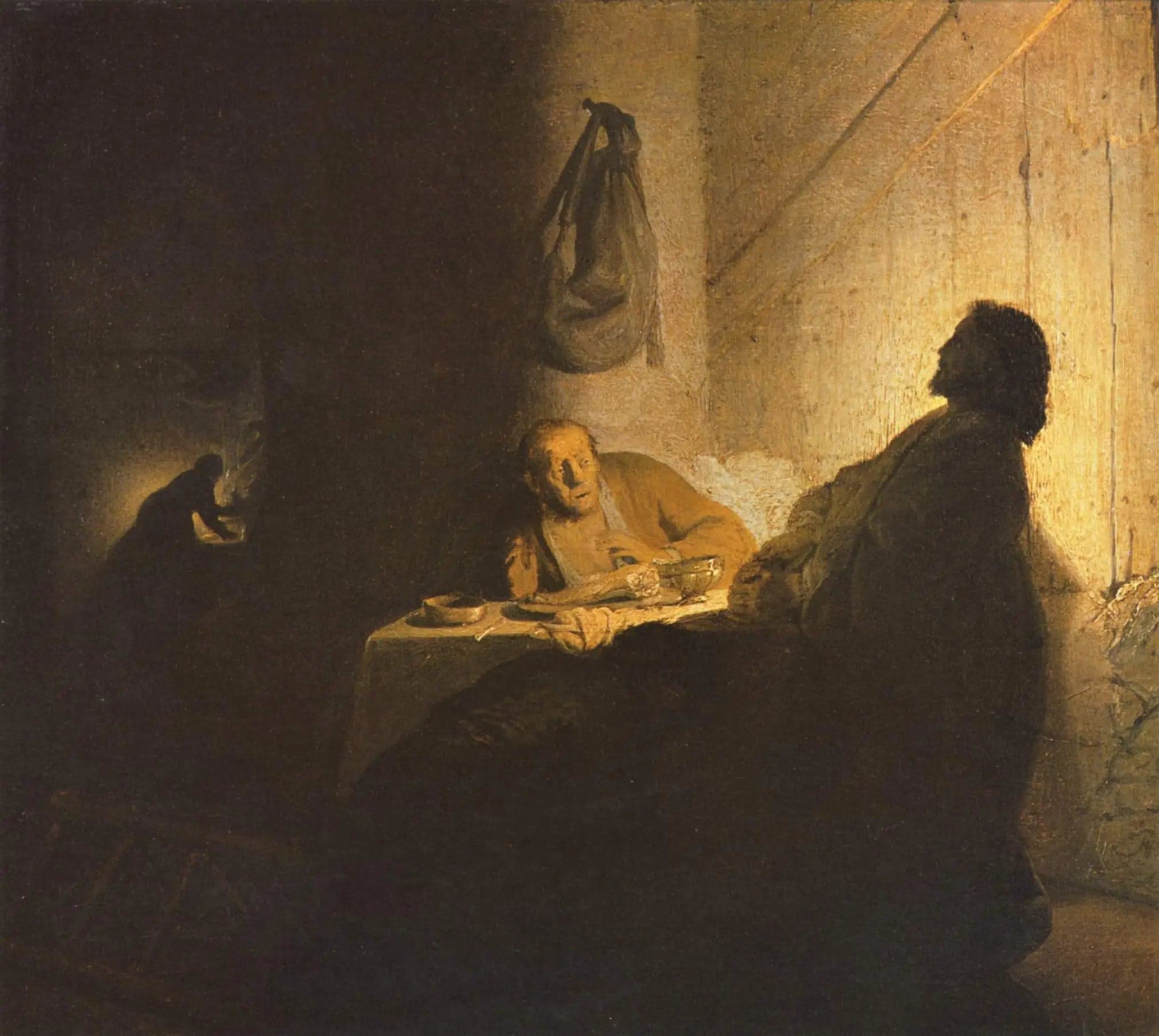
The Pilgrims of Emmaus
- Original dimensions
- 42 x 39 cm
- Movement
- Baroque
- Museum
- Jacquemart-André Museum
- Year
- 1628
Scene depicted
This painting depicts the eponymous episode from the Scriptures, where two disciples, after the resurrection of Christ, meet a mysterious traveler. When their eyes meet, the divine identity is revealed, marking a spiritual turning point. Both intimate and universal, the scene invites viewers to grasp the essence of faith and discovery. This masterpiece by Rembrandt captures this fleeting emotion with unparalleled depth.
Historical context
Work : The Pilgrims of Emmaus |BRK| Artist : Rembrandt |BRK| Year : 1628 |BRK| Museum : Jacquemart-André Museum |BRK| Dimensions : 42 x 39 cm |BRK| Artistic movement : Baroque |BRK|
Place in the artist's career
Located at a pivotal point in Rembrandt ’s career, The Pilgrims of Emmaus symbolizes his relentless pursuit of light and shadow, bridging his early period and artistic maturity. Compared to The Night Watch and The Return of the Prodigal Son , this painting reveals greater technical refinement and emotional depth, making this artistic work a milestone in his artistic trajectory.
Anecdote
Rembrandt , reflecting his creative genius, is said to have once remarked: “The true light of the world resides in our deepest encounters.” This moment of contemplation, reminiscent of a peaceful morning, is palpable in the painting where every gaze and gesture tell a story of authentic exchange rich in nuances. At that moment, he captured the glow of rediscovered spirituality, celebrated in The Pilgrims of Emmaus .