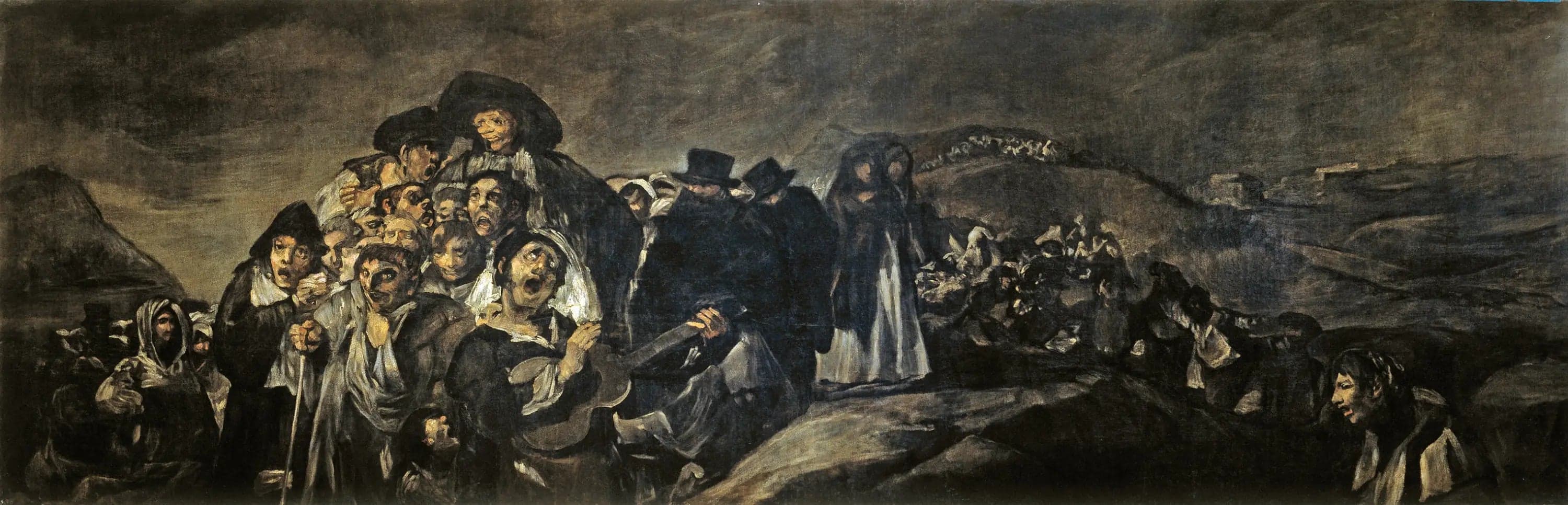
The Pilgrimage to the Hermitage of San Isidro
- Original dimensions
- 436 x 138.5 cm
- Movement
- Romanticism
- Museum
- Prado Museum
- Year
- 1819
Scene depicted
In this pictorial work , Goya captures a vibrant procession of pilgrims heading towards the hermitage of San Isidro. The figures, imbued with devotion, blend with a lush nature, creating a palpable connection between man and the divine. Here, each character tells a story, each gesture evokes a tradition deeply rooted in the heart of the Spanish people.
Historical context
This painting , created in 1819 and integrated into the romantic movement, is set in a rich cultural context of Spain, particularly in Madrid. It is currently housed in the Prado Museum, a place where history and the magnificence of art meet. The canvas stands out with its impressive dimensions, offering a dive into Goya's vibrant universe.
Place in the artist's career
This canvas represents a significant milestone in Goya's career, a moment where he combines raw emotion with refined artistic execution. In parallel, works such as The Naked Maja and The Executions of May 3 reveal the evolution of his technique, oscillating between realism and expressionism . With each work, Goya unveils layers of humanity and poignant truths.
Anecdote
Goya once declared: "Nature is my eternal muse." That morning, as he observed the pilgrims on their way to the hermitage, a golden light shimmered on the path, creating an atmosphere of hope and devotion. It is this fleeting beauty that breathed life into his masterpiece , making it as timeless as it is touching.