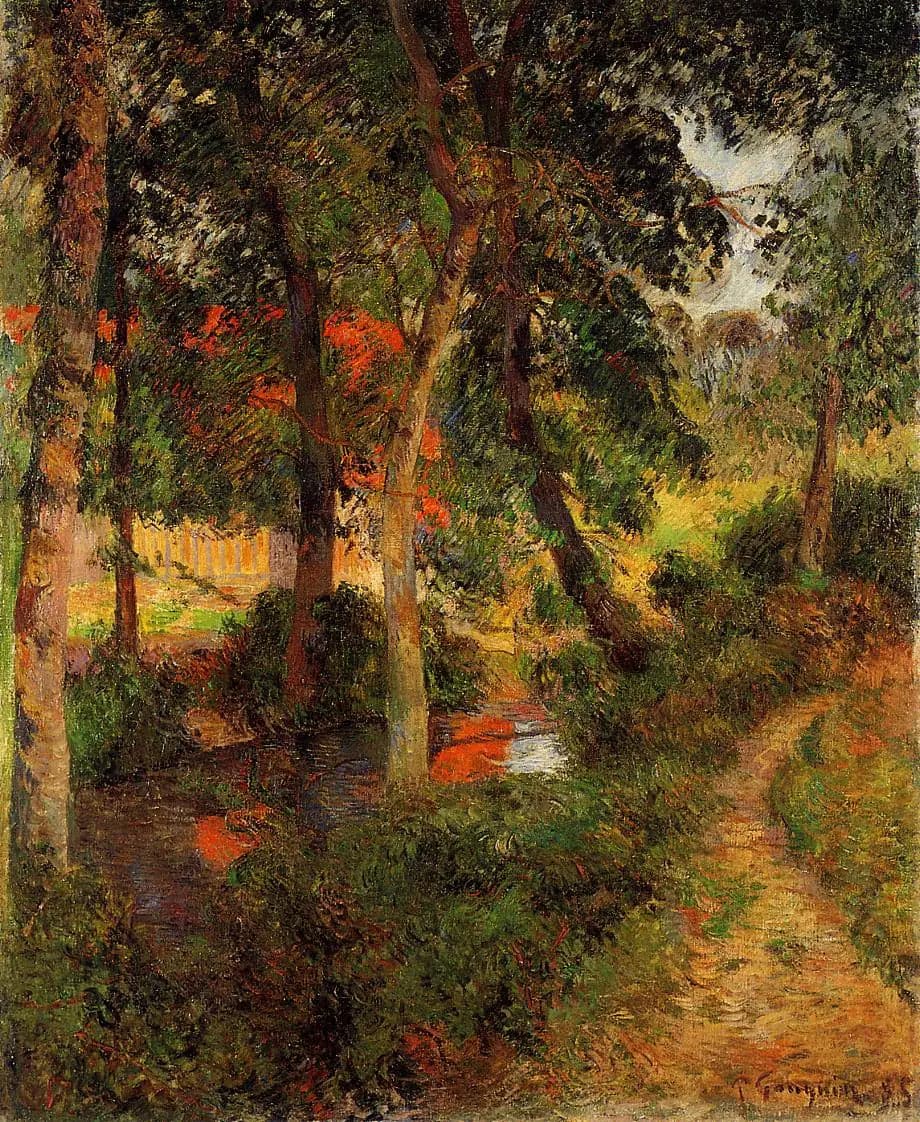
The Path of Father Jean
- Original dimensions
- 65 x 81 cm
- Museum
- Mohamed Mamoud Khalil Museum
- Year
- 1885
Scene depicted
The peaceful scene of the canvas depicts a shaded path leading to a house from another time, inviting introspection. The stylized shapes of the trees, the warm colors, and the soft light create a contemplative atmosphere, awakening in the observer a gentle melancholy. Each detail tells a story of connection between man and nature, echoing the existentialists of his time.
Historical context
Created in 1885, this remarkable painting , located at the time in Pont-Aven, Brittany, is part of the post-impressionist movement that revolutionized artistic codes. During this period, Gauguin, in search of a free and vibrant expression, transcends reality with his canvas . Today, this painting is part of the precious collections of the Mohamed Mamoud Khalil Museum, testifying to the brilliance of his artistic heritage.
Place in the artist's career
The Path of Father Jean represents a crucial step in Gauguin's career, marking his departure from conventional paths for a bolder exploration of color and form. In parallel with The Starry Night by Van Gogh and The Good Samaritan , this work illustrates his remarkable stylistic evolution and his aesthetic quest for greater symbolism .
Anecdote
“I seek to capture the soul of things,” Gauguin said about his art. Inspired by a misty morning, as he wandered along the alleys of Pont-Aven, he encountered a tranquil man with deep eyes. This fleeting moment became the vibrant heart of his painting , instilling the emotional strength of The Path of Father Jean .