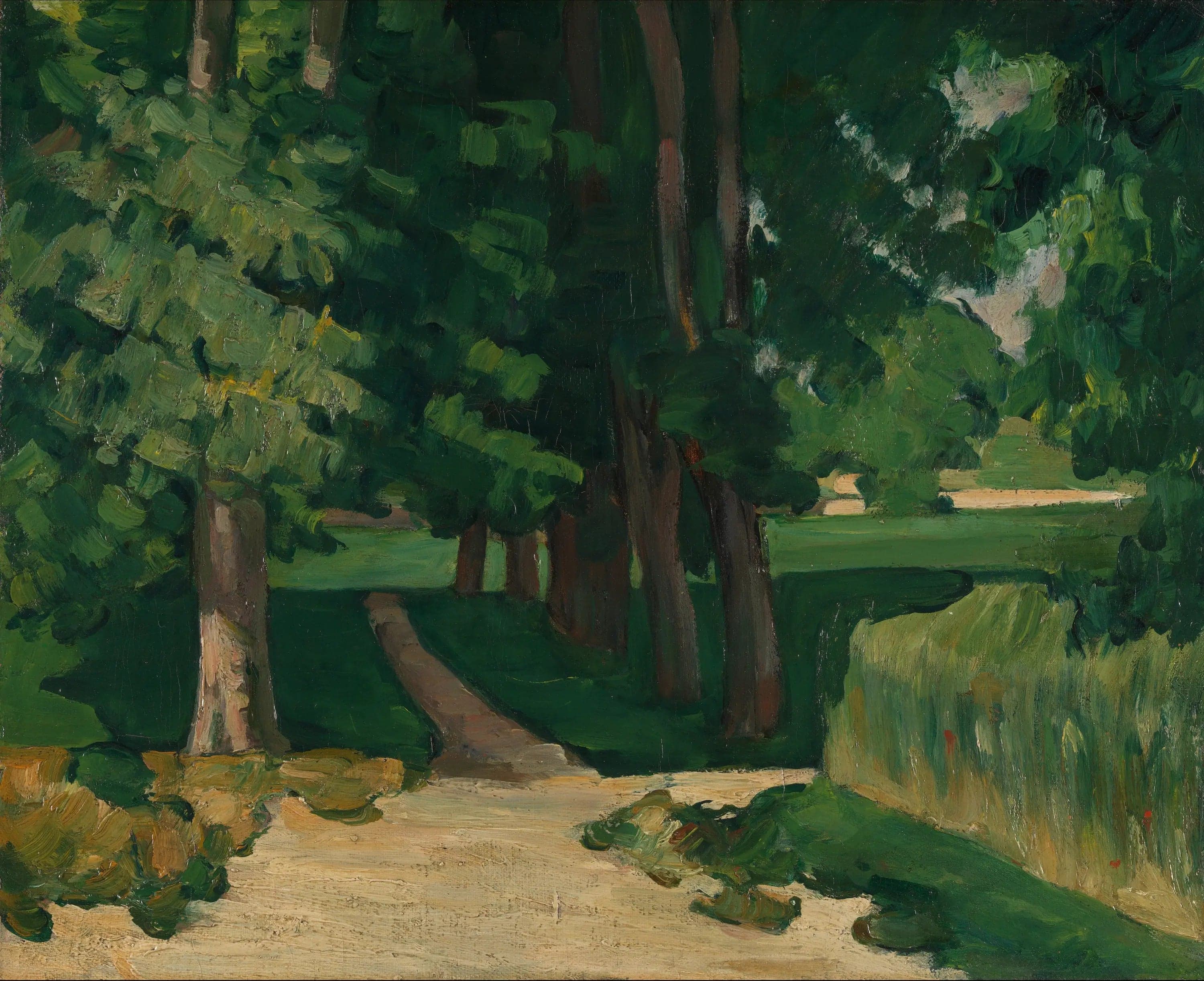
The Path at Jas de Bouffan
- Original dimensions
- 38.1 x 46 cm
- Museum
- National Gallery
- Year
- 1869
Scene depicted
The painting reveals a path lined with majestic trees, where blurred silhouettes emerge, their outlines surrounded by a mystical atmosphere. The painting illustrates a moment of tranquility, both visual and emotional, where nature reveals itself in all its splendor, accentuated by Cézanne's mastery.
Historical context
Created in 1869 in Aix-en-Provence, this painting is emblematic of the post-impressionist movement. A time of transformation for the French artistic landscape, this painting reflects the eternal beauty of southern France, imbued with the golden light and vibrant shadows of that era. Currently, it resides within the prestigious collections of the National Gallery in London.
Place in the artist's career
The Path at Jas de Bouffan marks a pivotal moment in Cézanne's career, showcasing his innovative approach. Alongside other paintings like The House of the Guard and The Large Bathers, the composition from Aix-en-Provence highlights the evolution of his technique, sculpting a passage towards modernity.
Anecdote
“Nature does not allow itself to be tamed for a single moment,” Cézanne once said, reminiscing about those sunny mornings spent observing The Path at Jas de Bouffan. Experiencing this sublime moment in the golden dawn, where every shade of color in the canvas seems to vibrate to the slow and steady rhythm of nocturnal life, is fully captured in this masterpiece .