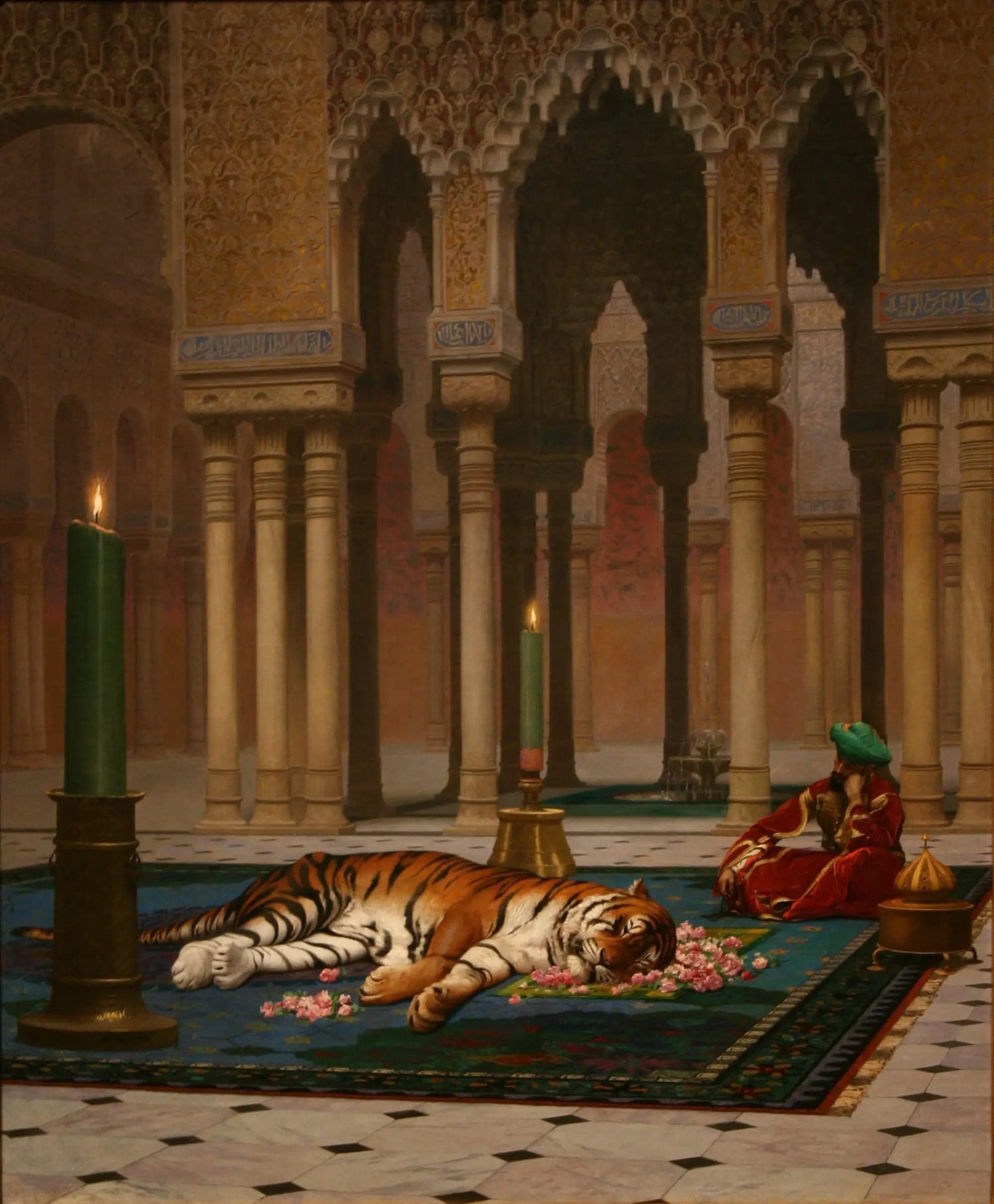
The Pain of the Pasha - Jean
- Original dimensions
- 73.5 x 92.5 cm
- Movement
- Orientalism
- Museum
- Joslyn Art Museum
- Year
- 1885
Scene depicted
This canvas highlights a visibly tormented pasha. His face expresses silent pain, an inner struggle that echoes in his rich and colorful surroundings. The meticulous details of the scene vibrate with the textures of his sumptuous clothing. This painting captures the essence of the human soul, prompting reflection on the juxtaposition between power and vulnerability.
Historical context
Created in 1885, this painting unfolds in the vibrant context of Orientalism, an artistic movement that fascinates European artists with its exotic landscapes and colorful scenes of life. The canvas is now displayed at the Joslyn Art Museum , offering a sensory journey to visitors. With its imposing dimensions, this pictorial work cannot go unnoticed, inviting everyone to explore a world of emotions and traditions.
Place in the artist's career
Positioning The Pain of the Pasha as a stylistic peak in Gérôme's career, this painting testifies to his technical mastery and commitment to Orientalism. In parallel with other works like The Return from the Hunt and The Gladiators , a marked evolution in his exploration of human emotions can be perceived.
Anecdote
Jean-Léon Gérôme once declared: "Beauty lies in the emotion captured by the viewer's gaze." This quote resonates deeply with the genesis of The Pain of the Pasha , painted on a sunny morning in an alley in Istanbul, where every shadow and light mingled with distant whispers, inspiring him to create this poignant composition that evokes an inner drama.