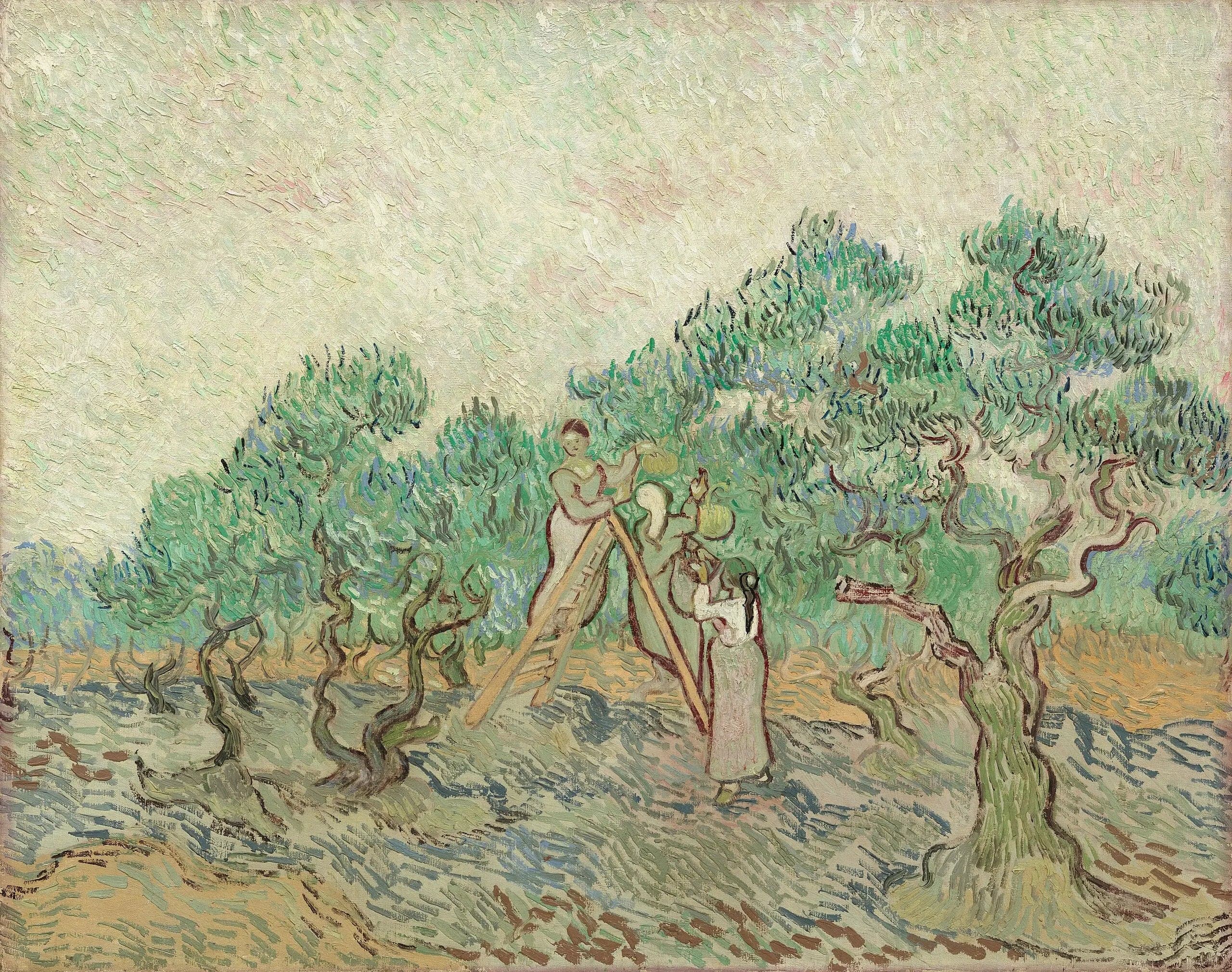
The Olive Harvest
Scene depicted
In this iconic painting, Van Gogh captures a scene of agricultural work in the heart of the olive trees, where human figures gently bend to harvest fruits from a generous nature. The gestures of the harvesters evoke the harmony between man and his environment, a recurring theme throughout his work. The atmosphere of this moment is palpable, as if one could hear the rustling of the leaves and smell the characteristic scent of olives.
Historical context
Created in 1889 in Saint-Rémy-de-Provence , this painting is part of the post-impressionist movement, characterized by chromatic expressionism and strong subjectivity. The canvas is currently displayed at the National Gallery of Art , offering visitors the opportunity to immerse themselves in the unique universe of Vincent van Gogh . Its dimensions, 92 x 73 cm, testify to the imposing presence and emotional intensity of the painting .
Place in the artist's career
This painting is part of a pivotal period in Van Gogh's career, as he matures his style, blending raw emotion and bold technique. Alongside works such as The Starry Night and The Sunflowers , The Olive Harvest reveals his constant quest for color and expression. Each of these canvases marks an evolution towards an emblem of modern art.
Anecdote
“I always seek the light through art, for it was my muse,” Van Gogh might have said while recalling that morning when he was inspired by the soft light of Provence and the rustle of the wind in the olive trees. This moment of fullness is found in the evocative power of The Olive Harvest , a pictorial work that is both intimate and collective.