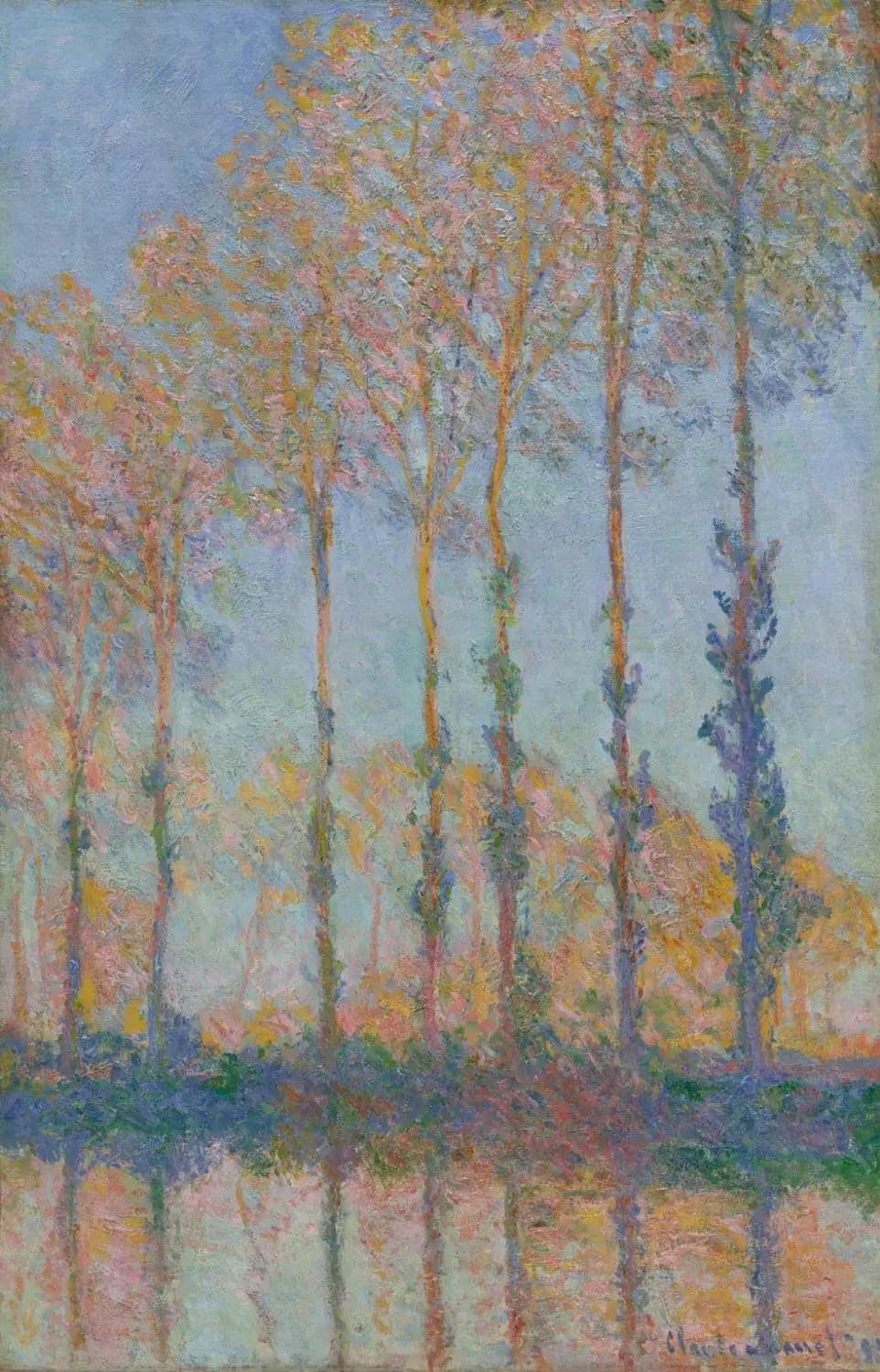
The octopuses on the bank of the Epte
- Original dimensions
- 65.2 x 100.3 cm
- Museum
- Philadelphia Museum of Art
- Year
- 1891
Scene depicted
In this pictorial work, Monet transports us to the bank of the Épte, where the octopuses reveal themselves delicately. The painting is a celebration of marine life, with meticulous attention paid to the smallest details. The viewer is invited to immerse themselves in a world where the sea meets the land, where each brushstroke evokes the swaying of the waves and the whisper of the wind.
Historical context
Year: 1891 |BRK| Museum: Philadelphia Museum of Art |BRK| Dimensions: 65.2 x 100.3 cm
Place in the artist's career
This painting stems from a period of maturity in Monet's career. While other works like “ Impression, Sunrise ” and “ Water Lilies ” illustrate his recurring themes of light and water, “The Octopuses on the Bank of the Épte” marks a turning point by integrating a marine narrative. It is a painting that transcends mere representation to unveil the raw emotions Monet felt in the face of nature.
Anecdote
“I paint what I feel, not what I see.” This quote illustrates the very essence of Monet's painting . One sunny morning, while walking along the bank of the Épte, Monet was struck by the graceful movements of the octopuses, marine figures inviting themselves into the golden light of the rising sun. This inspiration gave birth to a masterpiece of undeniable evocative power, capturing the fleeting beauty of nature.