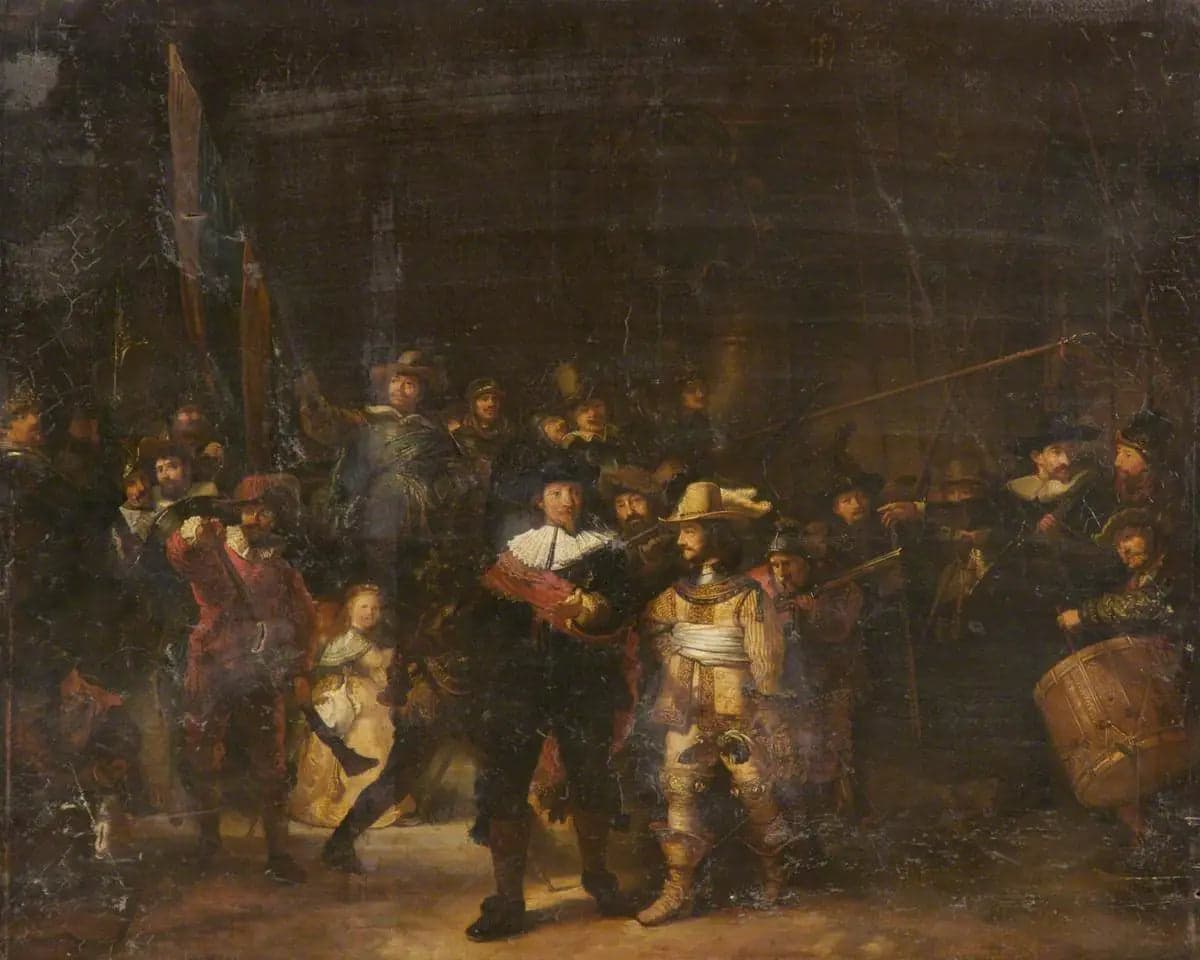
The Night Watch
- Original dimensions
- 61 x 49 cm
- Museum
- Warrington Museum and Art Gallery
Scene depicted
This canvas , far from being a simple portrait, reveals a vibrant scene of the civic militia. The characters, illuminated by a brilliant light, evoke the vitality and camaraderie of the time, while being enveloped in a mysterious atmosphere. The exchanged glances, the suspended gestures, invite interpretation of the profound story of each ontological protagonist.
Historical context
Created in 1642, in a vibrant Amsterdam of the baroque period, The Night Watch is part of the artistic movement of chiaroscuro. This iconic painting , which captivates admiration, now rests in the museum and art gallery of Warrington, where it is carefully preserved for future generations.
Place in the artist's career
The Night Watch is situated at a turning point in Rembrandt's career. It marks a stylistic peak, revealing an unmatched mastery in the use of light and shadow. In comparison, The Anatomy Lesson of Dr. Tulp shows his promising beginnings, while The Return of the Prodigal Son embodies his mature period, showcasing his technical and emotional evolution.
Anecdote
“Every light hides a shadow, every shadow, a story.” Rembrandt drew his inspiration one winter evening, while walking through the streets of Amsterdam. The magic of moonlight playing on the cobblestones, an intriguing lighting, was the starting point of this work that transcends time.