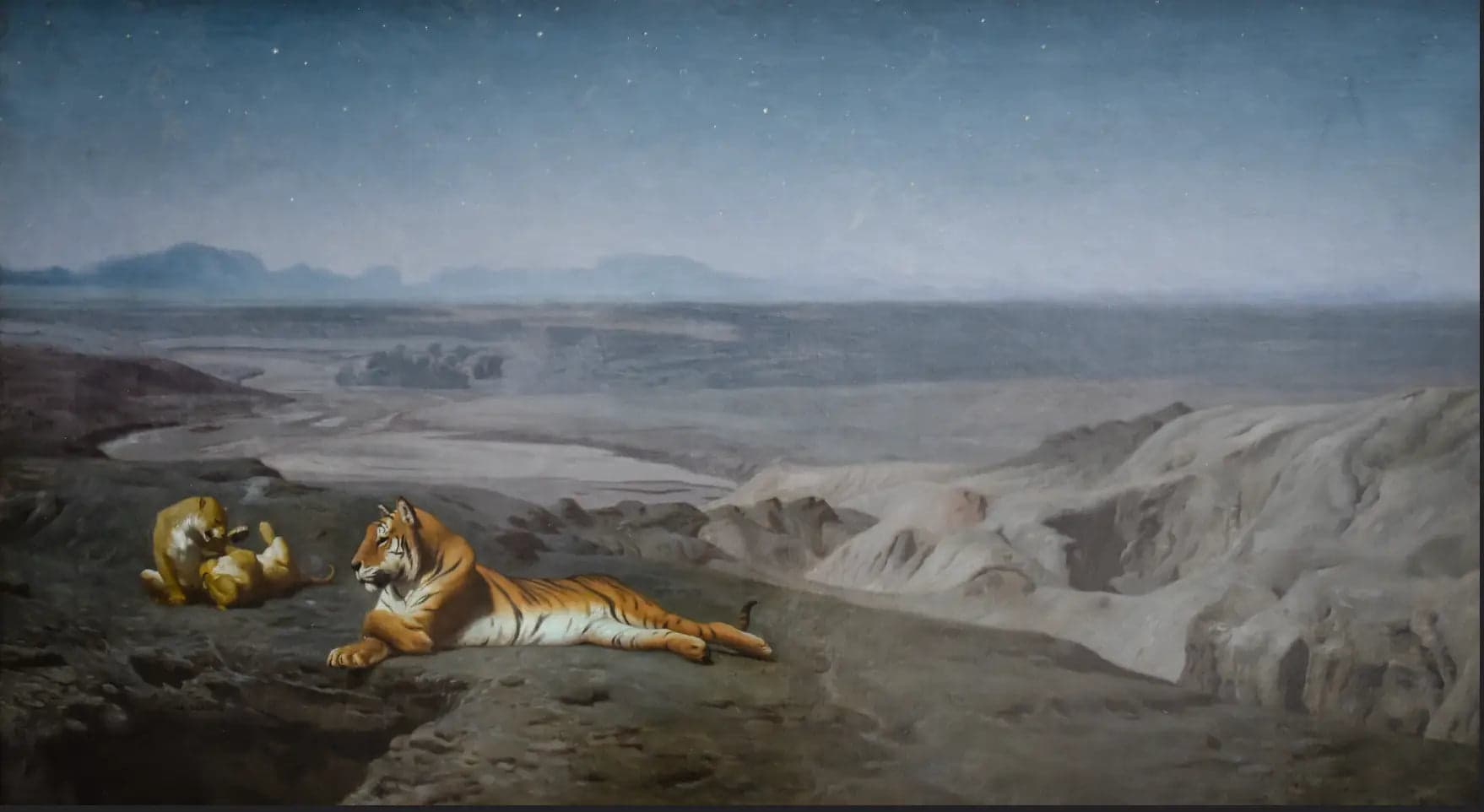
The Night in the Desert - Jean
- Original dimensions
- 100.3 x 55.9 cm
- Museum
- Carnegie Museum of Art
- Year
- 1884
Scene depicted
The majestic scene of The Night in the Desert depicts a moment of unreal calm. The vast sandy expanses, bathed in soft moonlight, seem to breathe tranquility. At the heart of this composition, the silhouette of a rider stands out against the starry sky, evoking not only a physical boundary but also an introspective reflection on wandering and questing.
Historical context
Created in 1884, within the impressive framework of the French academic movement , The Night in the Desert by Jean-Léon Gérôme stands out for its exploration of fascinating Eastern themes. This painting is the result of an era when art and Orientalism intertwined to give birth to richly detailed works. Remaining today at the Carnegie Museum of Art in Pittsburgh, this painting evokes a mysterious and palpable atmosphere, a true tribute to the richness of desert landscapes.
Place in the artist's career
This painting represents a turning point in Gérôme's career, illustrating his mastery of Orientalist realism . Previous paintings like The Oil Market and The Gladiators already testify to his virtuosity, but The Night in the Desert stands out for its pictorial boldness and emotional depth.
Anecdote
Jean-Léon Gérôme once declared: “The light of the desert is an unmatched muse, the inspirer of my most vivid dreams.” Imagine him, one gentle morning in the light of day, getting lost in the shadows of the dunes. Each brushstroke on the canvas was imbued with intense emotion, infusing strength and character into the masterpiece that is The Night in the Desert .