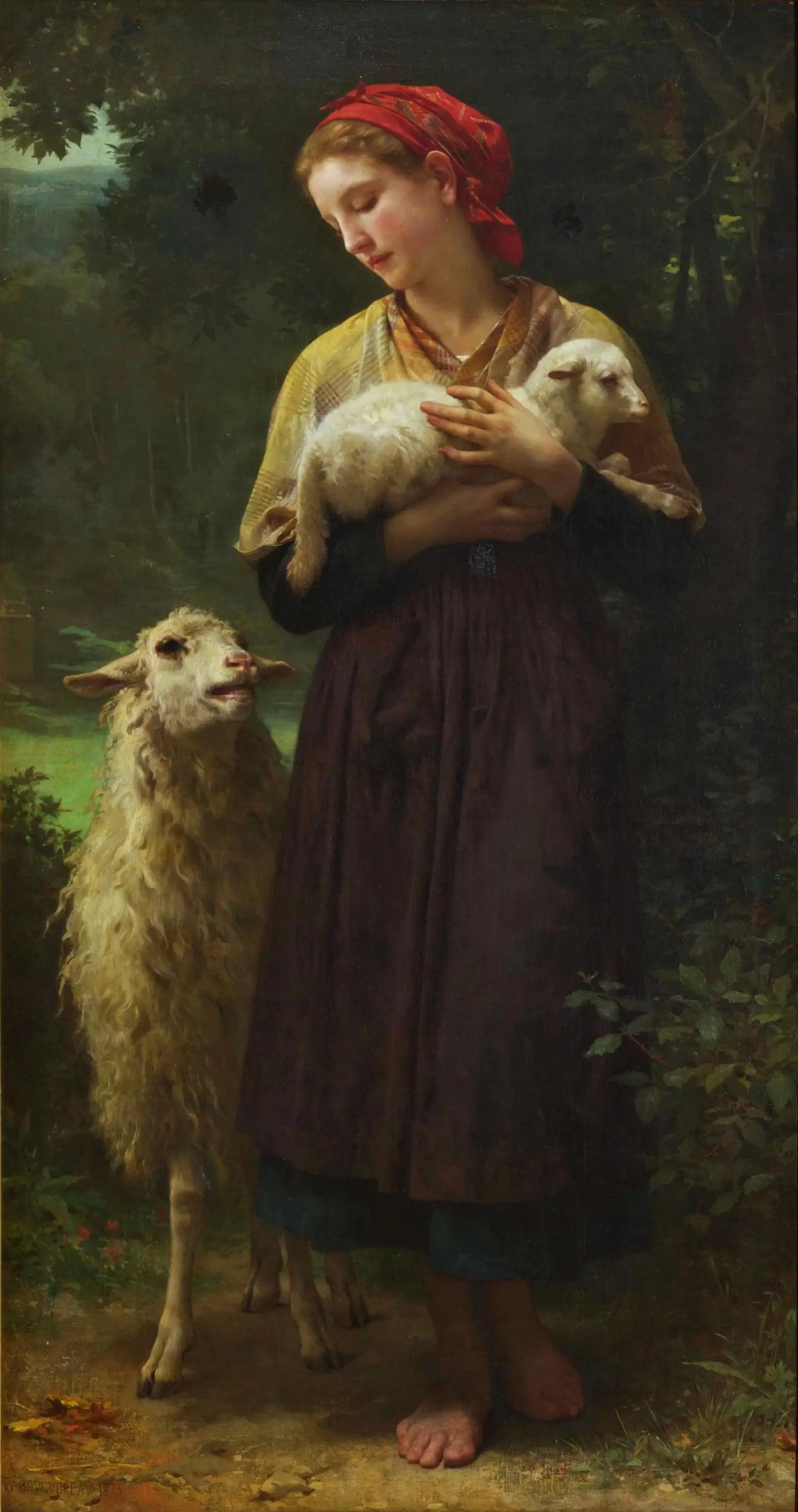
The Newborn Lamb
- Original dimensions
- 87.9 x 165.1 cm
- Museum
- Not specified
- Year
- 1873
Scene depicted
In this pictorial work, Bouguereau depicts a young child, delicately embraced in a pastoral environment. The harmonious arrangement of forms and colors creates an intimate atmosphere, where the light caresses the child's fine features while highlighting the fluffy softness of the lamb. This painting tells a universal story about innocence and the relationship between man and nature.
Historical context
Created in 1873, this majestic painting is born within 19th century France, a fertile cradle for the realistic movement. In an artistic context where the authentic representation of emotions and scenes from everyday life dominate, Bouguereau stands out for his ability to capture the innocent beauty of childhood. The current painting is not displayed in a well-known museum, but deserves a prominent place in a private collection.
Place in the artist's career
The newborn lamb represents a stylistic peak in Bouguereau's career. Shortly after his early successes, this painting embodies his refined and emotive approach. Through works like The Birth of Venus and The Child and His Dog, he explores similar themes, but this canvas stands out for its depiction of pure and unadulterated innocence.
Anecdote
“The softness of a lamb is innocence incarnate.” This quote from Bouguereau resonates strongly, evoking a spring morning at dawn, where the gentle bleating of a lamb, in the heart of awakening nature, inspired the artist. Each brushstroke on this canvas testifies to that fleeting moment, seeking to immortalize the tenderness of life.