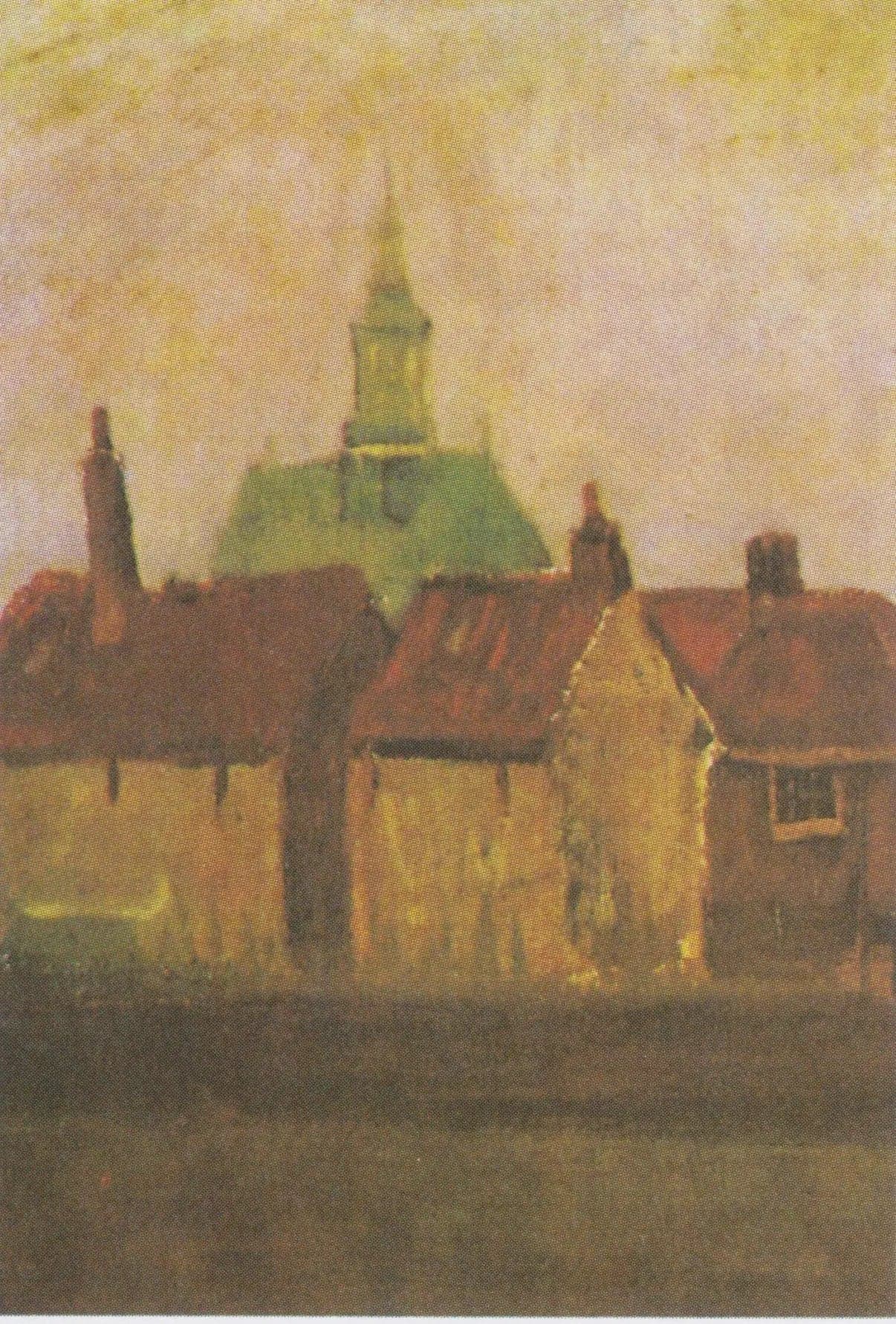
The New Church and the Old Houses of The Hague
- Original dimensions
- 25 x 34 cm
- Museum
- Not specified
- Year
- 1882
Scene depicted
The painting “The New Church and the Old Houses of The Hague” presents a striking composition where the imposing silhouette of the church contrasts with the quaint charm of the surrounding houses. A masterful balance is established, revealing not only the urban landscape but also the stories emanating from each stone, an echo of bygone eras and past lives. It is a painting that invites contemplation and makes us feel the vibrations of The Hague at the end of the 19th century.
Historical context
Created in 1882, this painting reflects the beginnings of Vincent van Gogh during his stay in The Hague, a city that, at that time, vibrant with the influences of post-impressionism , offers a conducive setting for the flourishing of his unique style. The scene, worthy of the most beautiful paintings , evokes a blend of modernity and tradition, illustrating the meeting between the new church and the old houses that line its streets. Although the painting is not preserved in a known museum, it continues to inspire and awaken the collective imagination.
Place in the artist's career
This painting is situated at a pivotal moment in Van Gogh's career. Just a few years before his departure for Paris , this canvas shows us an artist still in search of his identity. Alongside “The Arenas of Nîmes” and “ Starry Night ”, we observe in Van Gogh a gradual shift towards bolder compositions, while maintaining an impressive technical mastery of urban landscapes. It is the birth of a style that questions and reinvents the perception of the world.
Anecdote
“Beauty lies in what we find by listening to the whisper of the past.” At the dawn of a spring morning in The Hague, Vincent van Gogh was captivated by the melancholy of the old houses that rose majestically around the new church. This pictorial work , the result of delicate observation, conveys his wonder at this harmony between the old and the modern, a discipline that would characterize the rest of his artistic journey.