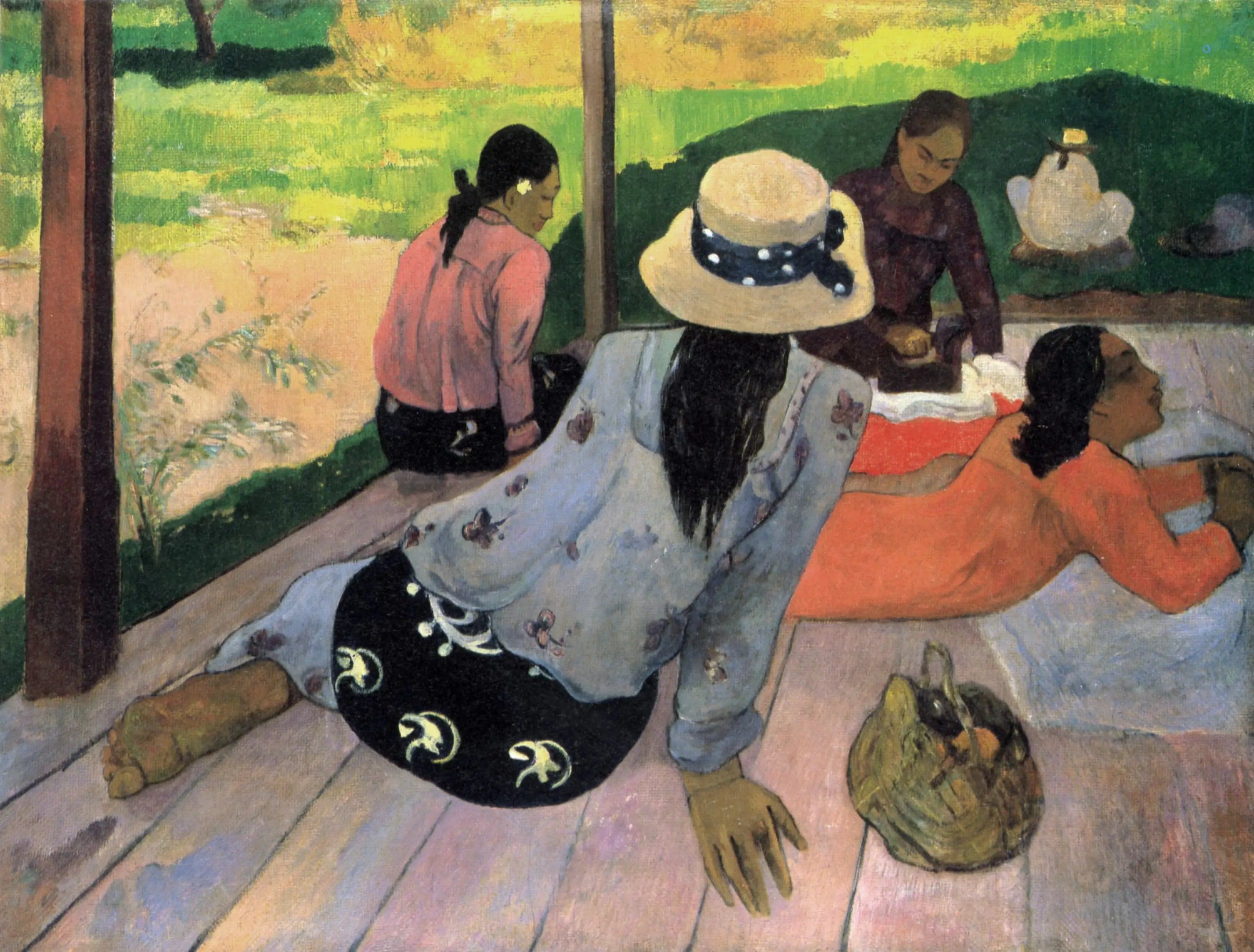
The Nap
- Original dimensions
- 116.2 x 88.9 cm
- Museum
- Metropolitan Museum of Art
- Year
- 1892
Scene depicted
In this painting , Gauguin offers us an intimate vision of peaceful naps under the blazing sun of southern France. Two young women lie down, enveloped in a soothing drowsiness, their skin blending with the warmth of the light. The composition highlights the harmony between man and nature, evoking the gentle whisper of the wind in the trees, creating an atmosphere of total serenity.
Historical context
Created in 1892, in Arles, this painting is emblematic of the post-impressionist movement, an iconic trend of the 19th century. In the heart of Provence, where light plays with colors, Paul Gauguin crafts a canvas that evokes not only the fullness of a peaceful afternoon but also a quest for spirituality through nature. Today, this majestic painting remains at the Metropolitan Museum of Art in New York, where visitors can admire its generous dimensions.
Place in the artist's career
The Nap marks a pivotal period in Gauguin's career. It is a turning point where he explores themes of rest and contemplation. This painting can be paralleled with Vision of the Woman Who is Born and Our Lady of Patience , where the artist refined his unique style and bold palette, thus forging his indelible mark in the history of art.
Anecdote
“Art is another way of living existence.” This quote from Gauguin resonates like a heartfelt cry, emanating from an artist in search of lost paradises. Imagine him in a garden in Arles, breathing in the scents of blooming flowers, seeking inspiration for this masterpiece . The evocative power of The Nap transcends time, transporting us to a world where every moment is a dance of colors.