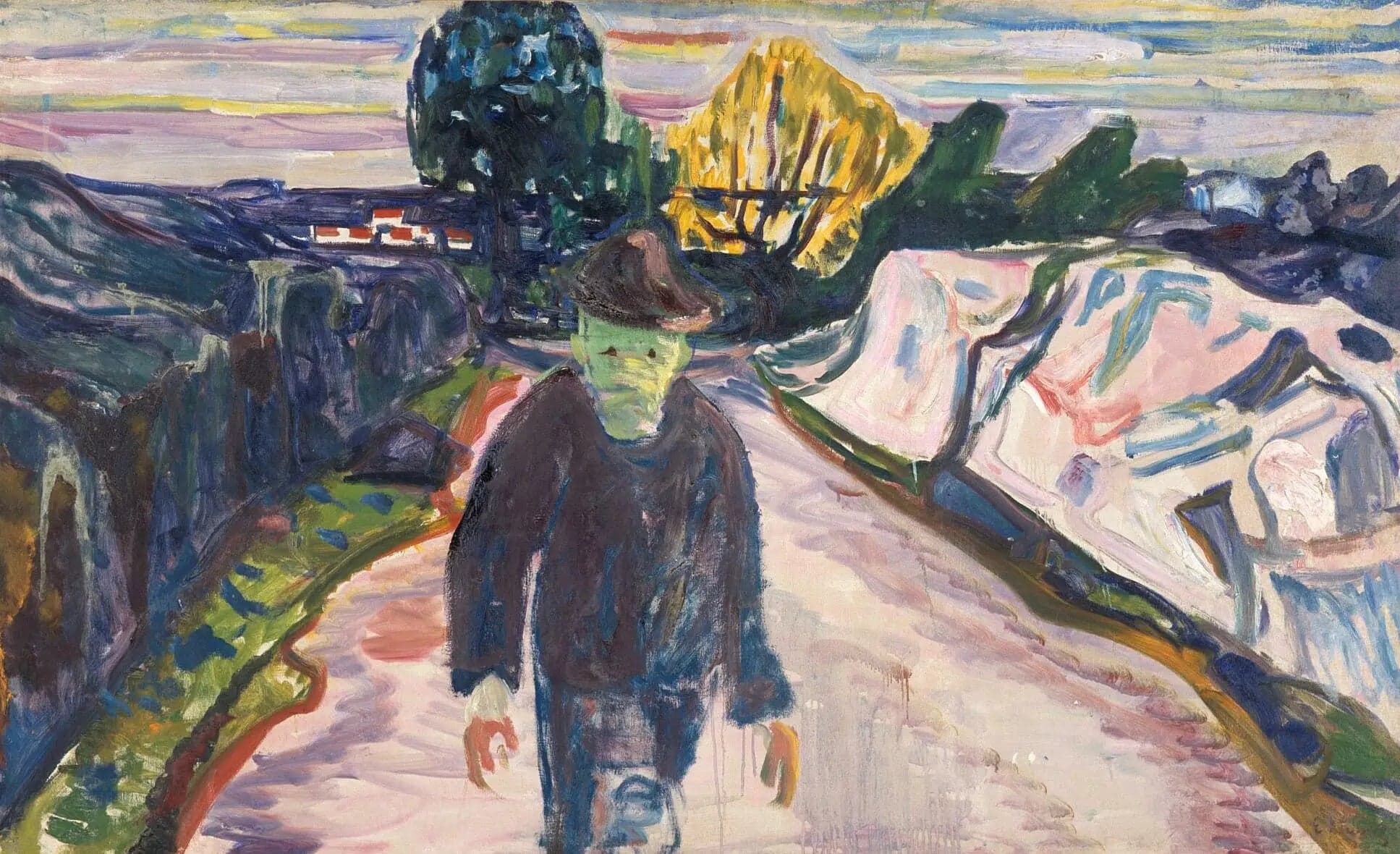
The Murderer
- Original dimensions
- 154.5 x 95.5 cm
- Museum
- Munch Museum
- Year
- 1910
Scene depicted
In The Murderer , Munch captures the inner struggle of an individual facing the consequences of their actions. The composition evokes the dramatic tension of a tragic act, where the dark color palette reflects a tormented state of mind. Each face and gesture is like a silent scream, immersing us in a narrative where human pain is palpable.
Historical context
Created in 1910, this painting emblematic finds its roots in Oslo, at the heart of an artistically vibrant Norway. The painting illustrates the expressionist movement, a current that transcends reality to let raw emotions speak. The painting is currently preserved at the Munch Museum, a place dedicated to the work of this bold artist, where one can admire this canvas in its original format.
Place in the artist's career
The Murderer stands at a crossroads in Munch's career, representing a period of maturity where he merges reality and emotion. Compared to his earlier works such as The Scream and The Madonna , this painting marks a shift towards a darker and more introspective expression of the human condition.
Anecdote
Edvard Munch once stated: "Art is the meeting between the invisible and the visible." This thought guided him when creating The Murderer , inspired by the turmoil of a dark alley one summer evening. The sight of a face bruised by past mistakes gave rise to this evocative work of art .