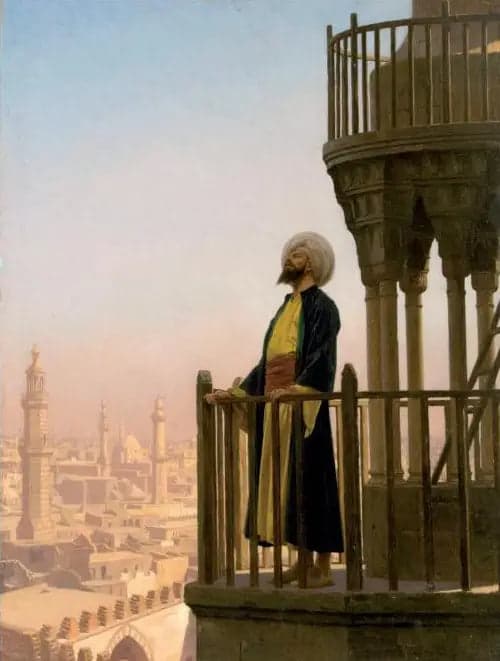
The muezzin - Jean
- Original dimensions
- 29.5 x 40.5 cm
- Museum
- Not specified
- Year
- 1865
Scene depicted
This painting , masterfully executed, illustrates the solemn moment when a muezzin is about to call the faithful to prayer. The meticulous details of his costume, the golden winter light filtering through the arches, and the contrast between shadows and light create an atmosphere that is both tranquil and spiritual, inviting the viewer to feel this sacred intimacy.
Historical context
Created in 1865, this painting is part of the academic movement , reflecting a taste for the captivating orientalism of the time. Jean-Léon Gérôme , through this work, immerses the viewer in the vibrant streets of a medieval city, where the sounds of the calls to prayer still resonate in the air. The painting is currently not located in a renowned museum, but its notoriety does not wane despite this absence of display.
Place in the artist's career
“The Muezzin” marks a key milestone in Gérôme's career, revealing his transition from academic art to a more personal and emotional expression. By paralleling it with works such as “Pollice verso” and “The Lion of Belfort,” one perceives his evolution towards bolder compositions, where light and theatricality take center stage.
Anecdote
“Every brushstroke must breathe the soul of the scene being captured,” said Gérôme, inspired one morning while wandering through the shaded alleys of the East. This moment of grace, this fleeting encounter with a muezzin calling to prayer, sowed the seeds of his masterpiece , the painting “The Muezzin.”