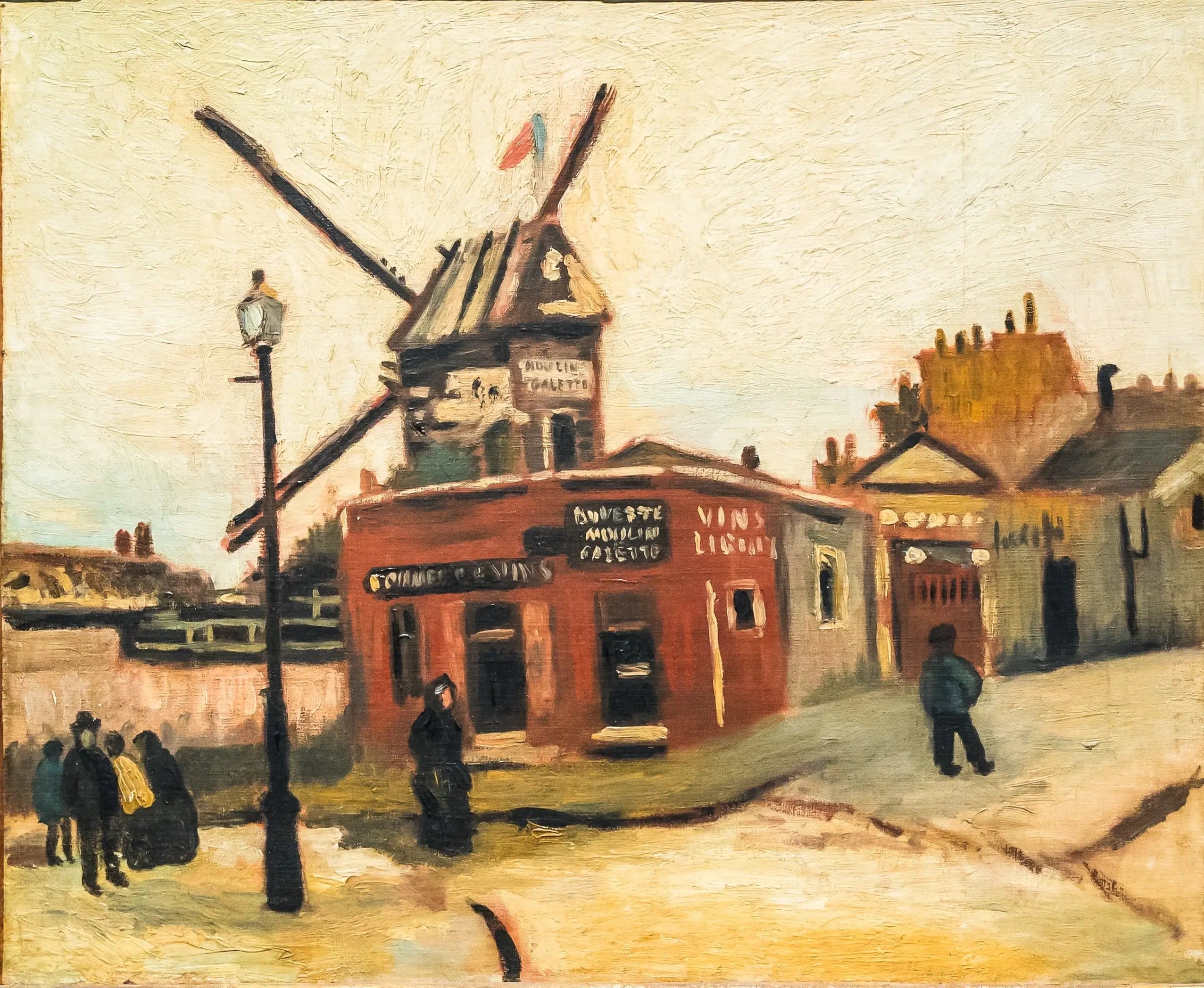
The Moulin de la Galette
- Original dimensions
- 39.37 x 47.31 cm
- Museum
- Carnegie Museum of Art
- Year
- 1887
Scene depicted
The painting illustrates a festive scene where regulars gather around the famous mill, a symbol of conviviality. The atmosphere is filled with joy, with couples dancing and friends sharing a moment of simplicity. The movements are fluid, almost intoxicated by the rhythm of Parisian life. The composition, full of vitality, immerses us in the heart of human fervor.
Historical context
Created in 1887 in the lively district of Montmartre, in Paris , this painting is emblematic of the post-impressionist movement. The canvas , now housed in the Carnegie Museum of Art , captures the essence of a vibrant era where art and life intertwine in a whirlwind of colors and sensations.
Place in the artist's career
This painting marks a pivotal period in Van Gogh's career, where his emotions become more tangible through vibrant colors and dynamic brushstrokes. Alongside works like The Starry Night and the Sunflowers , it testifies to his artistic journey towards expressionism, where each painting becomes a window into his soul.
Anecdote
Vincent van Gogh , a tormented spirit, once confided to his brother Théo: “I see colors that vibrate, that come alive” as he painted this pictorial work inspired by his surroundings. This moment, frozen in time, was born from a spring morning when the lights of Paris danced on the joyful faces of passersby.