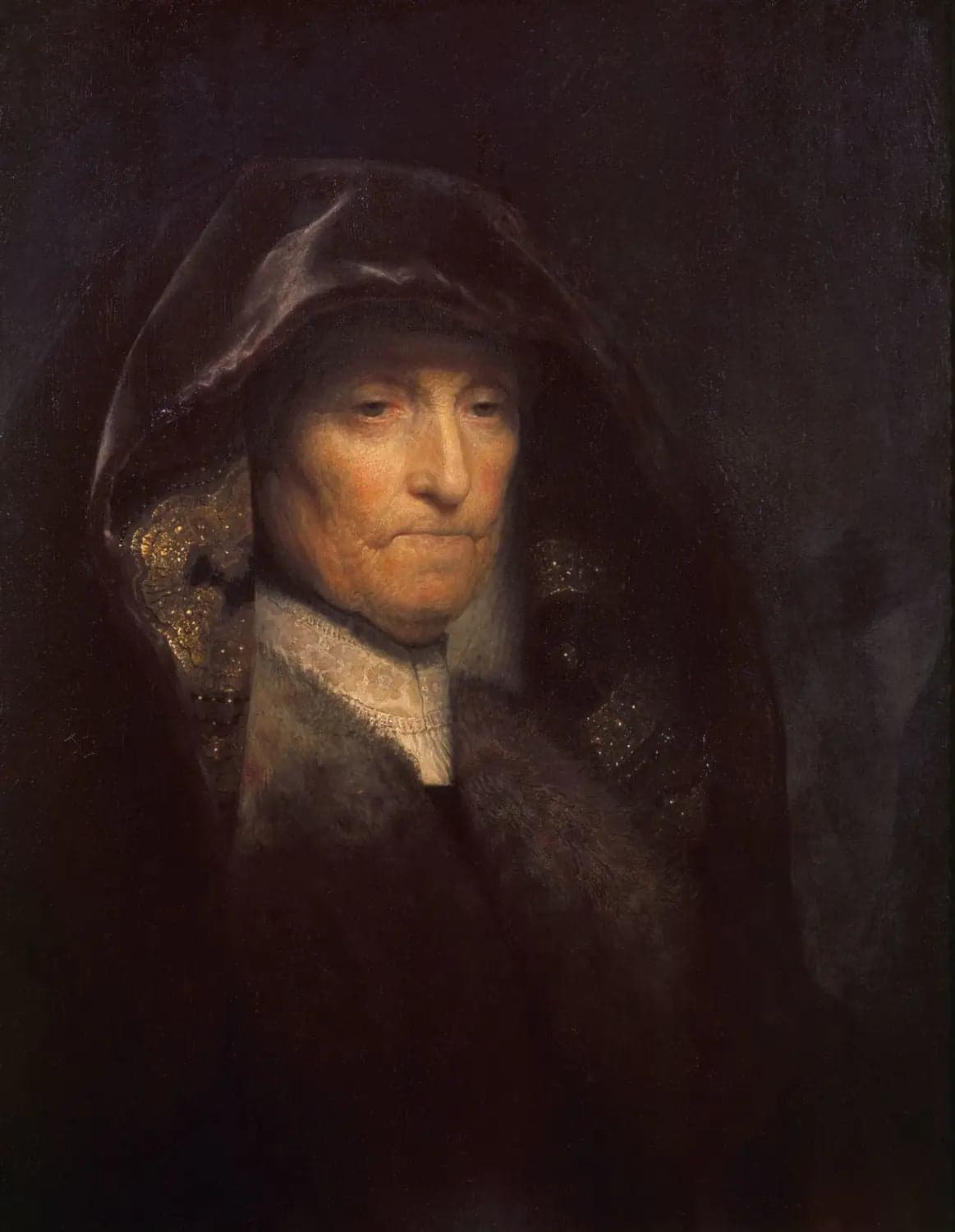
The Mother of Rembrandt
- Original dimensions
- 47.4 x 61.3 cm
- Museum
- Royal Collection
- Year
- 1629
Scene depicted
This painting represents the figure of the artist's mother, dressed simply, her gaze imbued with tenderness and wisdom. The scene is bathed in soft light that accentuates the features of her face, revealing the emotion of a moment of reflection. This portrait, more than just a visual rendering, captures the depth of familial feelings and the dignity of a life dedicated to those she loves.
Historical context
Created in 1629, The Mother of Rembrandt is an iconic painting that belongs to the Dutch Baroque movement. Made in Amsterdam, at the heart of the Netherlands, this canvas draws its essence from a context where light and shadow play masterfully to bring human emotions to life. Currently housed in the Royal Collection , this painting measuring 47.4 x 61.3 cm invites a deep introspection into the intimacy of everyday life.
Place in the artist's career
The Mother of Rembrandt represents a pivotal period in the artist's career, highlighting a turn towards unprecedented psychological depth. Alongside paintings such as The Night Watch and The Anatomy Lesson of Dr. Nicolaes Tulp , this portrait reveals the technical and emotional evolution of Rembrandt , marking a maturation in his approach to painting and human relationships.
Anecdote
“A mother carries the light of her children within her,” could have been said by Rembrandt at the beginning of this canvas. Perhaps inspired by a quiet morning, as soft light filtered through the windows, each brushstroke in this work resonates as a tribute to the sacred bond between mother and child, a moment frozen in time, vibrant with emotions.