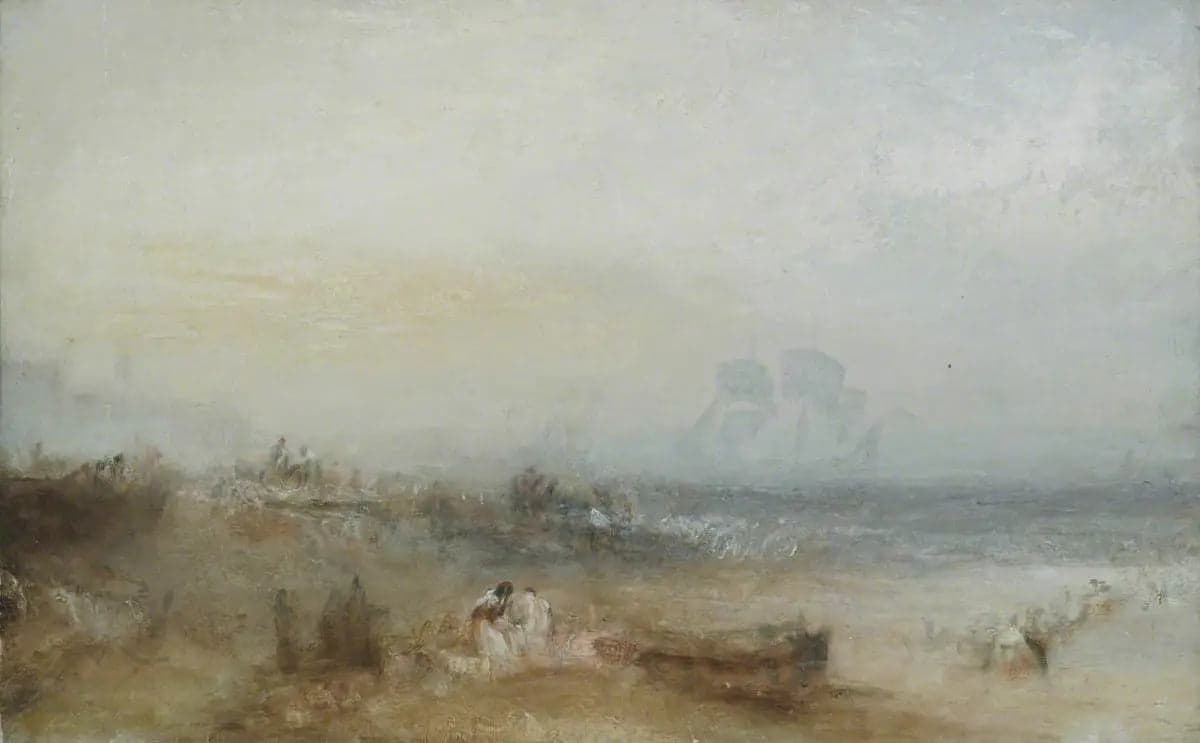
The Morning after the Wreck
- Original dimensions
- 61.8 x 38.7 cm
- Museum
- National Museum of Cardiff
- Year
- 1837
Scene depicted
This painting evokes the consequences of a tragic shipwreck, bathed in a halo of northern clarity. The clear sky, contrasting with the tumultuous waves, reveals the struggle between wild nature and the fragility of human existence. Turner, with his mastery of nuances, immerses the viewer in a nostalgic atmosphere, while symbolizing the hope of a bright tomorrow.
Historical context
Created in 1837, The Morning after the Wreck is an iconic canvas that illustrates the peak of the Romantic movement. Located in Cardiff, this work captured by Turner reveals a poignant moment, when the sea, both beautiful and terrifying, becomes the stage for intense emotions. The canvas is now preserved at the National Museum of Cardiff , highlighting the invaluable artistic legacy of this artist.
Place in the artist's career
This painting represents a key milestone in Turner’s career, showcasing his stylistic transition towards a more atmospheric writing. When compared to The Fighting Temeraire and Rain, Steam and Speed , we notice an evolution towards abstraction and a bold use of color, capturing the soul of the elements.
Anecdote
“Light is my language, I paint what I feel,” said Turner. It is said that this work was born in the heart of a misty morning, while debris from a shipwreck on the coast awakened in him a melancholic vision, imbued with beauty and despair.