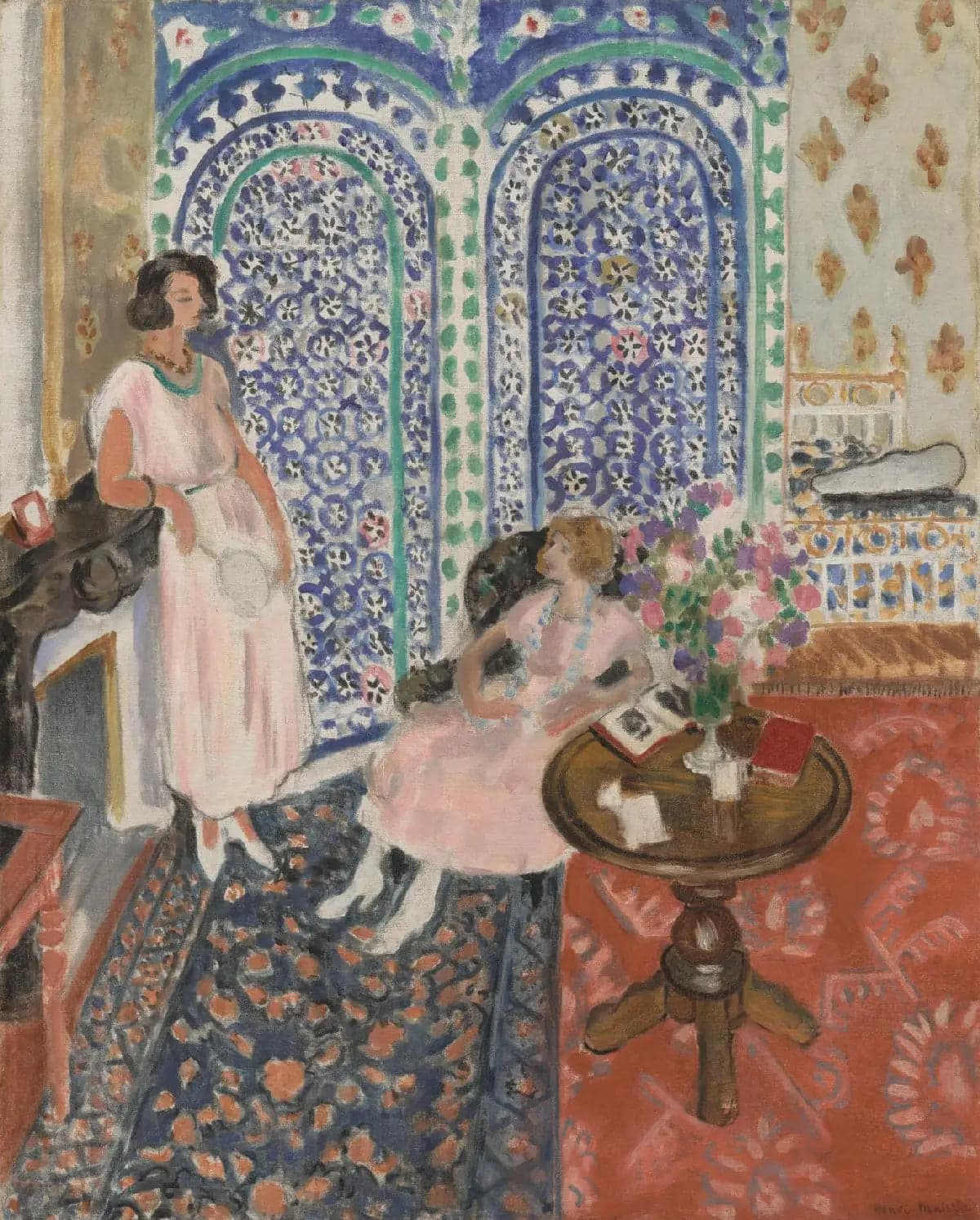
The Moorish Screen
- Original dimensions
- 74.3 x 91.9 cm
- Museum
- Philadelphia Museum of Art
- Year
- 1921
Scene depicted
The Moorish Screen features a vibrant composition of floral and geometric patterns, symbolizing a world imbued with exoticism. The painting evokes a decorative screen, suggestive of a universe where light and colors dance harmoniously. Each element of the painting recalls the refinement and beauty of Islamic arts, transporting the viewer to an enchanting elsewhere.
Historical context
Created in 1921, this iconic painting is rooted in an artistic context marked by Fauvism and the influence of decorative arts. Matisse, then in Nice, draws inspiration from the shapes, colors, and atmosphere of the oriental decor surrounding him, making this canvas a true masterpiece. The painting currently resides at the Philadelphia Museum of Art , a collection where it continues to fascinate visitors.
Place in the artist's career
The Moorish Screen is part of Matisse's mature period, marking a stylistic turning point in his journey. At this time, he distances himself from more figurative forms to explore colorful abstraction. Compared to his painting “The Dance” or “The Fauves,” The Moorish Screen reflects his technical evolution, refocusing his search on visual harmony rather than figurative narrative.
Anecdote
Henri Matisse once said: “Color is not just a means of expression, it is my way of life.” The inspiration for this pictorial work came to him during a walk through gardens intoxicated by the scent of flowers. That morning, the sun played in the shadows, awakening in him an irresistible desire to capture the sensory essence of the world on his canvas .