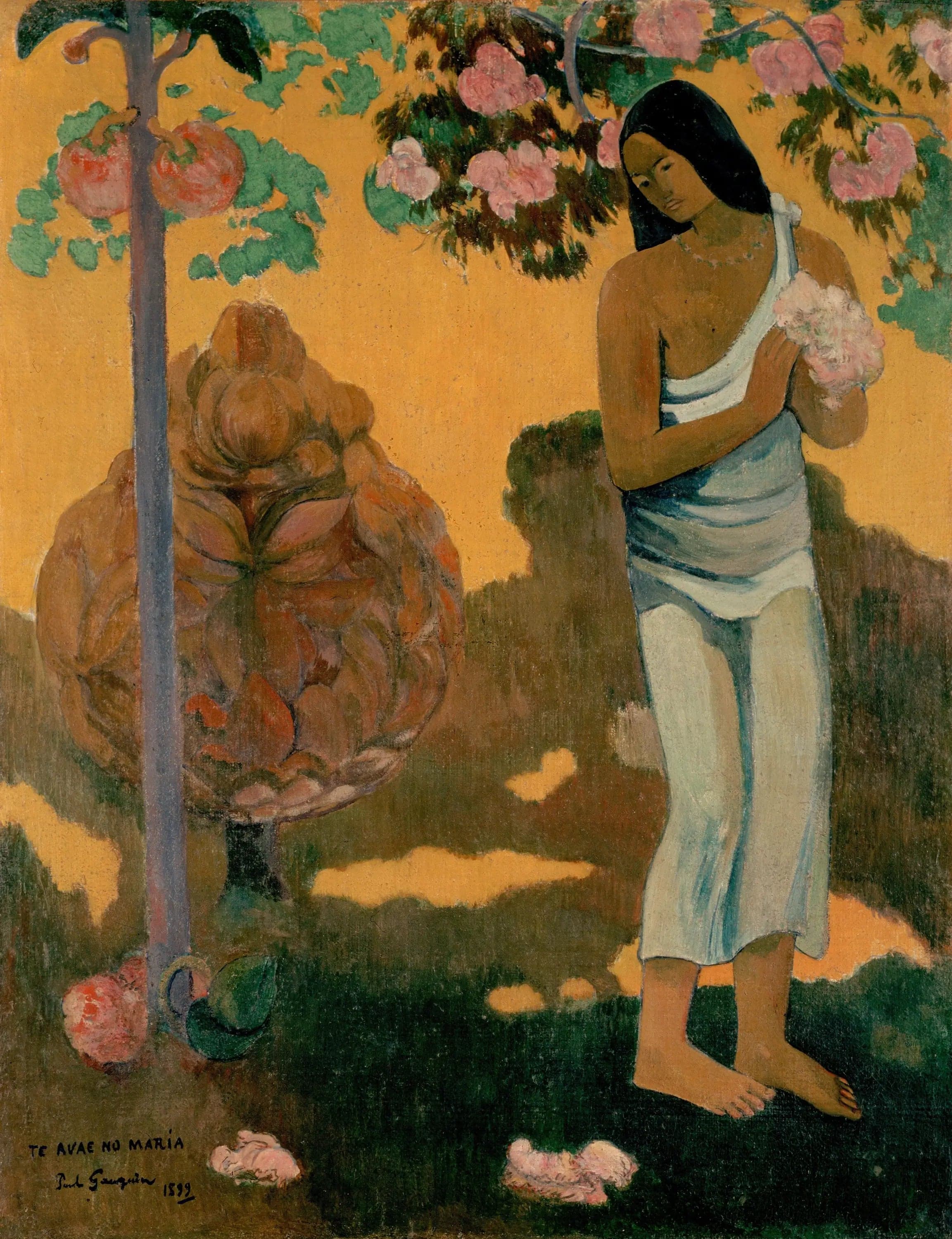
The Month of Mary
- Original dimensions
- 74.5 x 96 cm
- Museum
- Hermitage Museum
- Year
- 1899
Scene depicted
In this canvas , Paul Gauguin depicts an evocative scene where spirituality intertwines with natural harmony. The vibrant colors tell the story of the Virgin Mary, while incorporating elements of local culture. The painting captures the spiritual renaissance , inscribing human development through tradition. Every detail is meticulously crafted to stimulate the viewer's imagination.
Historical context
Created in 1899, The Month of Mary is at the heart of a time when modern art was emerging. This iconic painting , offered by the artist Paul Gauguin , is rooted in the post-impressionist movement. Developed in France, this exceptional canvas resonates today around the world, currently located at the famous Hermitage Museum . Its dimensions, 74.5 x 96 cm, make it a true visual gem.
Place in the artist's career
The Month of Mary represents a key milestone in Gauguin's artistic journey, marking his period of maturity. Compared to his famous work Vision After the Sermon and to The Sea, this painting reflects a significant evolution towards stylized abstraction, reinforcing his status at the crossroads of tradition and modernity.
Anecdote
“Each canvas is a poem written with colors in silence,” Gauguin might have said while getting lost in his thoughts on a peaceful April morning. The painting The Month of Mary then emerges, guided by a soft light filtering through the leaves, transforming the everyday into a vibrant composition of emotion.