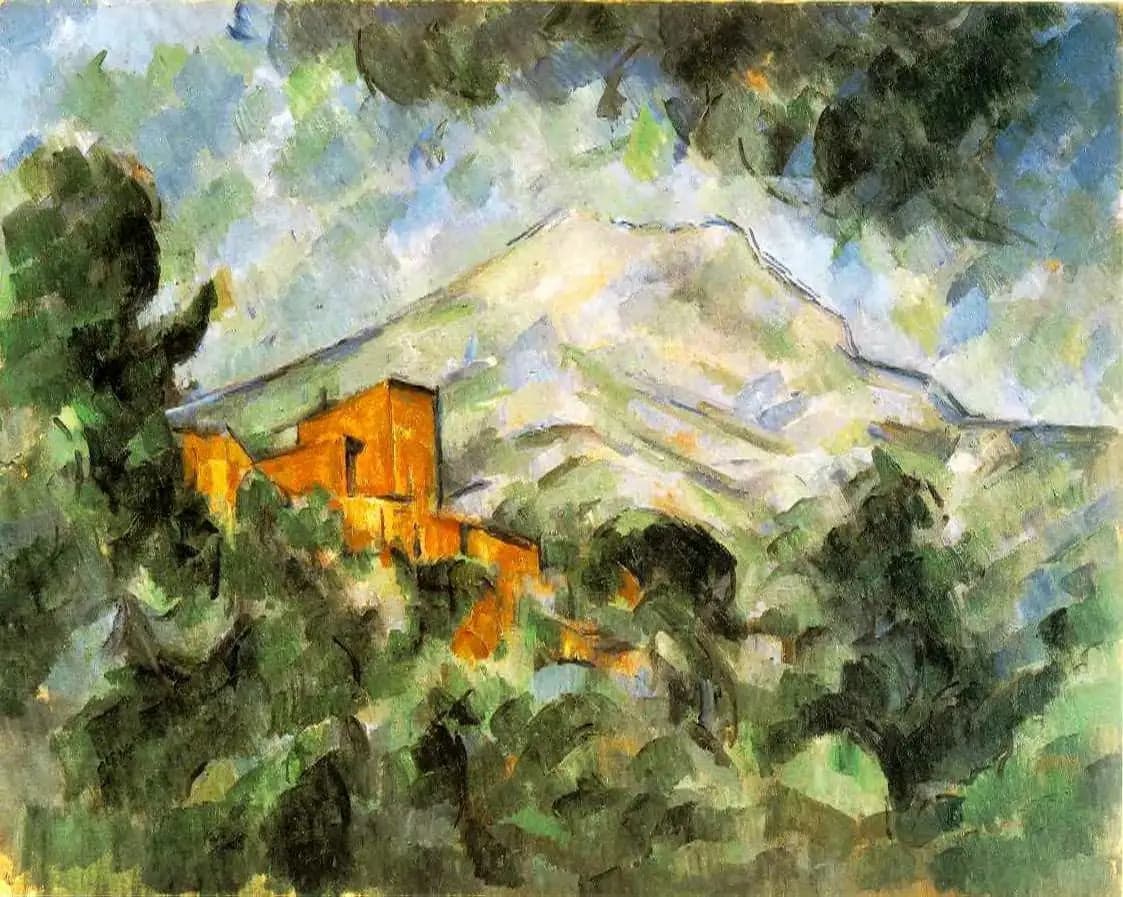
The Montagne Sainte-Victoire and Château Noir
- Original dimensions
- 81 x 65.6 cm
- Museum
- Artizon Museum
- Year
- 1904
Scene depicted
In this painting, Cézanne immortalizes the majesty of La Montagne Sainte-Victoire, intertwined with the silhouette of Château Noir. The canvas evokes a calm and serene atmosphere. The geometric shapes, woven together, blend in a way that invites contemplation. Shadows mingle with shimmering lights to create an almost mystical ambiance, like a call to daydreaming.
Historical context
Created in 1904, in Aix-en-Provence, La Montagne Sainte-Victoire et Château Noir emerges from a fascinating period of post-impressionism . This artistic movement, of which Paul Cézanne is a prominent representative, showcases the beauty of Provençal landscapes. Currently, this remarkable painting rests at the Artizon Museum , where visitors can contemplate its dimensions that evoke the grandeur of nature.
Place in the artist's career
La Montagne Sainte-Victoire et Château Noir represents a significant milestone in Cézanne's career. At this moment, the artist was heading towards his stylistic peak. Let’s compare it with other iconic works such as Les Grandes Baigneuses or La Maison de la Baigneuse, which illustrate the gradual evolution of his technique and the intensity of his artistic expression.
Anecdote
“The landscape is a state of mind,” Cézanne is said to have declared while painting. Imagine him, one spring morning, standing before this imposing mountain, capturing the soft light on the stone. This primordial emotion resonates intensely in La Montagne Sainte-Victoire et Château Noir, transforming nature into a true living painting.