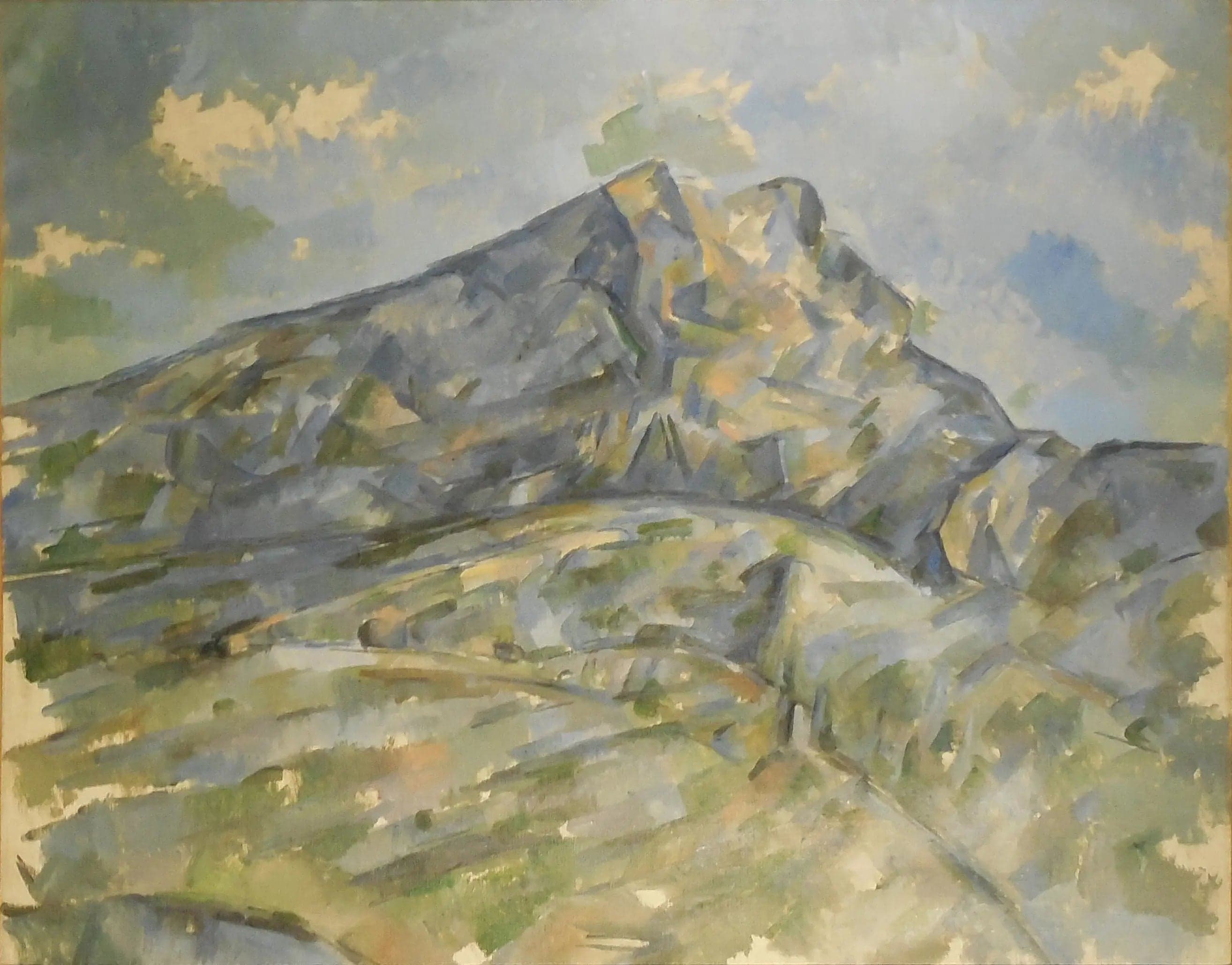
The Mont Sainte-Victoire seen from the grove of the Château Noir
- Original dimensions
- 80.3 x 65 cm
- Museum
- Qatar
- Year
- 1904
Scene depicted
This captivating painting reveals the Mountain Sainte-Victoire, an emblematic figure of the Provençal landscape, enveloped in a soft, almost magical light. The work invites us to feel the depth of the forms and the tranquility of a moment frozen in time, where every shade of green and blue transports us to the heart of Mediterranean nature.
Historical context
Created in 1904, this iconic work by Paul Cézanne is set in the enchanting landscape of Provence, where the artist enriches the canvas with his bright and vibrant colors. Part of the post-impressionist movement, The Mountain Sainte-Victoire seen from the grove of the Château Noir survived the artistic effervescence of the early 20th century. Today, this painting is preserved in the museum of Qatar, testifying to a cherished cultural heritage, capturing the wonder of a time in full transformation.
Place in the artist's career
This canvas marks a crucial step in Cézanne's career, reflecting a period of maturity and refinement of his style. It stands out alongside other masterpieces such as "The Large Bathers" and "The House of the Hanged Man," marking an unparalleled technical evolution in his way of translating reality through a more pronounced abstraction.
Anecdote
“My heart awakens to the beauty of nature, each brushstroke is an ode to light,” Cézanne might have said one morning as he contemplated the majesty of the Mountain Sainte-Victoire at dawn. This inspiration, which took shape in the masterpiece we know today, finds its essence in the tranquility of a place, vibrating to the rhythm of the seasons and dancing shadows.