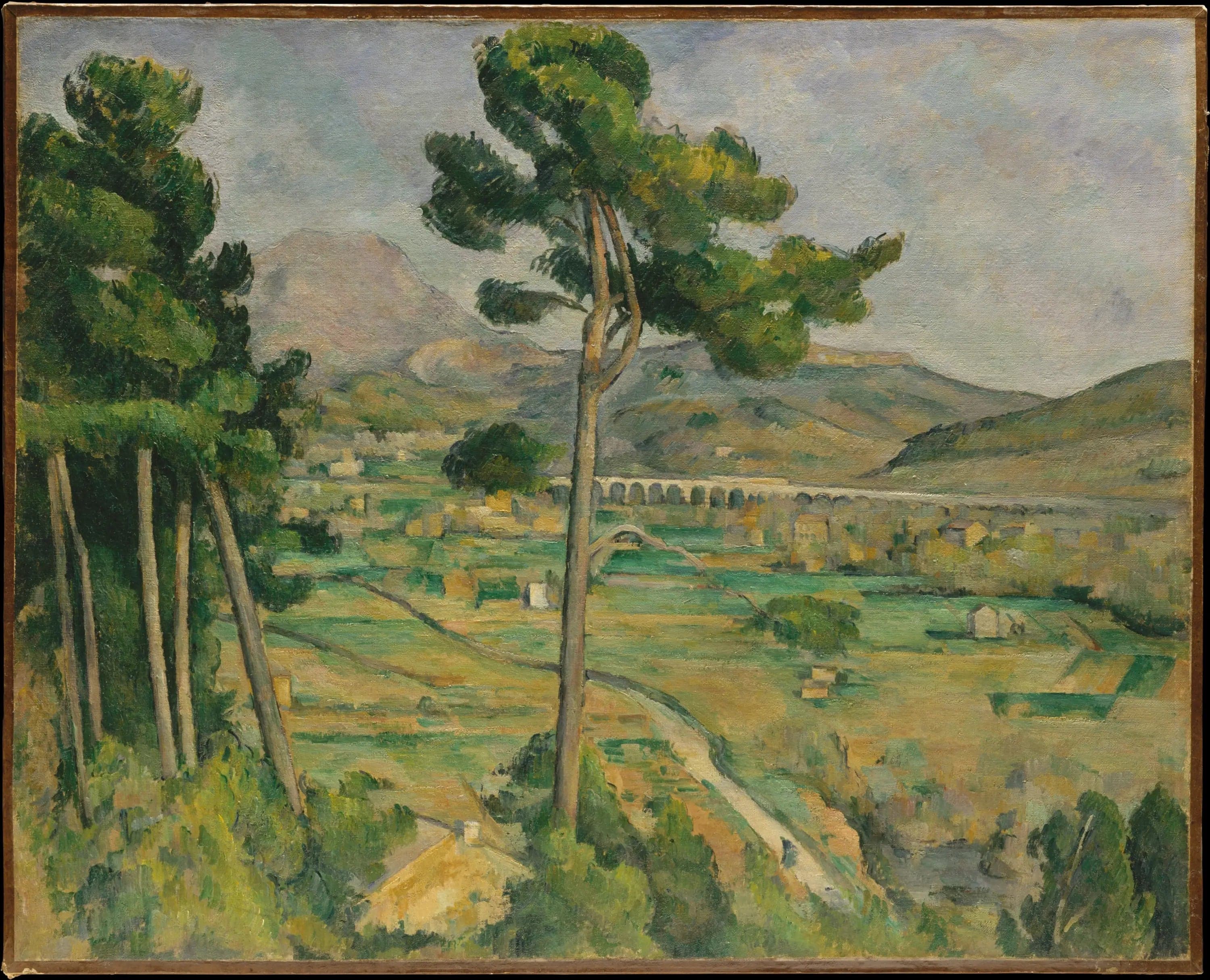
The Mont Sainte-Victoire seen from Montbriand
- Original dimensions
- 81.6 x 65.4 cm
- Museum
- Metropolitan Museum of Art
- Year
- 1882
Scene depicted
“La Montagne Sainte-Victoire vue de Montbriand” depicts the majestic relief of the Provençal hills, anchoring the viewer in peaceful contemplation. Cézanne explores nature in a new light, playing with shapes and colors to create a dynamic composition , where each brushstroke evokes the harmony between man and his environment.
Historical context
Created in 1882, this iconic painting , born from the Provençal soul, expresses all the power of the light of Southern France. Anchored at Montbriand, a remarkable viewpoint, this canvas is part of the Impressionist artistic movement while foreshadowing the future revolutions of modern art. It is possible to admire this painting at the famous Metropolitan Museum of Art , where it captivates visitors with its imposing dimensions.
Place in the artist's career
This painting represents a pivotal moment in Cézanne's career. It symbolizes not only the peak of his technique but also a constant dialogue with other paintings like "La Maison de la Grande Jete" and "Les Grandes Baigneuses", where the evolution of his artistic vision becomes evident, marking the transition to a more assertive abstraction.
Anecdote
“I am in nature, and I try to bring forth the painting from this beauty.” This quote resonates deeply with the moment Cézanne settled on the hill of Montbriand. Through his gaze, he captured the shimmering morning light caressing the mountain, giving his masterpiece a vibrant soul.