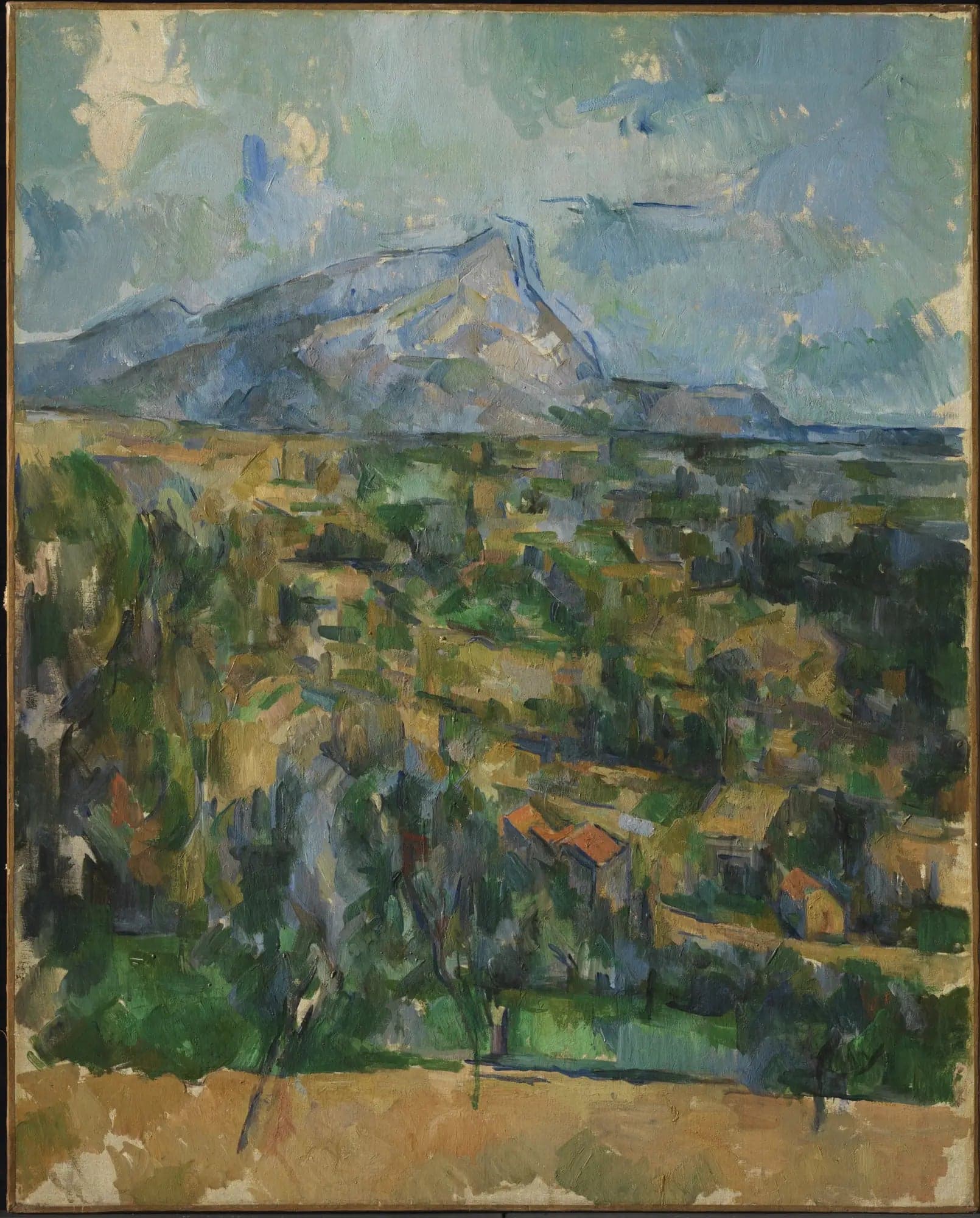
The Mont Sainte-Victoire seen from Les Lauves
- Original dimensions
- 65 x 83.8 cm
- Museum
- New York
- Year
- 1904
Scene depicted
The canvas depicts the majestic Montagne Sainte-Victoire, a symbol of the Aix-en-Provence region, painted from an angle that reveals the nuances of its silhouette. Cézanne skillfully played with the geometry of the landscape, transforming nature into a fascinating pictorial work, where the mountain seems to merge with the sky while maintaining its monumental presence. Every aspect of nature, every element of the painting, bursts forth with a visual vibration that transcends time.
Historical context
Created in 1904 in the picturesque setting of French landscapes, this painting is part of the post-impressionist movement. Paul Cézanne , an iconic figure of this movement, captured the very essence of nature around Aix-en-Provence. Currently housed in the museum in New York, this canvas fascinates with its dimensions that bring to life the mythical mountain that inspired the artist so much.
Place in the artist's career
This painting marks a decisive turning point in Cézanne's career as he explores more geometric structures. It stands alongside other iconic canvases such as “Le Grand Toilette” and “Les Joueurs de cartes,” revealing the evolution of his style towards a simplification of forms and a quest for emotional depth.
Anecdote
“I want to represent the world as it is, but also as I feel it.” These words from Cézanne resonate like a promise regarding his masterpiece . On a spring morning, amidst the snowy landscapes of the Lauves, he found inspiration. The harmony of colors and the soft light evoked a timeless world, reflected in every brushstroke of this canvas .