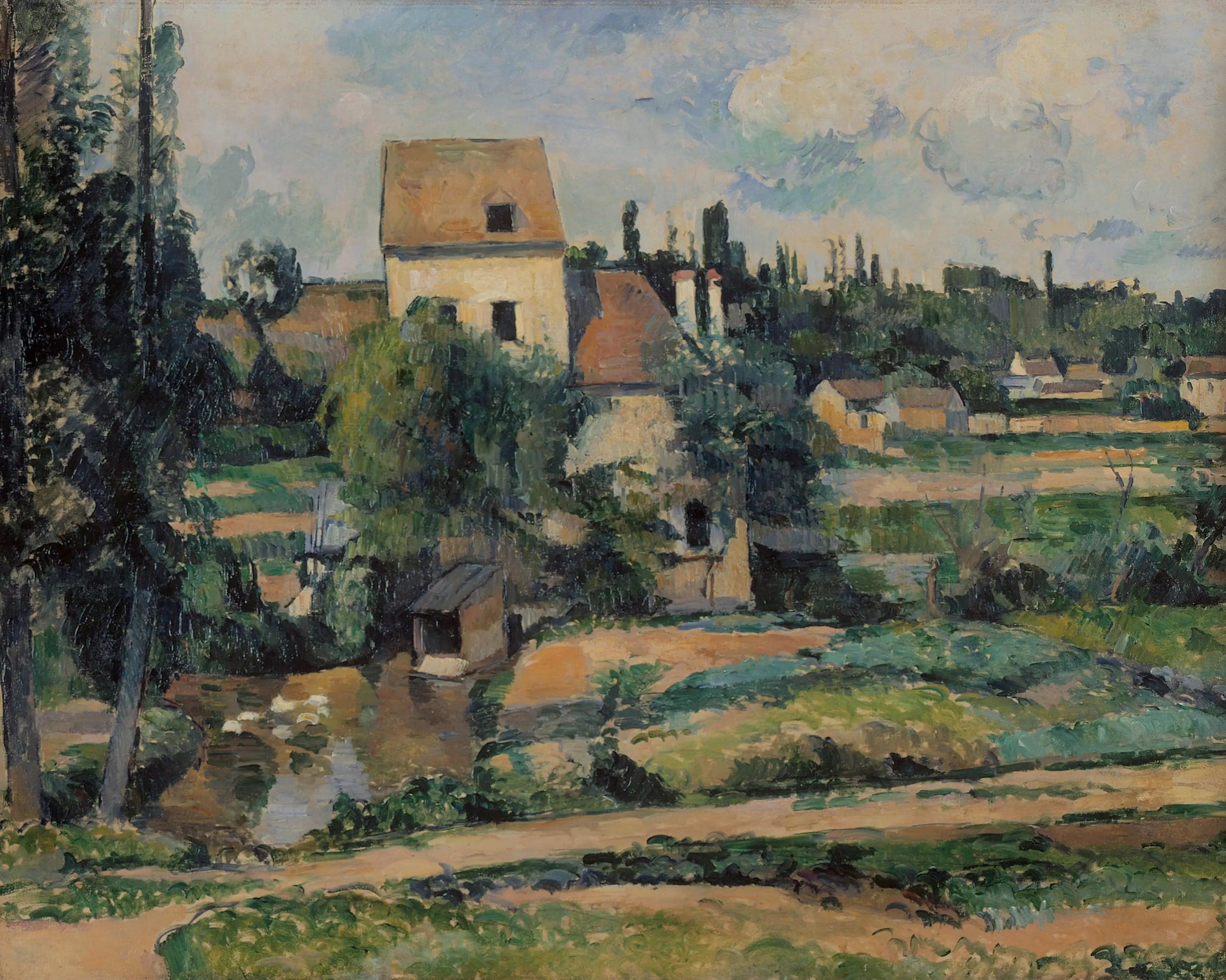
The Mill on the Couleuvre at Pontoise
- Original dimensions
- 91.5 x 73.5 cm
- Museum
- Alte Nationalgalerie
- Year
- 1881
Scene depicted
This painting, vibrant with life, depicts a mill by the water, a symbol of tranquility and unity with nature. The artwork transports us to a universe where time seems suspended, where dancing light reflects on the calm waters. The composition, both simple and complex, holds meticulous details of the surrounding vegetation, testifying to Cézanne's deep respect for his environment. A glance at this pictorial work is an invitation to daydream.
Historical context
Created in 1881, this exceptional canvas is set in the picturesque framework of Pontoise, a small French town of tranquil beauty. Associated with the Impressionist movement, this painting evokes Cézanne's ardent desire to capture the light and colors of a vibrant nature. Currently exhibited at the Alte Nationalgalerie , this masterpiece spans generous dimensions of 91.5 x 73.5 cm, offering a window into a world imbued with poetry and serenity.
Place in the artist's career
The Mill on the Couleuvre at Pontoise represents a significant milestone in Cézanne's career, a period when his style is in full maturation. At this time, he gradually abandons the influences of the Impressionists , while continuing to explore color and form. Alongside paintings such as The Montagne Sainte-Victoire and The Large Bathers , this painting embodies the artist's quest for a personal and modern vision of reality.
Anecdote
“Nature is a canvas that my brushes strive to capture at every moment,” Cézanne might have declared while creating this masterpiece . Imagine him, one spring morning, strolling along the banks of the Couleuvre, absorbing the warm colors of the landscape, a scent of wildflowers floating in the air. It is in this bucolic setting that the inspiration for this painting imposed itself on him with strong intensity, revealing an eternal essence.
Major exhibitions
Paul Durand-Ruel, the Bet on Impressionism