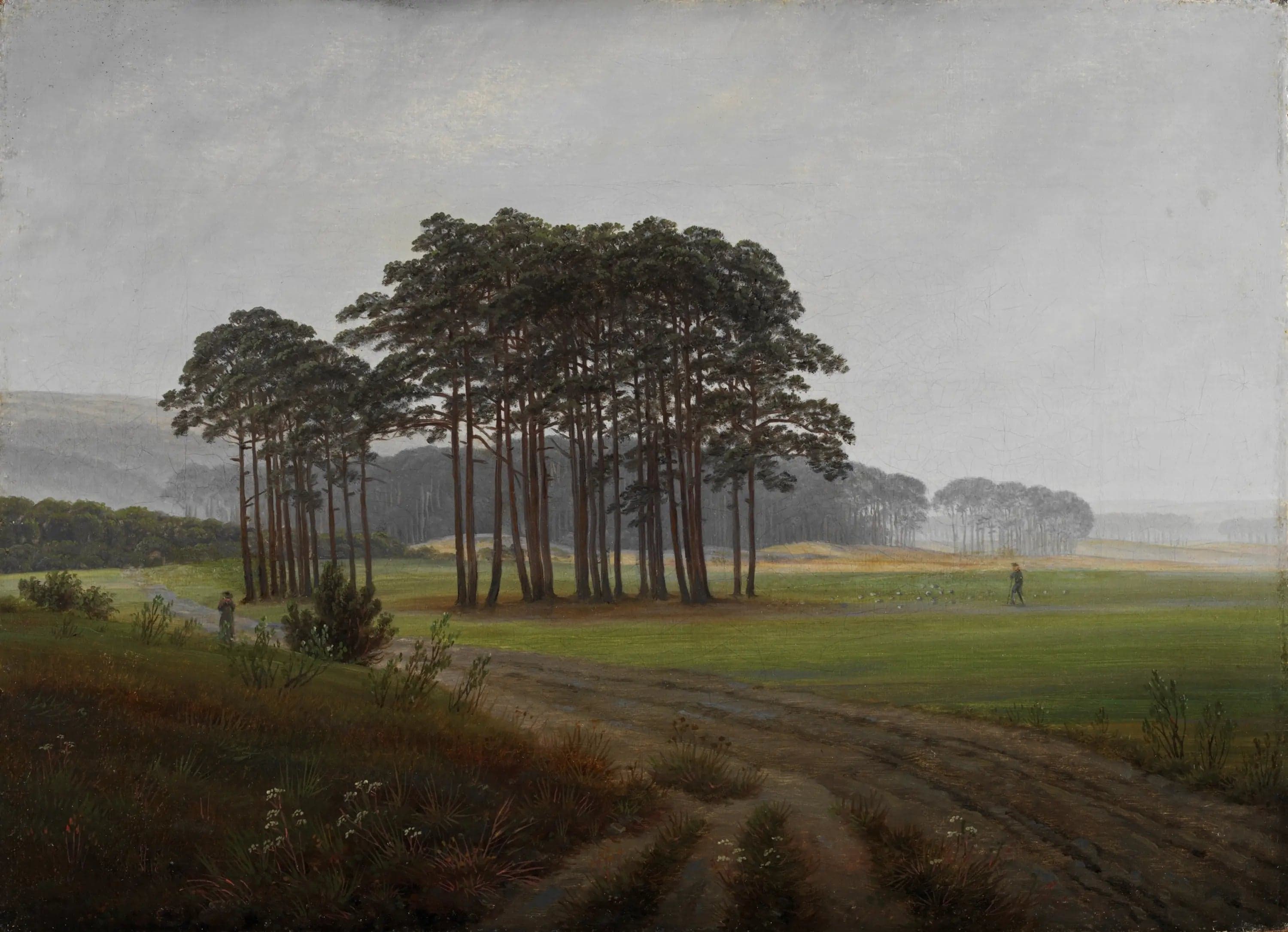
The Midi
- Original dimensions
- 30.5 x 22 cm
- Museum
- Lower Saxony State Museum
- Year
- 1821
Scene depicted
The painting “Le Midi” captures a scene of tranquility where the richness of natural details combines with a harmonious composition. Through this pictorial work , Friedrich expresses a deep respect for nature and the serenity it engenders, thus revealing the essence of Romanticism , which values emotion and personal experience.
Historical context
Created in 1821, this painting by Caspar David Friedrich is part of the Romantic movement, rich in emotions and introspection. This canvas , currently displayed at the Lower Saxony State Museum , evokes a particular moment in German artistic history, where nature was celebrated for its mystical and spiritual beauty. The dimensions of this painting offer an unprecedented closeness to the scene, allowing the viewer to immerse themselves in a universe where the sublime and the sacred meet.
Place in the artist's career
This painting represents one of the key periods in Friedrich's career, marking a turning point towards stylistic maturity. Situated between two other iconic paintings such as “The Hermit by the Sea” and “ The Wanderer above the Sea of Fog ”, “Le Midi” illustrates the artist's growing mastery in using light and landscape as vectors of emotion.
Anecdote
“The light of nature is a light of the soul,” Friedrich might have declared while recalling the origin of his masterpiece . This painting was inspired by a bucolic landscape seen on a spring morning, when the mists slowly faded to make way for a brilliant clarity, symbolizing hope and contemplation.