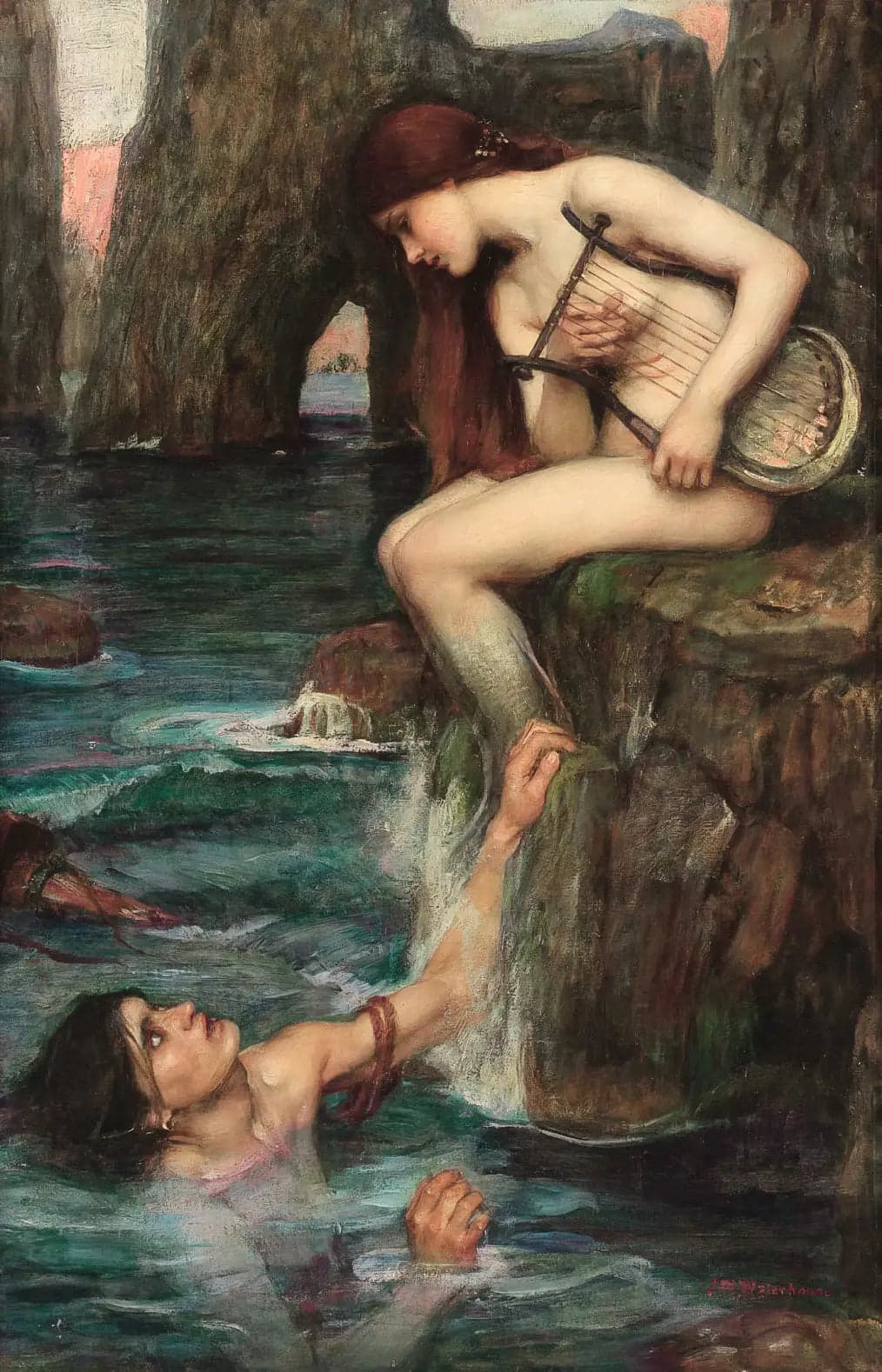
The Mermaid
Scene depicted
The Mermaid is a captivating representation of a mythological creature, surrounded by natural elements like seashells and seaweed. The scene illustrates sensuality and mystery, revealing the supernatural beauty of the mermaid as she sings of love and melancholy, ensnared by the intertwining of the sparkling waters.
Historical context
Created in 1900, The Mermaid is an emblematic work of John William Waterhouse , one of the great masters of Pre-Raphaelitism. This canvas was born in London, during a period when artists explored themes of beauty and nature. Currently, this painting is part of the Collections of the Tate Britain , a prestigious institution located in London, with dimensions of 83.5 cm by 67.3 cm.
Place in the artist's career
The Mermaid is at the heart of Waterhouse's career, during his most recognized period for exploring mythological themes. Alongside his famous works like “The Cycle of Life” and “Penelope,” one observes an evolution in his use of light and textures, creating a unique emotional depth in each painting .
Anecdote
“I seek beauty where it hides, in the whispers of the waves and the reflections of light.” This simulated quote from Waterhouse perfectly evokes the soul of his painting . One spring morning, while strolling by a gentle and luminous sea, he encountered a melancholic face that fueled his vision for The Mermaid.