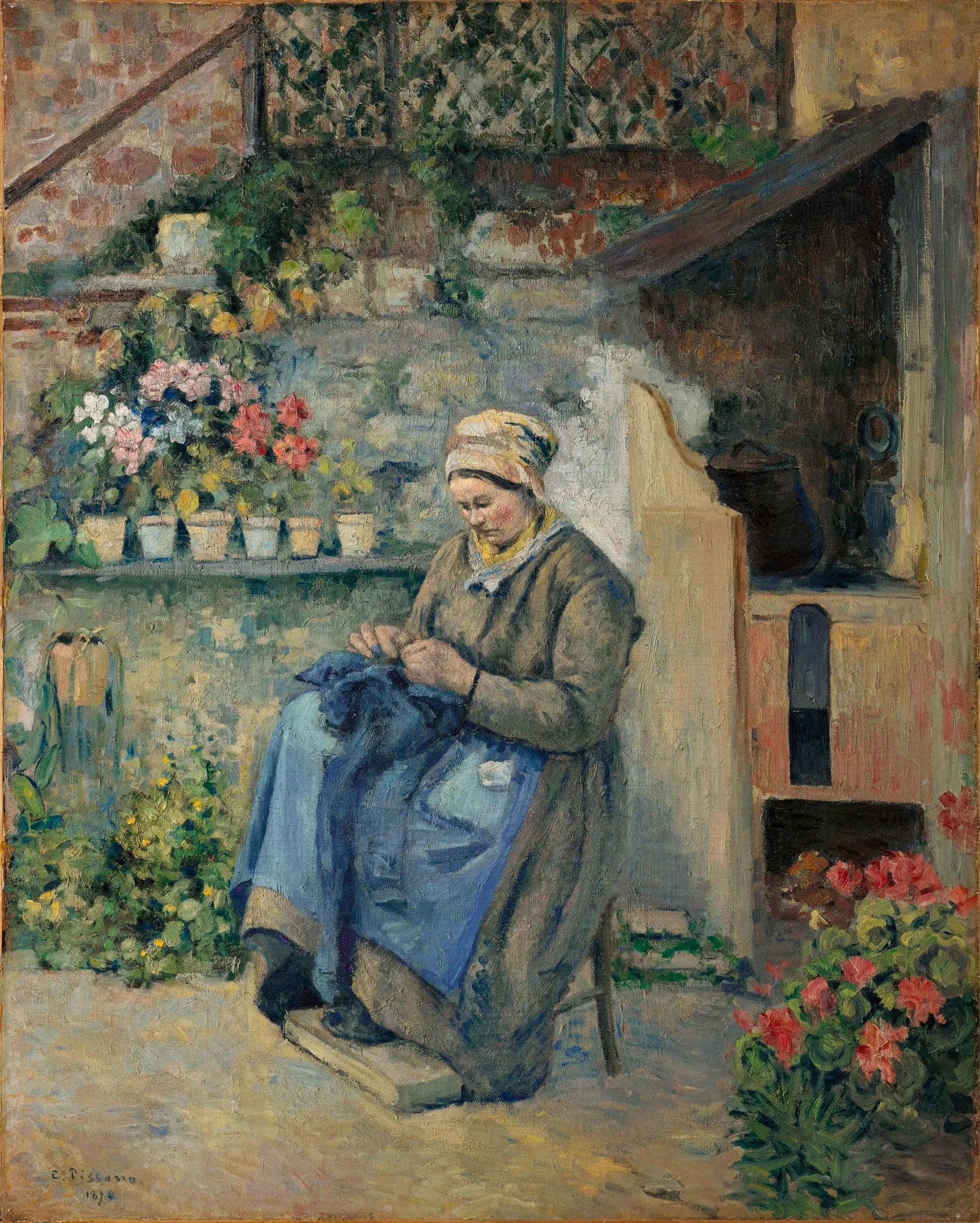
The Mending Mother Jolly
- Original dimensions
- 80.3 x 100.3 cm
- Museum
- High Museum of Art
- Year
- 1874
Scene depicted
The painting represents an intimate scene, that of a woman mending, a silent witness to 19th-century domestic life. Mother Jolly, an iconic figure, embodies home and tenderness, while revealing the details of everyday life, illustrating the beauty captured in the ordinary. Each brushstroke captures the filtered light and creates a warm atmosphere.
Historical context
Created in 1874, this painting is emblematic of the Impressionist movement, born in Paris during the 19th century. It is in this beautiful city, a gathering place for new ideas, that Pissarro shaped his artistic legacy. Currently, the canvas proudly resides at the High Museum of Art in Atlanta, a prestigious showcase of modern art.
Place in the artist's career
The Mother Jolly Mending fits into a flourishing period of Pissarro's career, symbolizing his transition to a more emotionally charged and human approach. Alongside other canvases such as Boulevard de l’Opéra and The Gardens of Érgè, this work stands as an emotional peak, an echo of his artistic maturity.
Anecdote
“Life is found in the everyday” could have been said by Pissarro when referring to his muse, Mother Jolly. This moment of inspiration may have occurred on a gentle morning, where light filtered through the shutters of a simple house, revealing the beauty of this woman's gestures at work. This canvas tells the dignity of the daily labor of bourgeois life.