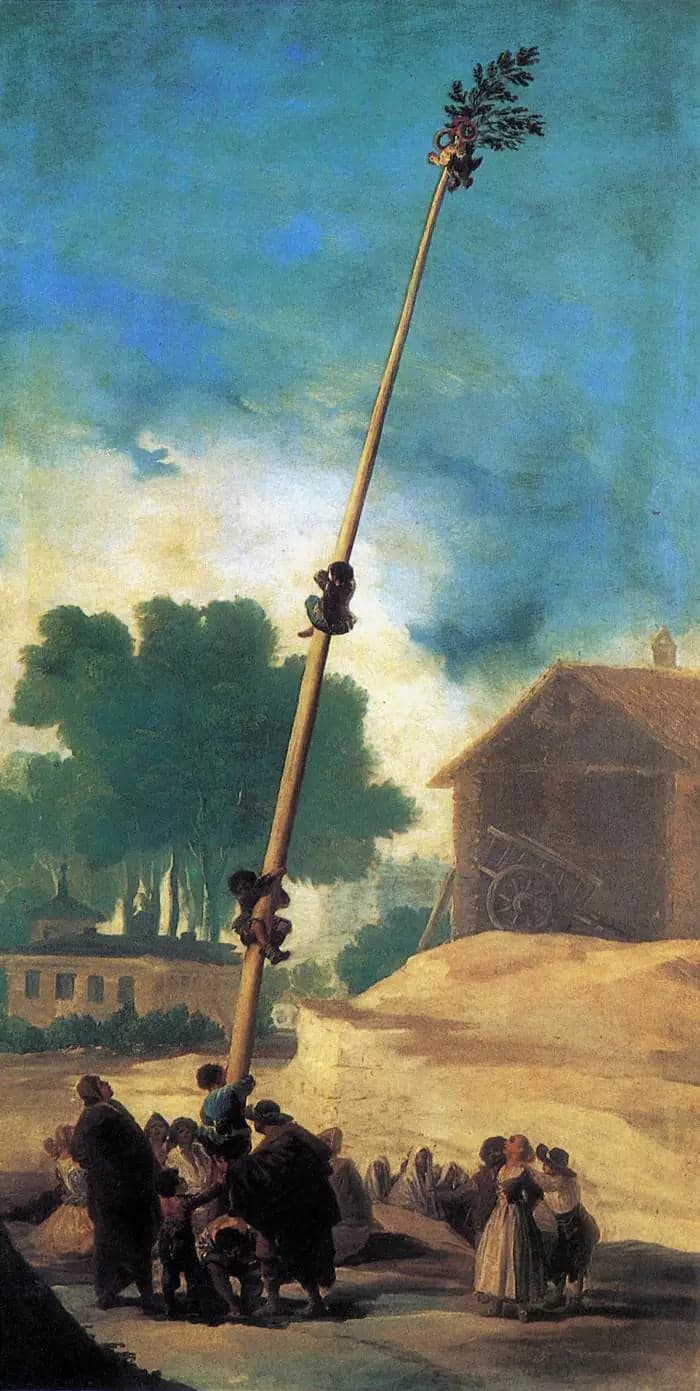
The Maypole
- Original dimensions
- 103.5 x 82.7 cm
- Museum
- Alte Nationalgalerie
- Year
- 1810
Scene depicted
In The Maypole , Goya captures a festive moment that celebrates the tradition of spring celebrations in Spain. The canvas depicts a pole erected by the community, surrounded by joyful figures, expressing an atmosphere of conviviality and unity. The characters, dressed in traditional costumes, vibrate with contagious energy, illustrating all the beauty of the popular culture of the time.
Historical context
Created in 1810, in the heart of Madrid, The Maypole manifests at a time of political and social upheaval in Spain. As an emblematic work of the romantic movement, this painting transposes the spirit of a nation in full transformation. The painting now resides at the Alte Nationalgalerie, a place where the history of art comes back to life for the pleasure of enthusiasts.
Place in the artist's career
The Maypole represents a turning point in Goya's career, marking his ascent towards a more personal and emotional style. At this time, he subtly oscillated between classicism and romanticism . Alongside The Maids of Honor by Velázquez and The Execution of the Third of May that follow this work, the artist demonstrates exceptional mastery of emotions and movement in his compositions.
Anecdote
“Painting is the reflection of the soul, a silent cry of the conscience.” While painting The Maypole , Francisco de Goya drew his inspiration one spring morning, as the laughter of children playing around a wooden pole echoed through the alleys of his hometown. This canvas evokes more than just a simple scene; it captures the essence of a vibrant community, united by joy and hope.