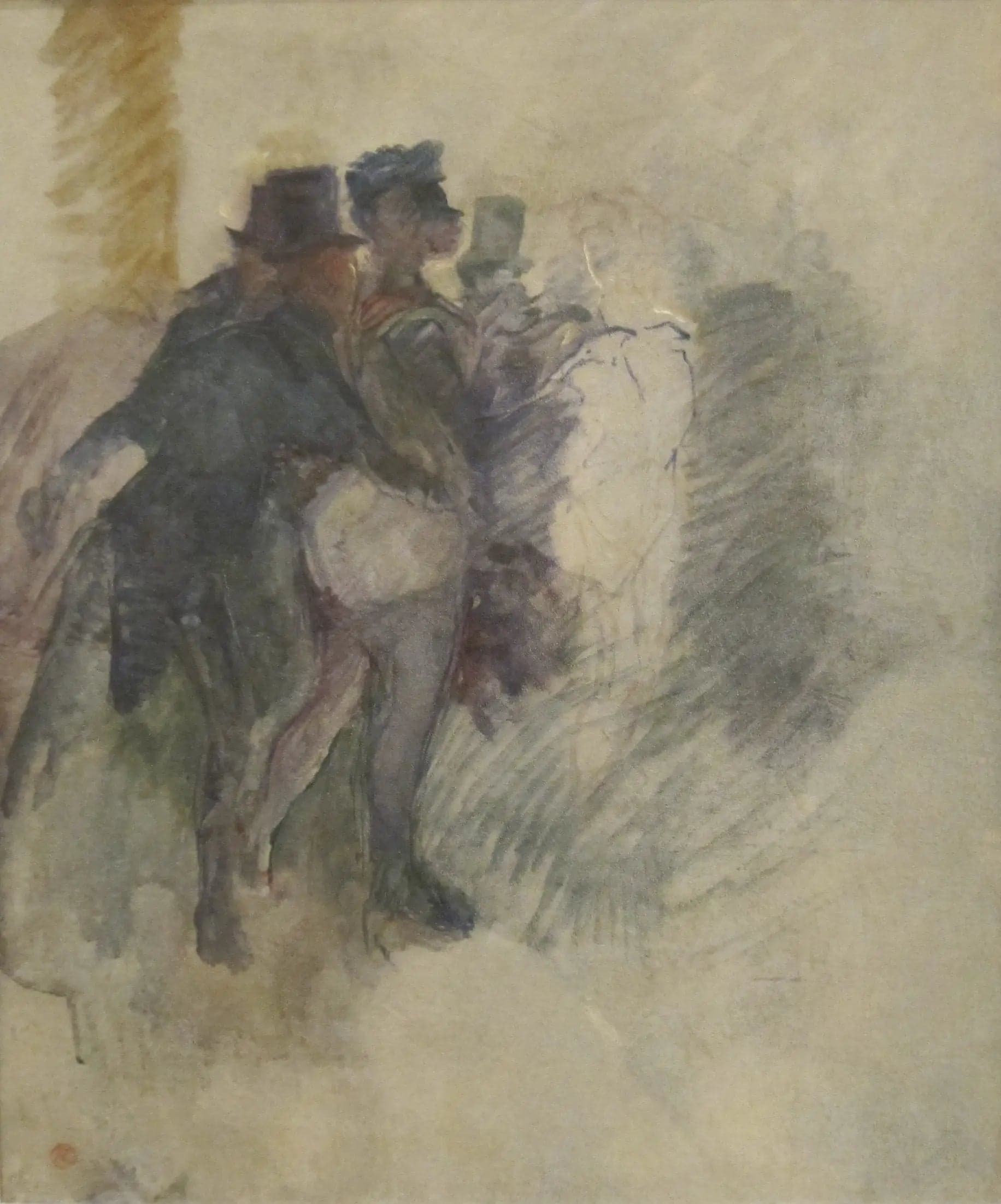
The Masquerade Ball at the Elysée Montmartre - Henri de Toulouse
- Original dimensions
- 46 x 55.3 cm
- Museum
- San Diego Museum of Art
- Year
- 1887
Scene depicted
This canvas immerses us in the heart of a festive evening, a masquerade ball where faces, hidden behind colorful masks, are swept away by music and dance. The refined costumes and vibrant colors evoke an atmosphere of mystery and joy, a true celebration of life where each character seems to tell a story.
Historical context
Created in 1887 in the vibrant city of Paris, the painting “The Masquerade Ball at the Elysée Montmartre” is part of an artistic movement impressionist , reflecting the golden age of Parisian cabarets. This canvas , now exhibited at the San Diego Museum of Art , is a window into a time when pleasure and celebration defined the social life of the Belle Époque.
Place in the artist's career
“The Masquerade Ball at the Elysée Montmartre” represents a crucial step in Toulouse-Lautrec's career, solidifying his reputation as an innovative artist. This canvas is part of a period of maturity, alongside works such as “At the Moulin Rouge” and “The Toilette,” illustrating his technical and emotional development through similar themes of nightlife.
Anecdote
“I have always sought to capture the soul of people through their pleasure.” This quote, inspired by the spirit of the masterpiece , evokes a bright evening when Toulouse-Lautrec, observing the frenzy of a masquerade ball, managed to translate the energy of this event. The painting results from his sharp gaze on the nocturnal conviviality of Paris.