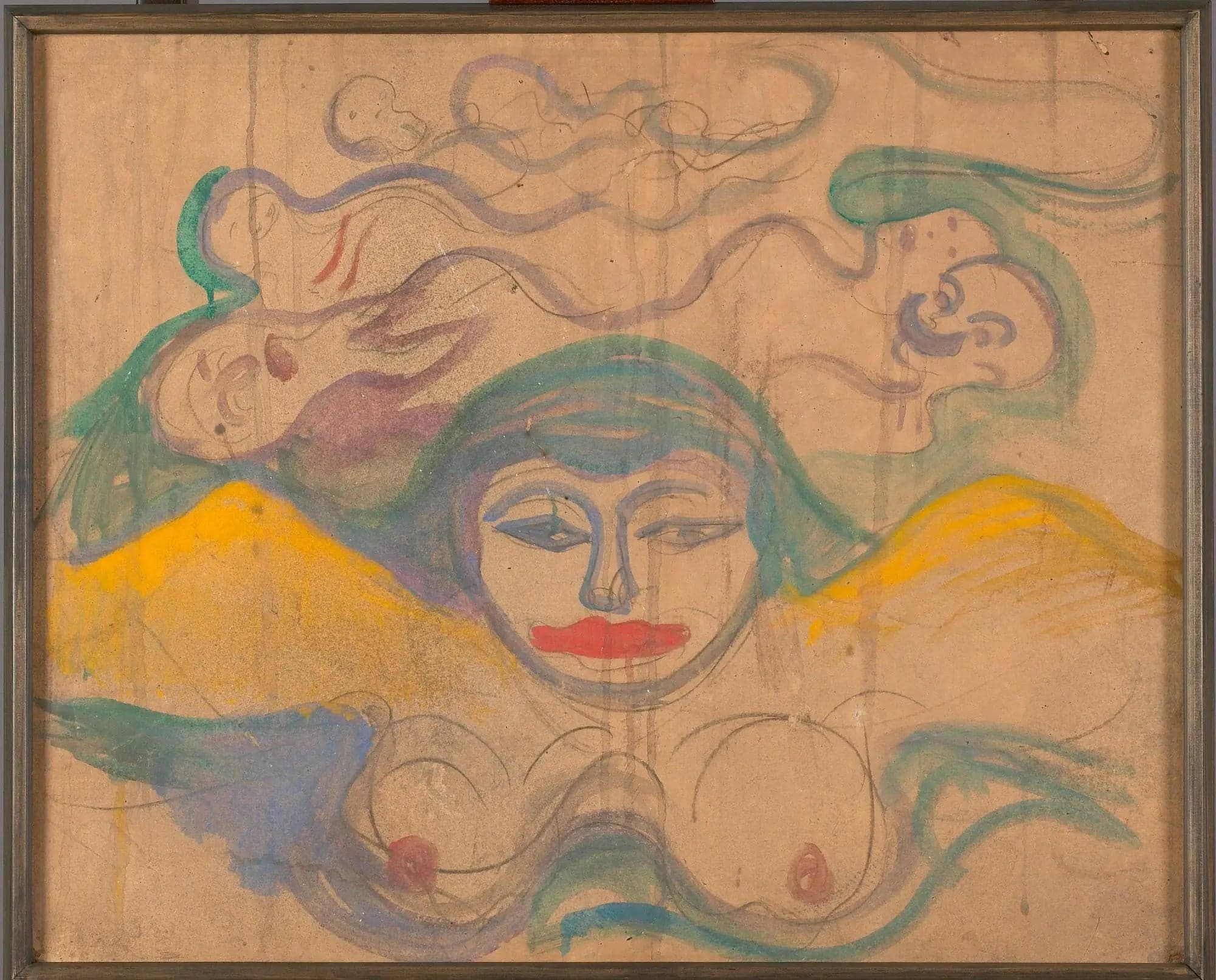
The Marsh
- Original dimensions
- 77 x 62.5 cm
- Museum
- Munch Museum
- Year
- 1903
Scene depicted
In this captivating work, Munch depicts a mysterious marsh, a symbol of fears and disillusionments. The human figures, faded shadows, seem to emerge from the dark depths, evoking an inner struggle against existence. The composition, both dynamic and unsettling, serves as a reflection on loss and solitude, essential elements of the human condition.
Historical context
Created in 1903, in the city of Oslo, Norway, this work showcases the vitality of the expressionist movement. The painting, currently housed in the Munch Museum, immerses the viewer in the troubled and emotional world of the artist. Through its dimensions of 77 x 62.5 cm, the painting captivates the eye, inviting exploration of the corners of the human soul while evoking the turmoil of the time.
Place in the artist's career
The Marsh is at the heart of Munch's career; it represents a maturity in his style, approaching the intense emotion visible in other works such as "The Frieze of Life" and "The Scream." These paintings share the same ability to capture human anguish, thus revealing the artist's evolution towards deeper and darker themes.
Anecdote
Edvard Munch once stated: "Painting is one of the cries of the soul." This quote resonates particularly when discussing the genesis of his masterpiece . Imagine a misty morning, where light weaves through clouds, his source of inspiration springing from memories of his childhood among the Norwegian marshes. The painting then becomes a visceral expression of buried feelings.