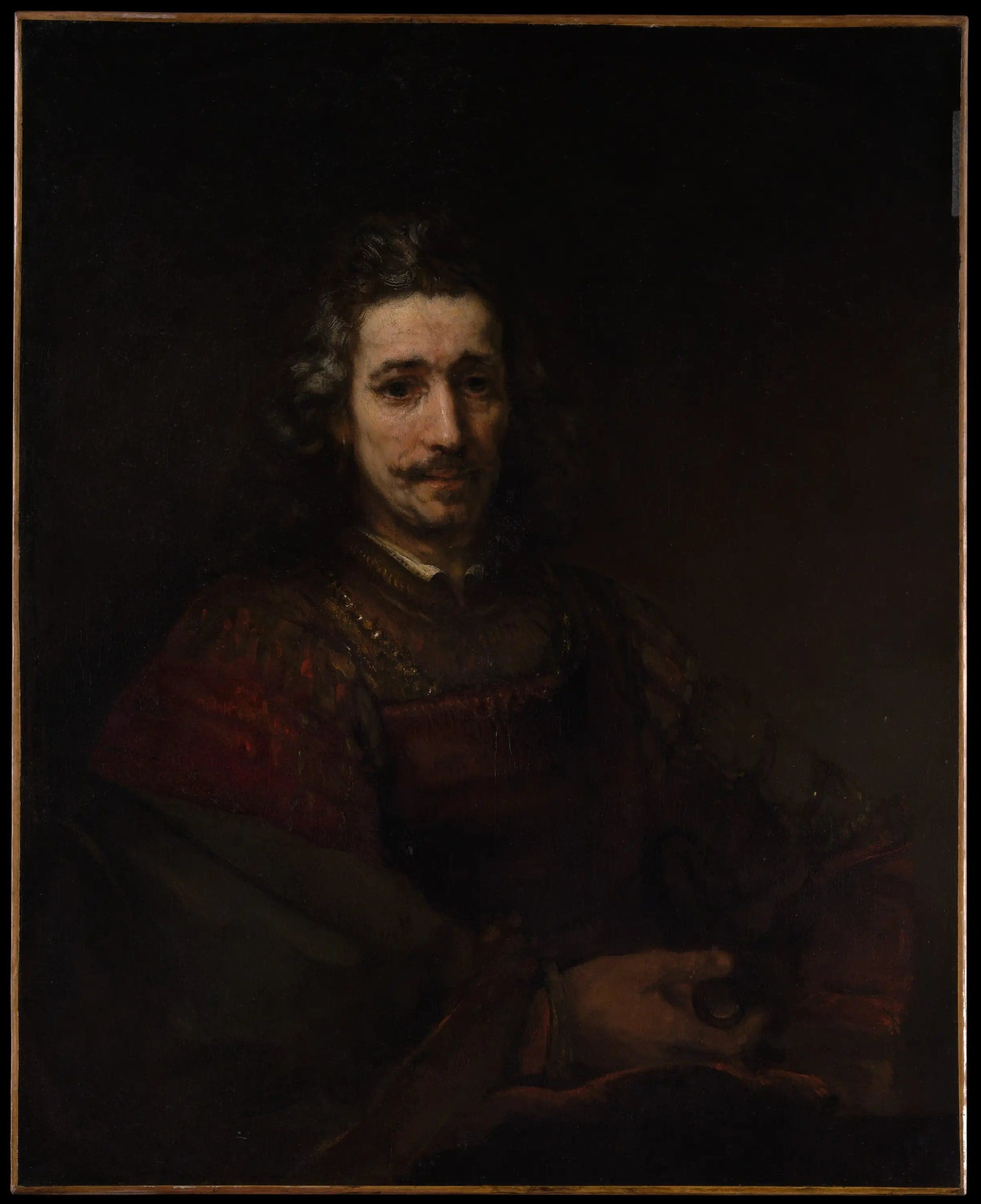
The Man with the Magnifying Glass
- Original dimensions
- 74.3 x 91.4 cm
- Museum
- Metropolitan Museum of Art
- Year
- 1660
Scene depicted
In this painting , we discover a man examining details through a magnifying glass, a symbolic representation of the quest for knowledge. This pictorial work questions not only the obsession with observation but also the fragility of human understanding through art and science, thus evoking a deep reflection on the human condition.
Historical context
Created in 1660, in the heart of Amsterdam, The Man with the Magnifying Glass is set in a flourishing time of the Dutch Golden Age. Rembrandt , undisputed master of chiaroscuro, delivers here an immersive composition that echoes the richness of his time. The painting currently resides in the prestigious walls of the Metropolitan Museum of Art in New York, inviting you to discover this unique artistic heritage, while being enlarged with dimensions that captivate the eye.
Place in the artist's career
The Man with the Magnifying Glass positions Rembrandt in full artistic maturity, combining observation and introspection. Through his other works such as The Night Watch and The Anatomy Lesson of Dr. Tulp , he reveals a technical and emotional evolution, testifying to his growing expertise in capturing human essences in the light of his time.
Anecdote
Rembrandt once reportedly said: “In every shadow lies a light,” a thought that resonates in every brushstroke of his masterpiece . Imagine the artist, one spring morning, scrutinizing the faces of passersby, drawing inspiration from the natural light reflecting on their features, thus emulating the human subtleties in his canvas .