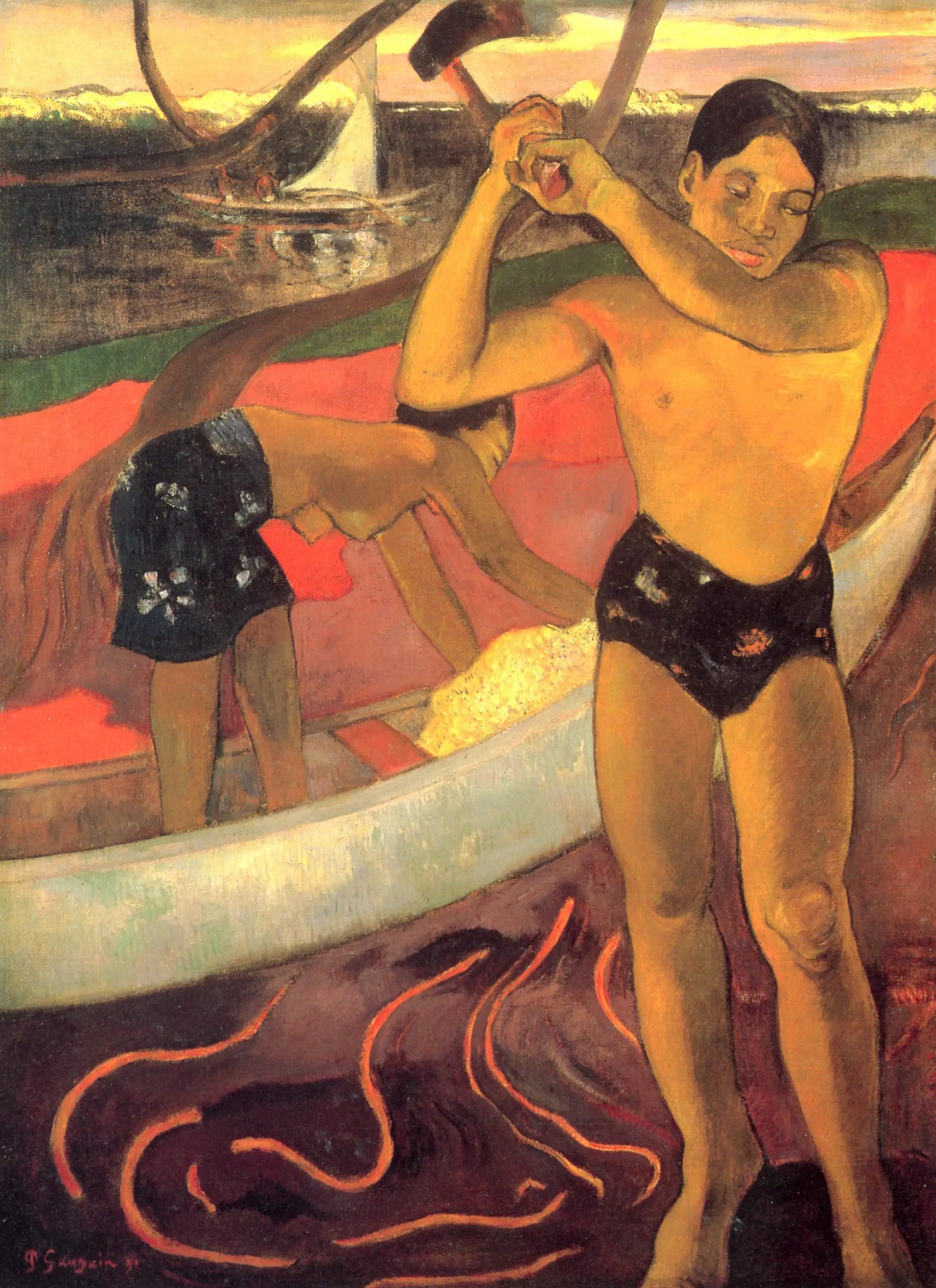
The Man with the Axe
- Original dimensions
- 70 x 92.7 cm
- Museum
- Not specified
- Year
- 1891
Scene depicted
In the canvas “The Man with the Axe,” Gauguin depicts a Tahitian native in full action, armed with his axe, thus encapsulating the strength and independence of man in the face of nature. This scene is an ode to the vitality and culture of Polynesia, evoking both the beauty of exotic landscapes and the depth of human struggles.
Historical context
Created in 1891, this painting is emblematic of the post-impressionist movement. Made in the enchanting exoticism of Tahiti, The Man with the Axe immerses us in a world vibrant with colors and emotions. This canvas , whose current location is not specified, bears witness to a time when art sought to express inner truth through scenes of everyday life.
Place in the artist's career
The Man with the Axe fits into a crucial period of Gauguin's career, marking the peak of his artistic exploration. This masterpiece, alongside works like Vision after the sermon and The Gozomanes Festivals , establishes a link between his innovative techniques and his desire to represent inner realities beyond mere appearance.
Anecdote
“I have always sought to capture the essence of souls through my canvases .” This quote, imbued with Gauguin's vision, evokes the moments of inspiration he experienced in this idyllic setting. Imagine a sunny morning in Tahiti, where he meets the gaze of a man whose quiet strength awakens in him the desire to represent struggle, survival, and harmony with nature.