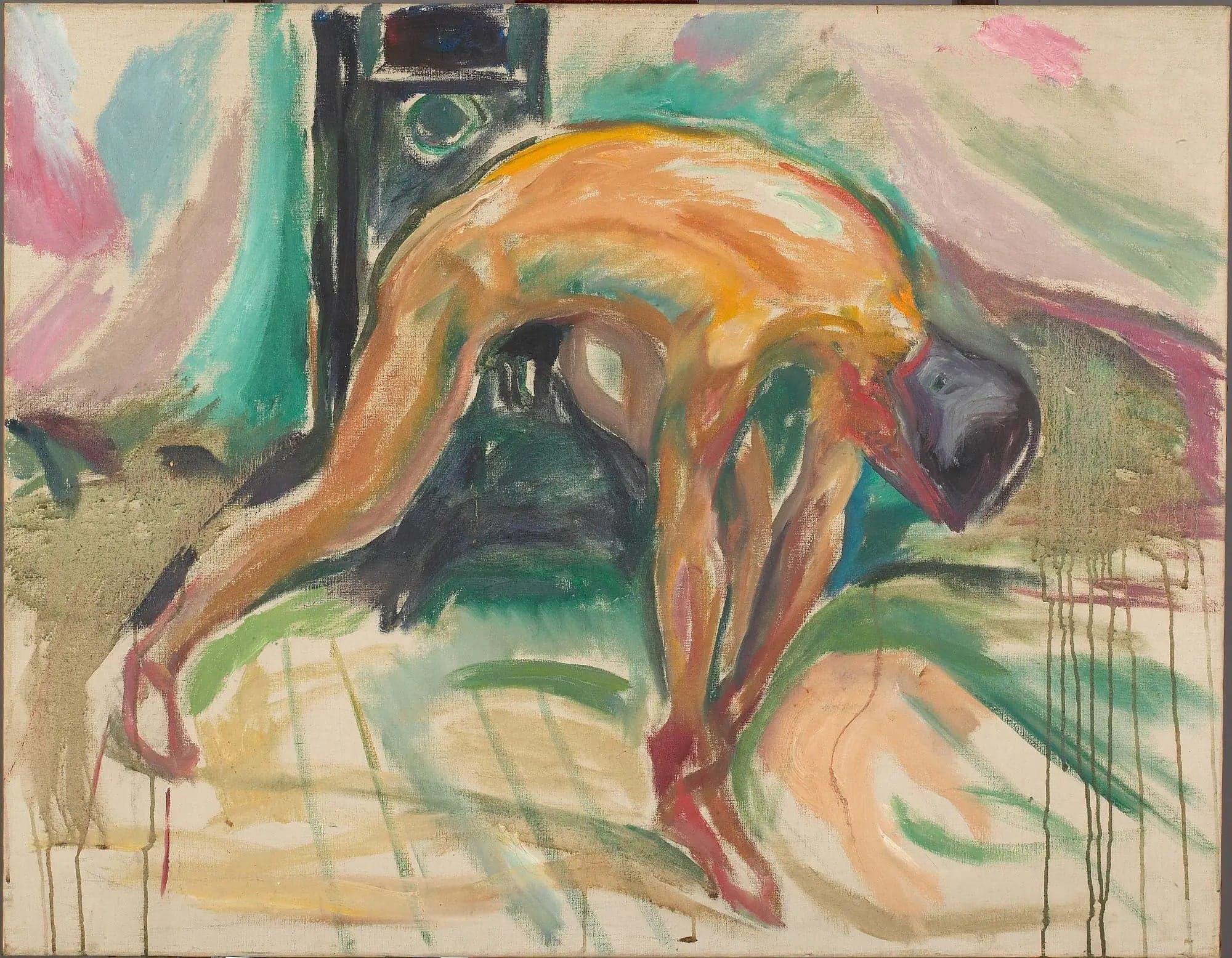
The man no longer holds his ankle
- Original dimensions
- 100 x 78 cm
- Museum
- Munch Museum
- Year
- 1920
Scene depicted
This painting explores the themes of suffering and anguish through the figure of a man, frozen in a moment of vulnerability. His posture, revealing despair, echoes universal emotions, like a silent scream in a world of turmoil, thus opening a profound reflection on the human condition.
Historical context
Created in 1920, this emotional canvas is located in Oslo, Norway, within the framework of the expressionist movement that marked a pivotal era. The work, now exhibited at the Munch Museum, reflects an emotional intensity characteristic of the artist. The psychological depth conveyed by this painting and its visual impact mark a milestone in the history of modern painting.
Place in the artist's career
The Man No Longer Holds His Ankle fits into a crucial phase of Munch's career, representing technical and emotional maturity. Alongside his famous works such as The Scream and The Madonna, this painting reflects a clear evolution towards greater introspection, capturing the complexity of the human soul while experimenting with color and light.
Anecdote
Munch reportedly said one day: "Art is the realization of my most poignant emotions." It was undoubtedly on a stormy night, while wandering alone through the streets of Paris, that the idea for this masterpiece came to him, immersed in his own dark thoughts, inspiring this powerful painting .