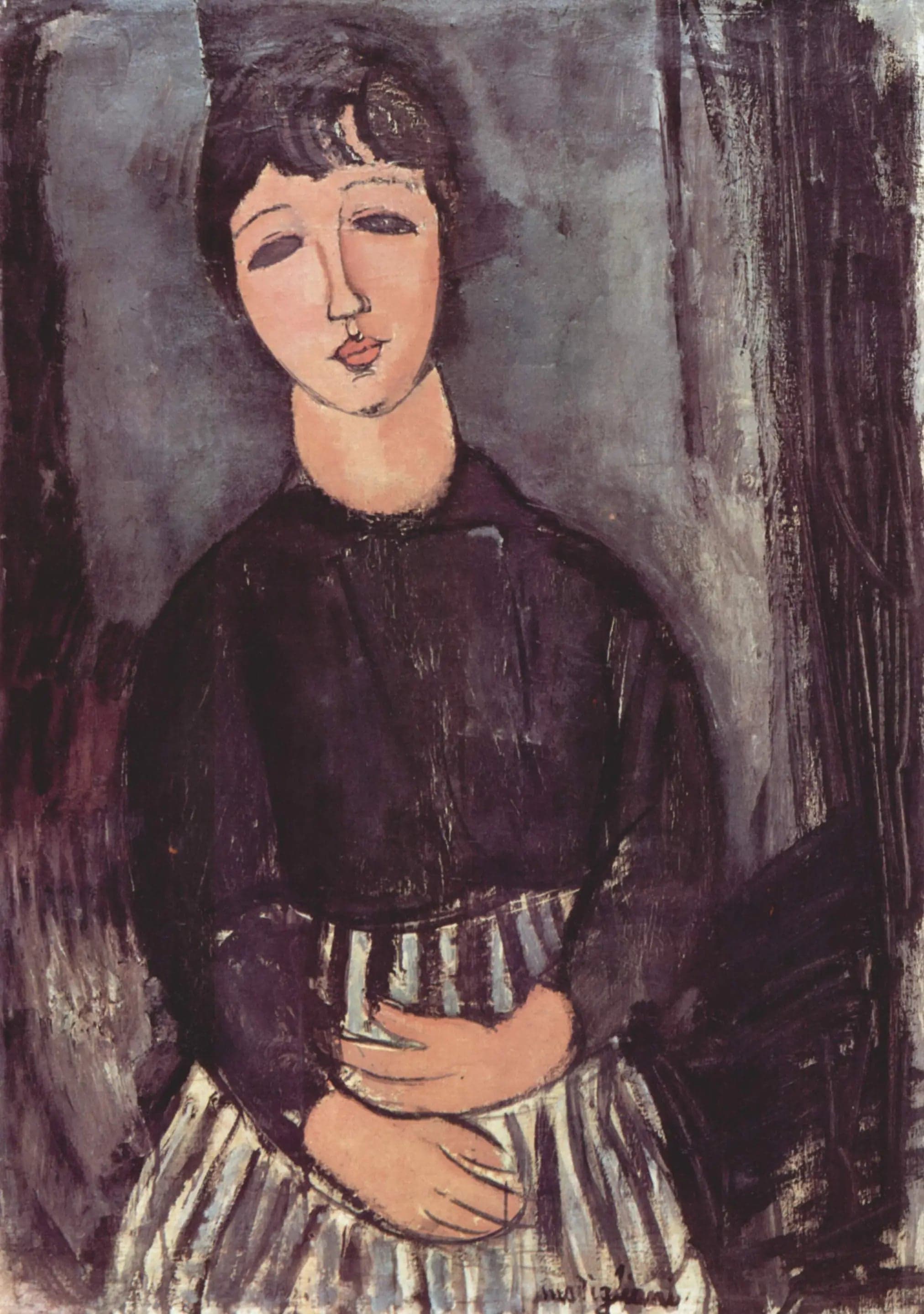
The maid in the striped apron
- Original dimensions
- 65 x 100 cm
- Museum
- Not specified
- Year
- 1916
Scene depicted
This canvas gracefully evokes a maid dressed in a striped apron, a symbol of a life of labor imbued with dignity. Her mysterious gaze, fixed towards infinity, invites us to explore the depths of her soul. The scene is imbued with a calm that contrasts with the hustle and bustle of the outside world, conveying a powerful message about the beauty of the ordinary.
Historical context
Created in 1916, this painting embodies the vibrant artistic context of Montmartre, Paris, where the influences of cubism and fauvism intertwined. This captivating painting remains an expression of individuality against the backdrop of social turmoil caused by World War I. Currently, the location of the painting remains uncertain, but its visual impact persists, revealing the beauty of the invisible.
Place in the artist's career
Positioned at the heart of his career, The Maid in the Striped Apron is a significant stylistic milestone. After his bold debut with The Woman with the Pearl, Modigliani evolves here towards a mastery of form and color, in harmony with other paintings such as Reclining Nude and Portrait of Jeanne Hébuterne, thus accentuating a quest for the essential while revealing inaccessible human emotions.
Anecdote
Amedeo Modigliani , known for his unique gaze on faces, once confided: "Every masterpiece begins with a breath of inspiration in the narrow streets of Paris, where souls speak to those who listen." It is at the turn of one of these streets, under a blue sky, that he imagined this maid, her sweetness captures an infinite light that we feel with every gaze upon this painting .